



Look, we get the urge to push nearly every television show past its natural conclusion. Fandoms perk up at and tune in for every new sequel, prequel, or spin-off of something they once loved, no matter how often past spin-offs have disappointed them. Studios chase any IP that looks safe, predictable, or profitable. Put both those urges together, and you get a lot of TV shows stretching out much longer than the story can justify. Whether a show has a perfectly serviceable season 1 ending and then fumbles to continue the plot, or sprawls out with only a vague promise of an eventual ending, it’s often much clearer in hindsight that everyone would have been better served with a single tight, smart, well-planned season.
That isn’t to say the shows below — our personal nominees for series that should have stopped with season 1 — never had a single good episode or storyline in subsequent seasons. Plenty of them had great storylines or scattered flashes of brilliance later in their run. But none of them lived up to the potential of their opening seasons, and we felt like we lost something powerful and enjoyable when they moved into season 2 and beyond.
1
Heroes
Tim Kring’s modern-day action-drama about a sudden breakout of superpowers, seemingly leading toward an apocalyptic event, had a nearly perfect first season. It was unpredictable and innovative, with a strong ensemble cast (the show made Zachary Quinto and Masi Oka into stars, and blew up Hayden Panettiere’s already established career) and an intelligent way of balancing superhero-comic tropes with mainstream TV drama elements to make both feel fresh. The first season introduces a sprawling collection of seemingly unrelated powered people and points them all in one direction, for an epic confrontation against supervillain and superpower-stealing serial killer Sylar (Quinto). Then, at the last second, Heroes lets him weasel out of a perfectly good dramatic death.
Over three subsequent seasons, plus a revival, Heroes: Reborn, Kring and a chaotically shifting writing and producing team kept changing what the story was about, chasing the first season’s arrow-straight force and efficiency while repeating themselves in frustrating ways, particularly around Sylar. Fans complained bitterly, Kring alternated between public defensiveness and apologies, and both the show and the drama around it went on far too long. If it had ended with season 1, it would be remembered as a classic, instead of a messy, protracted pet project Kring is still trying to revive yet again.
What would need to change to end the show with season 1?
Almost nothing. Sylar dies instead of crawling away from the final battle to heal and keep reprising his role over and over and over. The end. —Tasha Robinson
2
Stranger Things

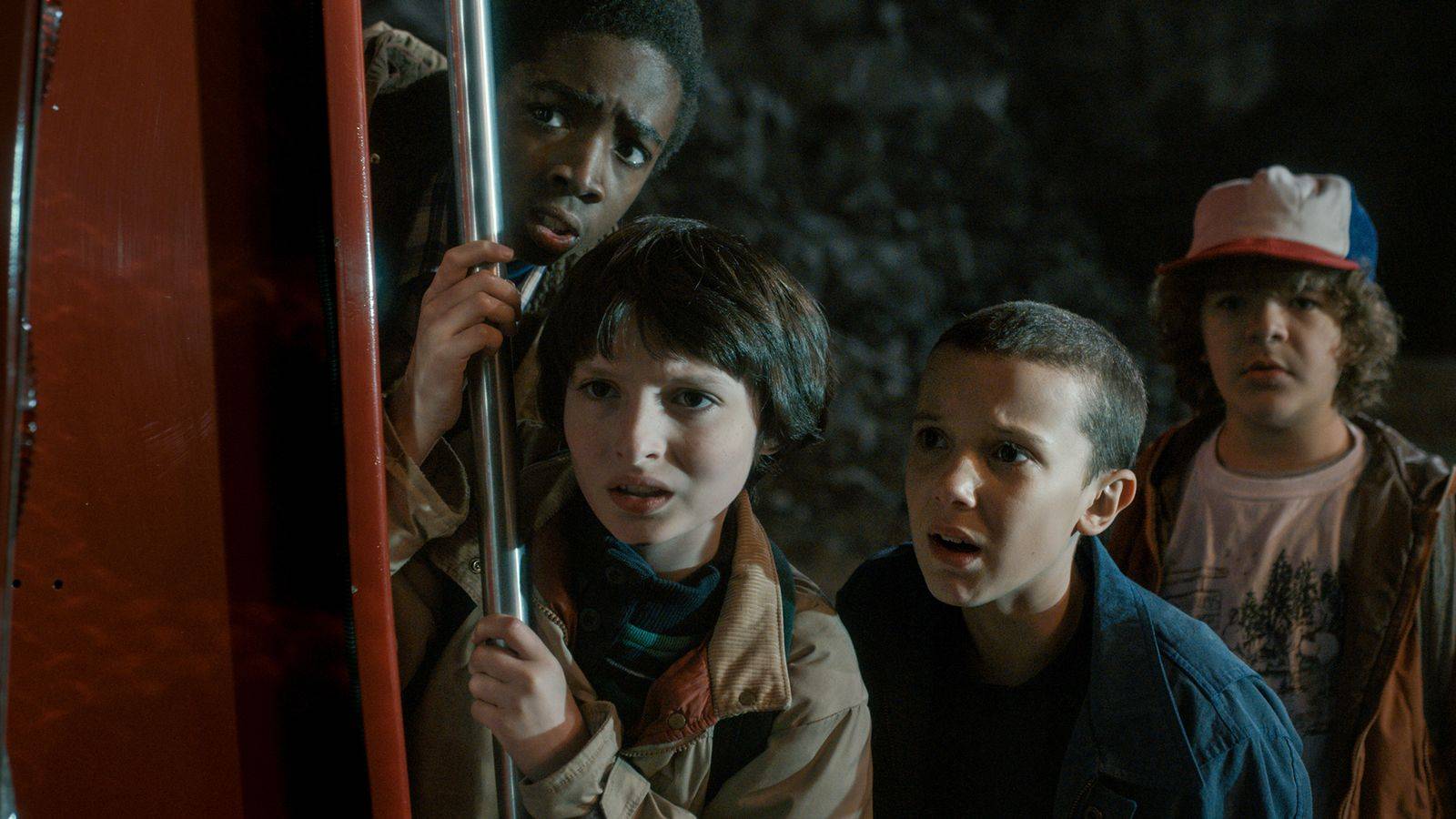
One of the biggest appeals of Stranger Things when it first aired in 2016 was that it felt like a very long movie. From the first episode, the story seemed strongly self-contained. The small-town setting, the mysteries, and the Goonies vibes all worked together to give the impression I was watching a Rob Reiner or Steven Spielberg movie that used the TV medium to tell a story that could not be contained in a theatrical runtime.
Stranger Things season 1 was in fact conceived like a movie. Series creators the Duffer brothers told The New York Times that the eight-episode format Netflix granted them (as opposed to a network-style 22-episode season) helped them tell a “cinematic story.” They told Variety they “wanted it to feel like a big movie.” By the end of season 1, all the plotlines were wrapped up neatly, even though the Duffers left some questions unanswered in case Netflix renewed the show.
Those questions became four more seasons of progressively deteriorating plotlines and characters. The charm of a small-town sci-fi mystery spiced with Dungeons & Dragons references turned into the Red Army secretly invading the USA and a showdown with an interdimensional monster that conveniently forgot about its army of demons.
What would need to change?
Almost nothing. Just let episode 8 end with the somber scene of Hopper leaving the Eggo waffles in the box in the woods, hoping El will return one day, and erase the following sequence of Will throwing up the Mind Flayer bug in the sink. —Francesco Cacciatore
3
Shōgun

Rachel Kondo and Justin Marks only set out to make 10 episodes of Shōgun, but their adaptation of James Clavell’s 1975 novel about the unification of Japan under the Tokugawa shogunate was so popular that FX wouldn’t let it end. The network threw a wrench into awards season by reclassifying it from a miniseries to a drama series and announcing it would get two more seasons. The show went on to win big at the Emmys and Golden Globes.
Kondo and Marks had already completed their adaptation of Clavell’s book, brilliantly building up a war between Lord Yoshii Toranaga (Hiroyuki Sanada) and his chief rival, Ishido Kazunari (Takehiro Hira), that never actually comes to pass because Toranaga achieves victory through intrigue. That resolution involved the death of two of the show’s best characters, Toranaga’s loyal translator Toda Mariko (Anna Sawai) and his perpetually scheming underling Kashigi Yabushige (Tadanobu Asano). Their loss will undoubtedly be keenly felt in future seasons.
Adaptations that run out of source material often have a steep dropoff in quality. While Shōgun’s showrunners can still draw on Japanese history, they’ll have to create their characters and plots from scratch. Maybe the new seasons will be great, but I wish they had the courage to just stick with the original plan.
What would need to change?
Nothing! —Samantha Nelson
4
Westworld

Jonathan Nolan and Lisa Joy’s Westworld delivers a perfectly self-contained, satisfying first season. The premise of a state-of-the-art Wild West-themed amusement park with android “hosts” as its primary attraction is a novel enough idea, elevated through a nuanced exploration of humanity’s worst impulses. Westworld is about duality and repetition, where storylines (and timelines) consciously echo an unbreakable loop, signifying the cyclical nature of human behavior.
To this end, a stark contrast is drawn between the old, grief-stricken Robert Ford (Anthony Hopkins) and the young, hopeful William (Jimmi Simpson), while Dolores (Evan Rachel Wood) and Maeve (Thandiwe Newton) walk different paths to achieve freedom. But then season 2 happened, creating the need for the story to venture beyond the confines of the park and deliver grander twists that often went off the rails. The original tautly written core idea became more convoluted and demystified as the seasons progressed.
The quiet cancelation of Westworld after its fourth season put a stopper on an already messy, meandering series, robbing hard-earned character moments of depth or meaning. Sure, there’s an argument in favor of an expanding world steeped in heady ideas and even wilder narrative swings, but Westworld did it at the cost of narrative integrity. The central theme of repetition was incorporated to the point of (unintended) self-parody, and attempts to recreate season 1’s tense puzzlebox structure ended in exhausting MacGuffin hunts.
What would need to change?
Nothing. Maeve and Dolores both achieve true consciousness, raising pertinent questions about organic and simulated motivations, and whether the two carry the same weight. The man-versus-machine dichotomy has existed in science fiction since its inception, but season 1 of Westworld gave it a smart, intriguing makeover. We could’ve ended a gripping story about humankind playing God (and paying a hefty price for it) on a near-perfect note, but I guess fate had other plans. —Debopriyaa Dutta
5
Good Omens

Amazon’s adaptation of Neil Gaiman and Terry Pratchett’s comedic 1990 fantasy novel about a misplaced Antichrist and a looming apocalypse covered all of the source material in one season. It’s a complete, self-contained, world-changing story, and it brings the tacit cooperation and unacknowledged partnership between fussy angel Aziraphale (Michael Sheen) and swaggering demon Crowley (David Tennant) to a head. Fans loved the dynamic between these two goobers and wanted more, and Amazon and Gaiman complied. (Pratchett died in 2015.)
But season 2 is muddled and unsatisfying, lacking both Pratchett’s puckish humor and the novel’s tight, efficient narrative build. The book and the season 1 adaptation track Aziraphale and Crowley’s slow-build rapprochement over millennia of events and interactions, and when season 2 jumps around in time to tell more historical tales about the two of them, it feels more like fan service than meaningful moments. Season 3 — one of many other projects canceled or put on hold due to the sexual assault accusations against Gaiman — is now planned as a single 90-minute episode, reportedly coming in May. It’s hard to imagine that finale feeling necessary or valuable to fans at this point.
What would need to change?
Nothing. It’s already a start-to-finish story. —TR
6
Bloodline

Netflix’s Bloodline is a taut thriller wrapped in Shakespearean drama. The Rayburn family are a sort of royalty on the island of Islamorada, Florida, and a celebration of the 45th anniversary of their seaside inn turns into a battle for influence between the dutiful second son John (Kyle Chandler) and his estranged older brother, Danny (Ben Mendelsohn). Danny’s unexpected return for the party is a reminder of a painful family history while also bringing new trouble from his shady friends.
The series premiere ends with John disposing of Danny’s body, promising in voiceover to explain everything that led to that moment, and the story loops back around in the season 1 finale. Every part of the story feels like it’s come to its natural conclusion, with John’s coverup continuing the show’s themes as the family once again buries dark truths beneath a picture-perfect exterior. Yet the show ran for two more seasons, as various characters tried to learn the truth about Danny’s death and the Rayburns had to keep killing people to protect their secret.
What would need to change?
Very little. The finale reveals that Danny had a son who wants to know what happened to his father, which feels very tacked-on. You would also need to have Danny and John’s mother Sally (Sissy Spacek) accept John’s explanation of what happened, instead of hiring a private investigator, but that would also be a pretty minor change. —SN
7
True Detective

The anthology series is the ultimate escape clause for networks and creators who want to keep things rolling after a one-off miniseries ends up as a smash hit, but realize their plot and characters simply won’t allow for a direct sequel. Sometimes, if there’s a creator with a specific vision and repeatable elements to the concept, it can work extremely well: The White Lotus is a great example.
HBO leaned into the idea with True Detective, a crime noir starring Matthew McConaughey and Woody Harrelson, and created by Nic Pizzolatto. The eight episodes of its 2014 opening season told an intensely moody, haunted, Southern Gothic-inspired serial-killer thriller story with a strange supernatural dimension. Drenched in manly sorrow, Louisiana humidity, and Cary Joji Fukunaga’s heavily stylized direction, the original True Detective is a little overwrought and silly, but it’s a powerful vibe.
That vibe turned out to be tough to repeat, not least because there wasn’t much more of a unifying concept to True Detective than a cool title. The following three seasons all have something to recommend them, especially the Alaska-set fourth season, Night Country. But they can’t replicate what viewers loved about the original, and gain nothing from the association beyond marketability and conspiracy theories. Honestly, over time, Noah Hawley’s Fargo proved to be a better and more coherent crime anthology.
What would need to change?
Nothing. While there are a few breadcrumb trails connecting the four seasons, they’re all standalone stories. —Oli Welsh
8
Killing Eve

Few seasons of popcorn TV over the last 10 years have been as perfect as Killing Eve’s first eight episodes, adapted from Luke Jennings’ Villanelle novel series by Phoebe Waller-Bridge. Killing Eve is a sexy, funny, flippant spy thriller, spiked with Waller-Bridge’s wicked dialogue and a sensational breakthrough performance by Jodie Comer as the deadly assassin and master of disguise Villanelle. It’s a classic espionage pas-de-deux between Villanelle and MI5 agent Eve (Sandra Oh); the pair become dangerously, erotically obsessed with each other as they play a cat-and-mouse game.
It’s so much fun that you can’t blame anyone for wanting to keep the party going, and there’s no plot reason to object to the continuing adventures of Eve and Villanelle, or the slowly unravelling mystery of the Twelve, the secret cabal Villanelle works for. The issue is that Waller-Bridge didn’t hang around. She handed the second season over to her friend Emerald Fennell, who doesn’t quite have Waller-Bridge’s wit, but shares enough of her taste to keep Killing Eve together — if only just. Subsequent showrunners on the third and fourth seasons increasingly lost their grip on the show’s knife-sharp tone until it ended in disappointingly limp ignominy. Let’s pretend none of that ever happened, and that our last sight of Waller-Bridge and Comer’s fabulous creation was at the end of season 1.
What would need to change?
It’s reasonable to have some fondness for season 2, but by the end, the plot was too messy and entrenched to leave there; the whole thing has to go. Season 1 ends on something of a cliffhanger after an extraordinarily charged encounter between Eve and Villanelle. It would be a crime to change too much of it, but it’s possible to imagine a downbeat or ironic twist that has a bit more finality, perhaps with either (or both) of the characters dying. But the existing open-ended conclusion suits the pair’s lethal flirtation just fine. —OW
9
Lost

Few shows ever capture lightning in a bottle quite the way that Lost did in its first season. It opens on a quiet moment: a close-up of Jack Shephard’s eye as he wakes up disoriented in a tropical forest. Along with dozens of others, he’s survived the crash of Oceanic Flight 815 on a tropical island. But the island’s eerie mysteries quickly create a persistant feeling of dread. Something is deeply wrong here.
Season 1 — and the show at large — works so well because it balances character-driven survival drama with strange, supernatural elements: the smoke monster, the hatch, the creepy whispers in the jungle. It all feels deliberate and meaningful, but most importantly, unknowable in a way that’s easy to obsess over. As Lost carried on across six mostly uneven seasons, it layered on so much mythology that it prompted more questions than it ever answered.
Lost remains one of my favorite shows, and I consider the divisive series finale a satisfying conclusion, albeit a mystifying one. But I sometimes dream of a timeline where after the overwhelming dramatic tension of the first season is released with the hatch being blasted open, and the series just ended. In hindsight, Lost may be the case where the answers we imagine in our minds wind up more satisfying than the ones we got.
What would need to change?
Lost season 1 is perfect from start to finish, and it’s only in season 2 and beyond that things get muddled. What if, after the hatch was blown open, the smoke monster came rushing out and knocked Jack to the ground… only for him to wake up on the plane having just experienced the strangest dream? —Corey Plante
10
Battlestar Galactica

The 2004 reboot of the ’70s space series Battlestar Galactica reminded viewers in a text crawl before every episode that humanity created the artificial race known as Cylons, which separated themselves from humanity, then returned decades later to obliterate their makers. “The Cylons have a plan,” said that text crawl. After a stunning opening miniseries and some killer first-season episodes laying out humanity’s desperate fight for survival and equally desperate flight toward a lost, near-mythical homeworld, it became increasingly clear that no, the Cylons did not have a plan, and neither did the writers. Creator Ronald D. Moore admitted in interviews that “the plan” was just marketing copy foisted off on him by producer David Eick:
“I’m like ‘But they don’t have a plan, David.’ He was like ‘No, trust me! This is marketing. It doesn’t matter. We’ll figure it out later. There’ll be a plan someday,’” Moore said at the 2017 ATX Television Festival. “So for the next 14 years of my life, people have asked me ‘Hey, what was the plan?’ There’s no f**king plan!”
That became increasingly apparent as the show spread across four seasons, a webisode series, the sidebar series Razor, the prequel Caprica, and eventually a deeply unsatisfying direct-to-DVD movie called The Plan, which tried and failed to retcon the series into something more coherent. The power and horror of those earlier episodes sprawled into muddled politics and even more muddled religion, frustratingly repetitive character arcs drawn out to great length, MacGuffin hunts, and self-indulgence. At times it seemed like the only goal was to keep the series going at all costs. When the end came, the resolution made the end of Lost seem popular and uncontroversial.
What would need to change?
It would have needed a plan from the start — specifically, a plan that kept up the energy, drive, and urgency of the miniseries and early episodes like “33,” and that didn’t rely on obscuring the villains’ intentions, presence, and processes in an attempt to keep viewers endlessly hanging on for the show’s mysteries.
There’s so much effective storytelling scattered throughout the series’ run, and terrific character work, particularly from Edward James Olmos and Mary McDonnell as the dueling leaders of humanity’s survivors, but even by the middle of season 1, the series started spinning its wheels. This one would need a radical overhaul and condensing — but if it had been planned for one effective, complete season from the start, the brilliant aesthetic (particularly the memorable cinematography, art design, and Bear McCreary’s mournful scoring) and gripping premise would have made for an all-time-great one-and-done series. —TR