![25th Sep: The Final Problem (2026), Limited Series [TV-14] (6/10)](https://occ-0-937-2706.1.nflxso.net/dnm/api/v6/0Qzqdxw-HG1AiOKLWWPsFOUDA2E/AAAABYpvBQC3TDfELGHQbStHJi_XZgljYpc2uPOi-uqnu2dcrhKPR9nUxuH6YUiU-LAQvixbfFxVatE6dkN1CP4z9yMYDkGTnnWo4JmqMuykXdWCGOI0OOojcXhhm8XeGkf-5KOxLA1ZWWZDhFGSYAIQrlVTboyu4WWRs6fUuBC2L7S8GA.jpg?r=916 "25th Sep: The Final Problem (2026), Limited Series [TV-14] (6/10)")



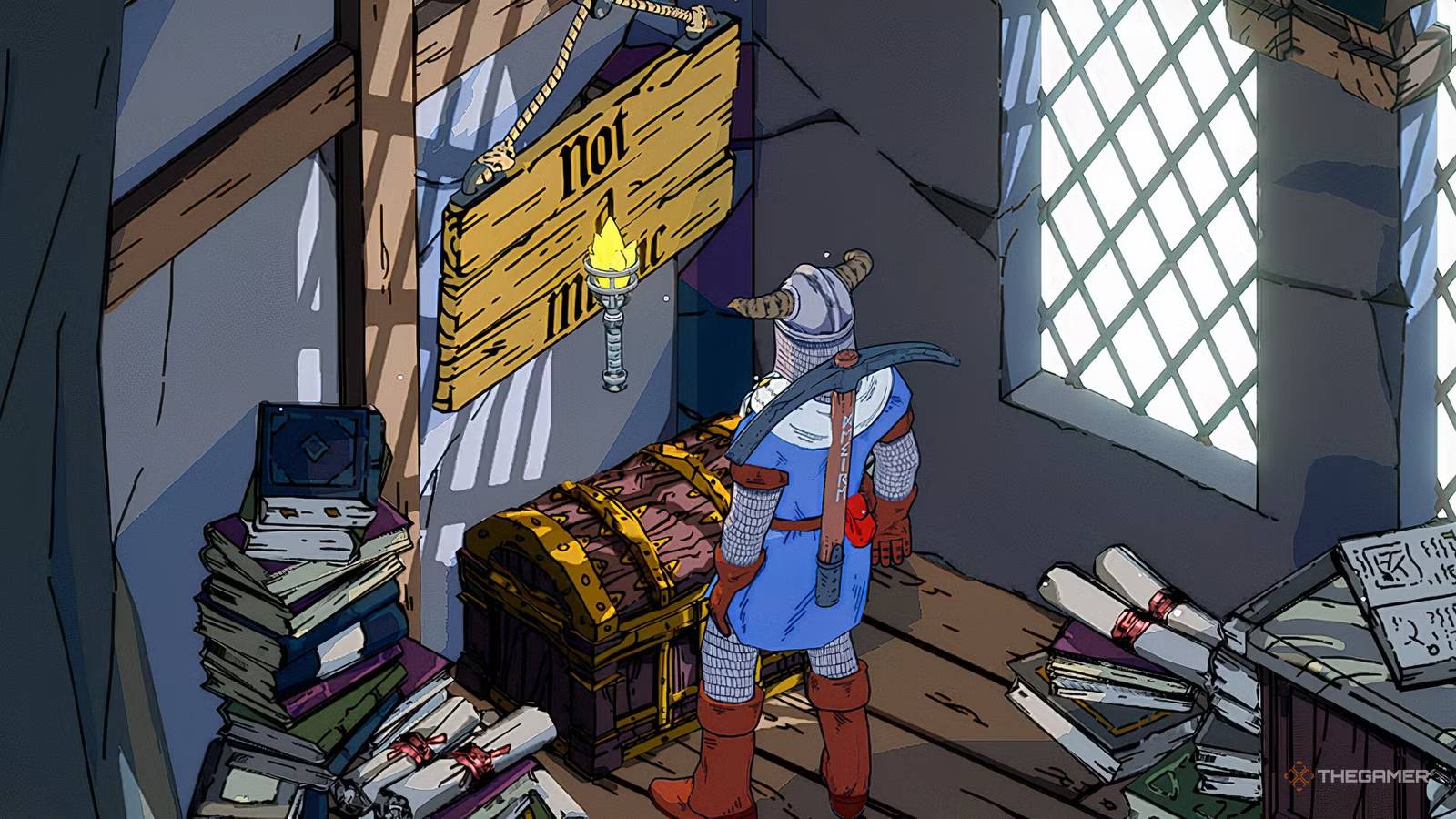
Christoffer Bodegård, the solo developer behind my pick for 2026’s RPG of the year, Esoteric Ebb, is obsessed with interactive storytelling. As I played the game, before I knew anything about its creator, I kept telling myself: “The person who made this is clearly a Dungeon Master who plays a lot of Dungeons & Dragons.” I wasn’t wrong.
As I interviewed him, I feared that Bodegård might be annoyed that most of my questions were about D&D rather than the video game he developed and released in March of this year to critical acclaim. Instead, I was almost overwhelmed by his eagerness to speak about D&D. “I’ve been playing continually since 2018,” Bodegård said. “We play every other Friday consistently, and we’ve been doing this for eight years.”
In a recent interview with PC Gamer, Bodegård revealed that to focus on developing Esoteric Ebb, he had to pause his video game sessions with his friends. But he did not pause D&D night. If you have already adventured into the whimsical and intricate world of Esoteric Ebb, you’ll agree that, more than its much-flaunted Disco Elysium inspiration, Bodegård’s game feels like a D&D campaign come to life in another medium.
Interactive storytelling is, after all, what D&D does best. According to the biography on his personal site, one of Bodegård’s goals is to answer the question: “How do you write good choices?” It’s a dilemma every good DM must wrestle with. Your job is to put decisions in front of your players, and they have to feel both organic and unpredictable.
In Esoteric Ebb, every choice you make feels like it truly matters. It’s a lost art in modern RPGs, but Bodegård’s game really nailed that aspect. And it’s a lesson that comes from his D&D experience. “It all goes back to how I view failure in TTRPGs,” Bodegård said. “As a DM, you can kill a player character, but you have to do it in a way that every single player at the table, and specifically the one whose character you’re killing, enjoys it. They can feel, ‘Oh no, I didn’t want that to happen!’ but they can’t feel bad about it. It’s the same in the digital space. Every single roll should lead to a situation where you keep playing. And if you fail, that’s the point: to fail and come back later.”
It’s not actually that hard to die in Esoteric Ebb. The game doesn’t hold your hand, and the world isn’t necessarily scaled up to your level. The same goes for a good game of D&D. If the players want to rush the red dragon at the start, then the DM should find some good in-game tricks to dissuade them. But if they persist, then they should get the new character sheets out. In his games, Bodegård ensures his players understand the risks by calibrating a campaign’s lethality during “session zero.” If the characters have full information, they don’t feel blindsided. Failure, including death, becomes a meaningful continuation of the story and a potent narrative moment.

In Esoteric Ebb, you can enter a pretty deadly dungeon right at the start of the game, before leveling up and finding appropriate gear. The game doesn’t stop you from doing that; it gives you full agency, but Bodegård mentioned how some players complained online about dying against the (only) skeleton found in the catacombs. “There’s a bunch of information in the game that they have missed, where it’s stated very clearly that you’re not supposed to go into the dungeon at level one,” Bodegård said. “I’m allowing you to because I am a DM who allows you to do whatever you want. But if you keep throwing your head against this boss, maybe you should go somewhere else.”
Before Esoteric Ebb’s focus on meaningful player agency and good interactive storytelling made me draw the parallel with D&D, it was the depth of the game’s world that made me realize that Bodegård had been building this for a long time in his tabletop games. The world, known as Jor or the Esoteric Coast, originated from his personal D&D campaigns, primarily two that he dubbed “The Evil Campaign” and the “Pest Control Guild Ccampaign.” Several characters in the game, such as Visken and his entourage, were directly based on the NPCs and player characters from his home campaigns. He collaborated with his friends to ensure their characters were represented authentically.

The world was designed around the core concept that “anything can exist in it” because portals from other worlds opened, allowing it to incorporate any fantasy trope or character type in a lore-consistent way.
If this sounds like an excuse for derivative worldbuilding, trust me, it couldn’t be further from the truth. For many years, Bodegård preferred using existing D&D settings like the Forgotten Realms because they already supported classic fantasy tropes and player fantasies and came with well-designed material. Eventually, he decided to build his own world to create a unique takes on those tropes, but also to make them as “functional” as possible in D&D. Bodegård’s worldbuilding process starts from the mechanics and then builds the lore around them.
A great example is how travel functions in Jor. In this world, wherever there are fewer “sapiens” (intelligent species like humans, dwarfs, elves, etc.), the world “contracts” and becomes more unstable and less material. In these “esoteric pockets,” time and space misbehave, meaning that a trip through the same uninhabited region could take a week or a month. What’s brilliant is that this is exactly how travel works in D&D. Maybe a DM just “fades to black” and quickly narrates the trip before the players get to their destination. Or they roll on random encounter tables for every day of travel, giving the impression of time dilation.
Baking the world’s lore into the game’s mechanics opens up infinite possibilities. In Jor, an extinct nation of mighty wizards known as the Arcanists solved their travel issues by creating “brains in jars” and embedding them into the ground at regular intervals, so that their magic-powered machines could travel normally through esoteric pockets. It’s sick, and brilliant, and it uses established elements of D&D lore creatively. It also follows a familiar approach to fantasy worldbuilding that cares about things like logistics, trade routes, geography, and everything that makes a world feel realistic.
However, he said that he’s not a DM who loves to prep. “I barely prepare anything at all,” Bodegård said. “I know exactly where the players could go, what places exist in the world, but everything between that and the endpoint is just open because I know that they should be able to do anything in the world. And I know from experience that my players enjoy the sessions where I don’t have anything prepared more than the sessions where I do.”
Bodegård seemed a bit embarrassed about sharing his “no prep” tricks, but he shouldn’t be. Prepping less is the sign of a great DM, as Mike Shea, author of the Lazy Dungeon Master book series, has been advocating for years. It encourages the creative process of building a world on the fly based on player actions and interesting mechanics, rather than having a static, fully mapped-out setting that could encourage railroading.
If Esoteric Ebb’s gameplay experience feels like the opposite of railroading, despite its limited map and fixed ending, it’s because Bodegård’s experience as a DM really shines through. I’m not surprised, considering his inspirations. He mentioned Planescape as his favorite D&D setting, which explains why Esoteric Ebb began as an attempt to make a spiritual sequel to Planescape: Torment. His favorite adventure module is 2e’s Dead Gods by Monte Cook, a Planescape classic and one of the most acclaimed D&D adventures ever.

Esoteric Ebb’s launch and the game’s success haven’t stopped Bodegård’s biweekly D&D game. “I’m not playing 5E,” he said. “I am playing ‘esoteric 5E,’ which is my version that’s homebrewed and has a bunch of unique stuff.” Even better, Bodegård is planning to turn the world of Jor into a full D&D campaign setting. Whether you’ve played Esoteric Ebb or not, the game’s world is so deep and fascinating that you might want to give it a shot for your next D&D campaign.