

![20th Jun: Something You Said Last Night (2022), 1hr 36m [TV-MA] (5.65/10)](https://occ-0-533-1007.1.nflxso.net/dnm/api/v6/0Qzqdxw-HG1AiOKLWWPsFOUDA2E/AAAABf4kMujGH3SF1NFesO_Rd4VZiNWxaoHbFDhAndsK5Ck2fngt4MHux3i_GodxHKHghOkI_5L1W1OS2T-mLv7_VtlfakbwkXPkrtEiRzy-sexZXyRcxP2-Et3v2iAKhJZdNNZ9f5tt5xYs1Tw_DZCkxPWbcu3hVrk2_UhqHZMljktGTQ.jpg?r=ae1 "20th Jun: Something You Said Last Night (2022), 1hr 36m [TV-MA] (5.65/10)")




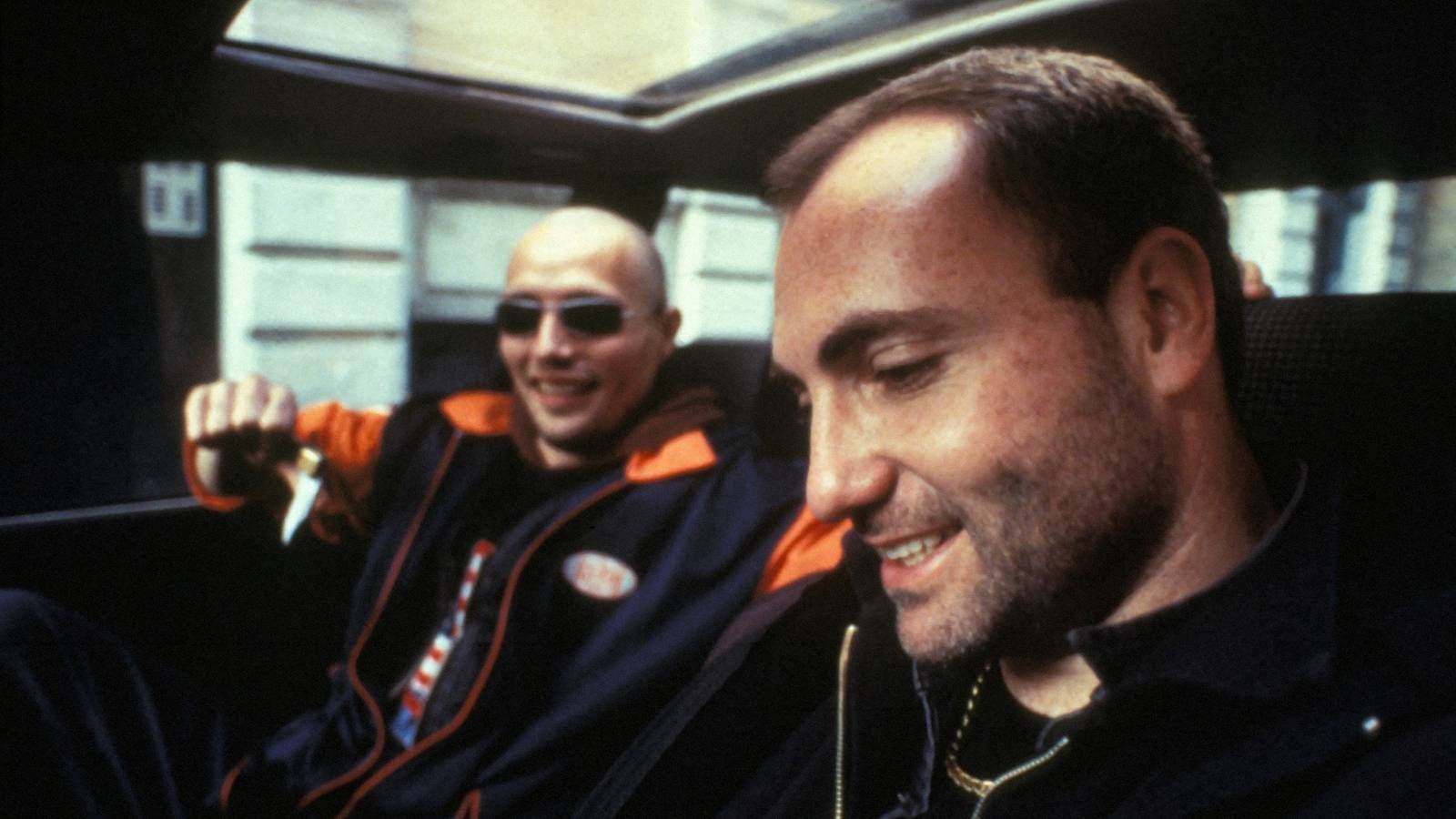
Three decades ago, Danish filmmaker Nicolas Winding Refn made his directorial debut with Pusher, a grimy crime thriller about a street-level drug dealer (Kim Bodnia) who finds himself owing money to a Serbian mobster. Like the Safdie Brothers’ anxiety-inducing one-two punch of Good Time and Uncut Gems, Pusher excels at making the viewer squirm with every ill-fated decision that sinks its protagonist into a deeper hole. (Pusher II and Pusher 3 follow that highly stressful format with different lead characters, including Mads Mikkelsen’s tragicomic Tonny.) Raw, kinetic, and shot with non-professional actors in many supporting roles, Pusher announced a major talent, even if his gritty and grounded debut didn’t make huge waves outside of Refn’s home country.
“The whole concept of Pusher was filming reality, and as much as I could get access to that, the more exciting it was,” Refn tells Polygon.
The world eventually caught up. In the years since, Refn has become one of cinema’s preeminent provoc-auteurs — someone who follows his perverse curiosities wherever they lead. At times, Refn’s highly stylized thrillers have crossed into the mainstream: His 2011 masterpiece, Drive, was a staple on critic year-end lists and seemed like the first step towards leveling up to major studio projects. Instead, Refn doubled down on his most transgressive impulses, audience goodwill be damned. He’s had a chorus of boos and fist fights emerge at Cannes screenings for Only God Forgives and The Neon Demon, respectively. Perhaps no streaming release has been more self-indulgent (or mesmerizing) as Too Old to Die Young, the Prime Video miniseries that, over 13 grueling hours, featured everything from ludicrously over-the-top ultraviolence to Billy Baldwin growling while holding a stuffed tiger.
Now, as the Pusher trilogy receives a 4K release in the United States and his latest film, Her Private Hell, premieres at Cannes, Refn finds himself at a characteristically strange crossroads: canonized and polarizing in equal measure, beloved by cinephiles and baffling to just about everyone else. He wouldn’t have it any other way. Polygon spoke with Refn about revisiting the Pusher trilogy, whether he’d ever consider making a blockbuster, and why he remains optimistic about the future of cinema.
This interview has been edited and condensed.
When you look back at your earlier films, like the Pusher trilogy, do you enjoy revisiting them, or is your relationship to that work more about moving forward?
Looking at your old movies is like looking at pictures of your kids when they were little [laughs]. Everything seems so memorable and happy.
Are there any particular memories that stand out?
They were made at specific times in my life, so you get very reflective to the point of being existential. The first one was my first film, so obviously all the arrogance of youth is very much accumulated in the energy around it. When I made the sequels, I was in a different stage of my life. Things had happened and you were suddenly reacting to the world around you and to an industry that was more classical.

What did you see in a young Mads Mikkelsen, and are you surprised that he’s become such a huge figure in blockbuster cinema?
No. I mean, there was always something very unique about him. We’ve made, gosh, four movies together. It’s been a great road for us, and we have always met up along the way. But I certainly think everything is greatly earned. He’s one of a kind.
There was a perception, especially when the first Pusher came out, that Denmark was the country of Hans Christian Andersen and The Little Mermaid and Danny Kaye and socialism and pornography and the happiest people in the world.
A lot of the smaller roles in Pusher are filled by non-professional actors. What do they bring to a performance — and to a world — that a trained actor cannot?
Most of the performers, except the few leads, were people of certain backgrounds that you could say were [laughs] connected to organized crime. That gave some authenticity to the film that otherwise maybe would’ve been more manufactured.
Because I shoot films in chronological order, it was also a great discovery process of working with people that were not trained, but, in a way, were also gung-ho to explore the material and what could be done with it. That kind of casting is very satisfying because you get faces that have real life experiences and you get raw emotions that are unfiltered. With the first one, I was maybe more breaking the rules of what you were allowed to do and could not do.
How is Denmark itself a character in the Pusher trilogy, and what were you trying to say about it at the time these films were released?
There was a perception, especially when the first Pusher came out, that Denmark was the country of Hans Christian Andersen and The Little Mermaid and Danny Kaye and socialism and pornography and the happiest people in the world. All those things are true, but like any urban environment, there’s also the flip side. I think people forget that Hamlet was originally taking place in Denmark. We have all the dark sides of humanity as well, and that wasn’t as common to touch on those themes or characters when I made the first one.

So much of your work centers on criminals and outsiders. Why do you think we have such a collective fascination with stories about them?
Because this is fantasy and, like the fascination of the outlaw in the U.S. or the samurai in Japan, we identify with characters that are larger than life, and dramatic arcs that deal with death and mayhem. Shakespeare wrote his best plays about the royal family because it was all mayhem and chaos. It was a mirror, yet it was a make-believe world. Generally, people are attracted to what symbolizes the anti-authoritarian in you.
You’ve talked about how the Pusher sequels were made because of financial issues after Fear X. Despite the circumstances, did you still find completing the trilogy to be creatively fulfilling?
It was a very strange situation, having been creatively and financially hit in the head [laughs]. That’s a very hard headache and there was no aspirin big enough to solve it — other than to work your way out of it. I was able to reinvent myself by going back and completing what was originally not intended as a trilogy.
I have only fond memories of that experience. I was the happiest bankrupt person in the world — commercially and financially and creatively — because if I hadn’t collapsed completely, I wouldn’t have done these two films. And if I hadn’t done these two films, I wouldn’t have done Bronson and Valhalla Rising; I wouldn’t have done Drive and Only God Forgives. Everything happens for a reason. Failure, you need to really understand to feel it, because then you know that it doesn’t kill you.
You now label your projects as “by NWR,” almost like a fashion label. What do you hope your name means on a film to an audience at this point in your career?
[Laughs] Really good cocaine.
[Laughs] …
…
Care to elaborate?
Well, how can you?
Well, because I look at Drive and I think there are people who, if that’s their first NWR experience, maybe they have a certain expectation. I’m curious how you feel about that film in particular and whether your relationship to audiences changed after that — whether you feel people want you to repeat yourself. I love Only God Forgives, but I know there was a more polarizing response to it.
I’ve always looked at creativity as something that must polarize, because then you can only define something if there are opinions, whether good or bad about it. This intent to please may sound good, but it may not end up being so interesting in the long run.
I only make films for an audience. I think an audience is very essential for a creator. You create experiences for other people to feel, and there’s much enjoyment in people taking the DNA of your creation and devouring it. I certainly have a belief that what I make is for an audience, and as many as possible would be amazing. The question is if people agree, but I can’t change anything. I can’t change myself. I can only be what I am.

In the past, you were considered to direct big franchise films like Spectre. Is that door completely closed, or is there a version of blockbuster filmmaking that could interest you?
I’m sure there’s a wonderful marriage out there, but when you make films with that amount of financial investment, you always have to remember, “Is it going to be worth it?” At the end of the day, I still very much cherish my creative freedom that I’ve been able to sustain through my life. If there’s a great tentpole movie that has my name written on it, I would love to see what it is, but it has to work both ways.
Success is a very strange definition, especially because a lot of the time success is very much defined in numbers, but it’s a bit like saying, “What’s a really good restaurant?” Well, it must be the one that’s most successful. Then I guess most fast food restaurants are the best restaurants in the world because they’re the most successful. But does that make them good? I’m not saying they’re not good — I’m just saying the definition of quality and success in art is very abstract, in my opinion.
I believe that all you can really be is true to yourself, and money is just there to help you create your vision, and there’s never an excuse not to fulfill your vision, whether you have five dollars or 500 million dollars.

One of my favorite things I’ve watched in the past decade is Too Old to Die Young. A lot of people making television like to say their show is actually a 10-hour movie or whatever, but Too Old to Die Young truly feels like, for lack of a better term, long-form cinema. What did that format allow you to do that a traditional film didn’t?
My original intent was to make a 13-hour movie, and I really tried to persuade Amazon to allow me not to chop it up into episodes and just make it one long stream. But at that time, the powers at the company weren’t interested in that approach — or experiment, as they called it. I thought it was a great experiment, especially if I could be the guinea pig on it [laughs], but they still didn’t buy it. But then the fun part was distorting time.
To answer your question, there was nothing different from making any of my movies except that I had more time to expand. That’s really the main difference between anything that we create, whether it’s a TikTok video or a theatrical movie that’s a certain amount of length or a television show, is that it’s really all about time and how much time do you want to spend with it.
I am much more interested in the freedom of time. Let’s break down the barriers of time more and say time doesn’t exist; it’s just experience. What I’m very fascinated by in social media is the concept of swiping, because swiping is you controlling your narrative time. That is a new form of experience that we have not really had before, at least not as instant. I think that has very much affected — and I think in a good way — a new generation of young people to understand what it means to experience narrative and time. You can say that it’s a great wake-up call to reimagine, but also challenge the notion of what is time in entertainment? What’s the transactional meaning between you and time and entertainment? Because you’re certainly giving something, but what are you getting back?
There’s no reason not to fulfill your vision with whatever budget you have because that is the craftsman in you that takes on the challenge. We still can always cut to a closeup of someone’s face and they will be the most powerful element of any experience.
What is your relationship to social media nowadays?
I wish I was better at using it, but I am fascinated by it. It’s an environment, like gaming, that is constantly evolving because of technology, where film and television is really fighting a form of stagnation. Not a lot of things have changed since the birth of cinema in terms of how we tell stories and what the stories are about.
Let’s get the Nic Refn crystal ball out: With the way younger audiences consume media these days, what do you think cinema will look like 30, 40 years from now? Is it going to change drastically or is it more set in stone?
I think the future is very bright. There’s more websites and podcasts and people interacting about cinema than ever. There is a political question in terms of do we want to keep cinemas alive and how do we do that? I certainly believe that cinema is the foundation for film, but it is not the only experience because the iPhone also exists. But the cinema experience, I think, will always exist. We just have to remember to make interesting, exciting films that financially make sense.
I look at it like this: There’s no reason not to fulfill your vision with whatever budget you have because that is the craftsman in you that takes on the challenge. We still can always cut to a closeup of someone’s face and they will be the most powerful element of any experience. It’s more about how to understand cinema and understand how people view time and cinema, because there’s so many other activities you could spend your time on. So why cinema? As long as we can continue to engage and give experiences through that medium, it will always exist. And no matter what, we’ll always go back to our 4K rereleases of old movies [laughs].
I definitely agree with that. I love adding to the collection.
Oh, me too. When 4Ks started to come out, I was so happy because I was missing physical media so much. The idea of buying something, preferably in a store, I still find enormous pleasure in that.
I’m really happy I got my hands on Michael Mann’s Blackhat; the director’s cut is hard to find otherwise. Are there any 4Ks you’re particularly proud of owning?
I was in New York a month ago and I bought the 4K release of Excalibur, which I was very excited to get.
Have you already cracked it open?
I haven’t opened it yet because I’m trying to save it to watch it with my youngest daughter, but it’s a little hard getting her interested. But she had seen Valerie and Her Week of Wonders and she absolutely loved it. Have you ever seen that movie?
No, but I’ll add it to the list.
Oh my god, it’s an amazing film. I think it’s time for my daughter to watch Excalibur, but if she doesn’t, I guess I’ll crack it open and get it on a large television.

Going off of that, I’ve noticed your recent work feels more female-driven. Has fatherhood changed the kind of stories you’re drawn to or want to make yourself?
I think having daughters certainly manifested itself in me a more female-centric desire. That’s a pretty savvy view of looking at it, so I agree with you.
You have your newest film, Her Private Hell, coming out this year. How was the experience making that?
Great.
You worked with Sophie Thatcher, is that correct?
That’s correct.

From what I’ve seen her in, she has such a fascinating presence on-screen. Do you see any similarities working with her at this early stage of her career and with Elle Fanning on The Neon Demon?
Sophie, she’s unique and very much like Elle Fanning; they’re powerhouses. Both of them share this old movie star quality, which makes them incredibly cinematic. The camera just loves them. Besides being lovely people and fantastic to work with, what more can you wish for?
We’re hitting 30 years since Pusher came out. Let’s say you’re lucky enough to do this for another 30 years. What do you think your work looks like going forward?
I always try to do something whenever I’ve made anything is to forget it. Completely wipe it from my memory, even to the point of not knowing or understanding how it was made, so when I do make something new, I am as naive as I possibly can be. As long as I can do that, then I think the future is very beautiful.