
![26th Aug: Death of the Pastor's Wife (2026), 3 Episodes [TV-MA] (6/10)](https://occ-0-748-1001.1.nflxso.net/dnm/api/v6/0Qzqdxw-HG1AiOKLWWPsFOUDA2E/AAAABc-IQnN9zHS--p-Xn9i_txURym3SjdctDxy_Vi7nsjG7H3J5VCVy8fnQcEt3McFPLLL_OnpPnJHc0t6dlVSWKA6AGwjByU5DpK4xVBA4-Llq3IqLtsLhFLAJdZfGBa5OZ9g9dfM3Nu3SVcfq7Z6DomqxfI5Sh2GKbdTv17qNFidcSA.jpg?r=ae5 "26th Aug: Death of the Pastor's Wife (2026), 3 Episodes [TV-MA] (6/10)")




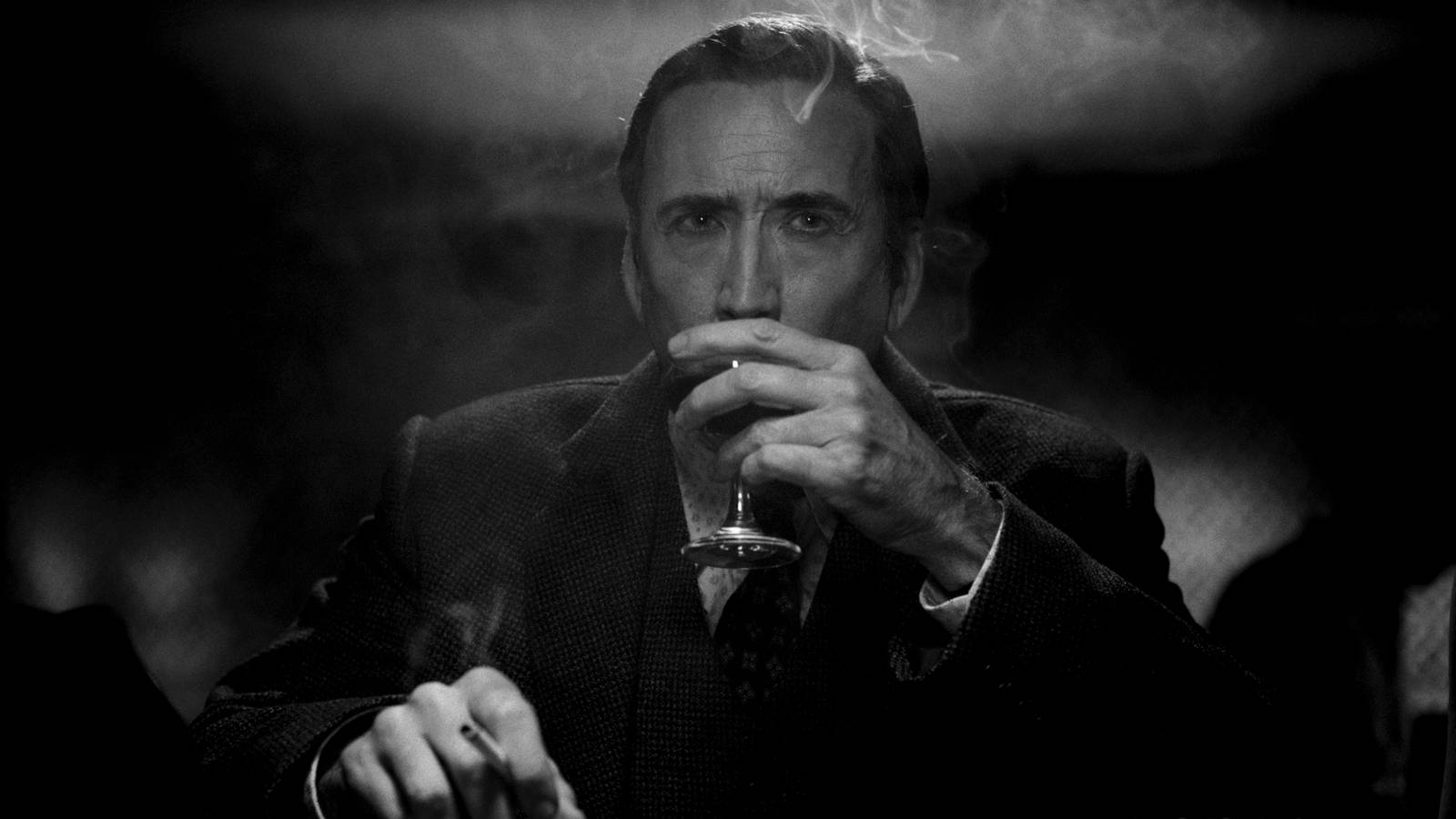
Spider-Noir is out now, and while the Prime Video series is nothing like the live action Spider-Man films that have preceded it, the show is quite a bit like the films it’s inspired by (minus the web-slinging, of course). Being a hardboiled detective story populated with morally ambiguous characters, and accented by moody lighting and a running inner monologue, the show draws heavily from the genre known as “film noir.” Coming into prominence in the 1940s and 1950s, film noir covers a range of genres, but the films are mostly crime dramas, often with a detective or private eye at the center. They’re also fairly cynical in nature, as they depict a corrupt world informed by the desperation of the Great Depression and the horrors of World War II.
In a recent interview with Polygon, the director of Spider Noir’s first two episodes shared which movies informed the look and feel of the series. He mentioned four of them, and along with those I included a handful of personal recommendations in the list below, for those who are all done with Spider-Noir and find themselves itching for a bit more of that same moody vibe.
1
Chinatown (1974)
Directed by Roman Polanski (yes, that Roman Polanski), Chinatown stars Jack Nicholson as J. J. “Jake” Gittes, a private detective in 1930s Los Angeles who is hired by a woman named Evelyn Cross-Mulwray (Faye Dunaway) to investigate her cheating husband. Throughout the case, Jake gets pulled into a web of murder and corruption that puts his life in danger.
If you’re new to film noir, Chinatown is a good place to start for a few reasons: it’s fairly modern (or at least it’s comparatively modern in the context of the films on this list); it’s in color; and it stars a guy who everyone still knows and loves. The film is often cited as one of the greatest films ever made for the way it blends noir elements with those of a more modern psychological thriller. While made outside of the golden era of film noir in the 1940s and 1950s, it’s probably the best-ever example of neo-noir, which is why it’s not too surprising that Spider-Noir director Harry Bradbeer cited this as an influence (as Spider-Noir is also, technically, neo-noir since it was made outside of the 1940s and 1950s).
2
Casablanca (1942)
Another suggestion by Bradbeer, and another movie often cited as one of the greatest films ever made is Casablanca. Directed by Michael Curtiz, the film is a love story between an American expatriate (Humphry Bogart) who runs a nightclub in Morocco during World War II, and his ex-lover (Ingrid Bergman), who seeks him out to help with getting her husband to escape Nazi-controlled territory.
With unparalleled romantic chemistry between Bogart and Bergman and an exciting, high-stakes story set during WWII, Casablanca is every bit the great romantic epic and the great film its reputation promises. Being more of a romance movie and a war picture, Casablanca is not generally considered as film noir, though it does feature a number of the standard visual elements, like the stark lighting and smoky environments. The character of Rick Blaine is possibly Bogart’s greatest work, and since Nicolas Cage was basing his Spider-Noir character off of Bogart, it’s obvious why he and Bradbeer would consult this film.
3
Touch of Evil (1958)

Written and directed by Orson Welles, Touch of Evil centers on Mexican prosecutor Ramon Miguel “Mike” Vargas (Charlton Heston), who is honeymooning with his American wife (Janet Leigh) in a Mexican bordertown. The vacation is interrupted though when a nearby car bomb that entered America from Mexico kills two people and Vargas goes to investigate. Before long, he sees himself tangling with a corrupt American cop and a Mexican crime boss that both have it out for him.
The first true noir film from the classic noir era on this list, Touch of Evil leans heavily into the crime story part of the genre. The movie is especially beloved for its cinematography, as it contains wildly stylized camera angles and direction, along with low-key lighting and heavy shadows. Bradbeer cited this film on his list of inspirations, which must have informed the darker moments of Spider-Noir, like the dimly-lit street scenes.
4
The Killing (1956)

Stanley Kubrick’s The Killing was Bradbeer’s final source of inspiration mentioned in the interview and it likely informed the grittier elements of Spider-Noir depicted in the crime empire run by Silvermane (Brendan Gleeson).
The Killing follows recently-released ex-con Johnny Clay (Sterling Hayden), who hatches a scheme with a crew of other criminals to pull off a robbery at a racetrack. The film was Kubrick’s third movie, released when he was 28 years old, and it made waves at the time for how bold and violent it was. Combining all the best elements of film noir, action thrillers and heist films, The Killing still stands as an excellent film, even if it’s overshadowed by the rest of Kubrick’s monumental filmography.
5
The Maltese Falcon (1941)
The Maltese Falcon is the third film on this list that’s often cited as one of the best movies ever made. It’s also the quintessential noir film, which is why I was a little bit surprised that Bradbeer didn’t mention it during our conversation. It may very well have informed him and/or Nicolas Cage though, as it’s another Humphrey Bogart movie and in this one, Bogart plays private eye Sam Spade, one of the most famous and influential detective characters in the history of fiction. The reason for the praise is that Spade redefined them altogether. Before Raymond Chandler created him for the 1930 novel The Maltese Falcon, investigators were generally polished super-geniuses like Sherlock Holmes and Hercule Poirot. After Spade, however, a great many detective characters were far more layered.
Directed by John Huston, The Maltese Falcon sees private investigator Sam Spade get wrapped up in the hunt for a priceless artifact which is being sought by an array of shady (and wonderfully entertaining) characters. It’s a great movie and the definitive noir film.
6
The Thin Man (1934)

W. S. Van Dyke’s film The Thin Man is often regarded as “proto-noir” as it came before the genre was fully realized in the 1940s. In it, William Powell stars as Nick Charles, a retired detective who gets tangled up in a missing persons case on a return trip to his former home of New York City. While it includes a femme fatale and the investigator-in-over-his-head tropes that would later be prominent in film noir, it’s more of a comedy than anything else, with snappy writing and funny characters. I include it here because, though Spider-Noir is not primarily a comedy, much of it is very funny and in the same kind of fast-paced, dialogue-heavy way that The Thin Man is.
7
Who Framed Roger Rabbit (1988)
But if all this black-and-white business is too much for you, you can always turn to the beloved live-action/animated feature Who Framed Roger Rabbit, directed by Robert Zemeckis. Aside from being a great comedy and a technical marvel, at its core the film all derives from noir. It takes place in 1947, right in the middle of noir’s heyday, and it focuses on hardboiled, hard-drinking private eye Eddie Valiant (Bob Hoskins) as its central character. It’s also a pretty intricate mystery and contains one of the most memorable femme fatales in cinema history.