
![2nd Apr: Alkhallat+: The Series (2026), 4 Episodes [TV-14] (6/10)](https://occ-0-1081-999.1.nflxso.net/dnm/api/v6/0Qzqdxw-HG1AiOKLWWPsFOUDA2E/AAAABf8NOjpdXD0BgZEqYZWShqlJRGGF2GI9G1dsl80mh_sKUJFrX5T6tNK4vEL58PfLUNSz2eYS4XZikQmyt0Vm1tXsRPB2cdxAa8K-PN27Je0IAHPbZhRTRWJ4Mauw7MN3FheOFpbUj6lQEjgsnrtmoL-xeHCN1MuRdQR-tzrM7OFDGw.jpg?r=65b "2nd Apr: Alkhallat+: The Series (2026), 4 Episodes [TV-14] (6/10)")





The Off-Broadway Theatre Review: NYTW’s Tartuffe
By Ross
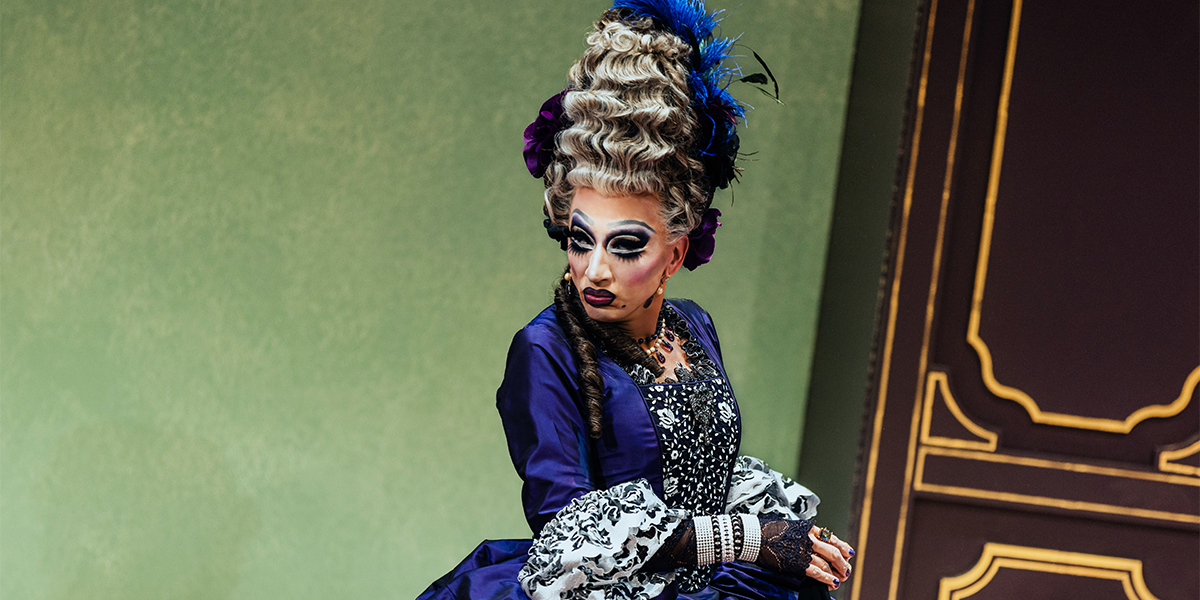
From the moment the astonishing Bianca Del Rio storms the stage as Mme Pernelle, New York Theatre Workshop’s new adaptation of Tartuffe announces itself as something bracing, dangerous, and unexpectedly precise. “RuPaul’s Drag Race” winner Del Rio does not merely enter the play; she grandstandingly ushers us into its rhythm and rhyme. And that’s no small feat. Lucas Hnath (Dana H.) has crafted a contemporary adaptation that lands crisply in her mouth, each couplet snapped into focus with brittle authority and ferocious comic intelligence. She understands exactly where the joke lives, how the language should bite, and how tone can turn verse into weaponry. For those opening scenes, Tartuffe, as directed by Sarah Benson (PH’s Teeth), feels thrillingly alive, a comedy sharpened by timing, diction, and an actor who knows how to command both language and room, that unfortunately, as the play unfolds, becomes something of a liability elsewhere in the telling of this tale.
After the sharply defined Del Rio exits, the production never quite regains that level of linguistic electricity, though it does not entirely collapse either. The rhymes begin to wobble, occasionally drawing attention to themselves rather than serving the joke, the idea, or the intention. Hnath’s script aims for a modern directness, and at its best it succeeds, stripping Molière of museum dust and restoring his bite. But at its weakest, the verse begins to feel absurdly thin and undercooked, as if drafted for speed rather than polish. The result is an uneven textual experience, one that alternates between smart propulsion and moments of verbal slackness that stall momentum and connectivity.

Starring Matthew Broderick (Irish Rep’s The Seafarer) as Tartuffe, the actor strides in as one of the production’s most intriguing but complicated choices. Rather than playing the fraud as oily or overtly sinister, Broderick opts for quiet mischief and a lightly coiled intelligence. He is mostly watchable in the extreme, using understatement as strategy, allowing Tartuffe’s power to emerge through patience and insinuation rather than volume. But that same stance doesn’t entirely hold us enthralled, that is, until the last scene, when, finally, a different aspect of character is unveiled. And we applaud the rewiring. David Cross (“Arrested Development”), delightfully dim as Orgon, complements this approach, crafting a portrait of blind devotion that is absurd without becoming completely cartoonish. Their dynamic anchors the comedy, even when the surrounding directorial choices feel less certain.
The ensemble offers a number of considerable pleasures. Amber Gray (Broadway’s Hadestown) is razor-sharp and clever as Elmire, navigating the character’s intelligence and moral clarity with precision and dry wit; she is acutely aware of what is happening and exactly what must be done to reclaim control of both house and husband.
Lisa Kron (Public/Broadway’s Fun Home), meanwhile, is hysterically funny as the production’s grounding voice of reason, delivering each line with a deadpan lucidity that cuts cleanly through the surrounding obliviousness. While nearly everyone else seems blind to the obvious danger in front of them, Kron’s performance understands the stakes, and that clarity becomes its own kind of comic weapon.

The wide-eyed Emily Davis (Broadway’s Is This A Room) is superb as Mariane, embodying her dilemma with a captivating physical specificity that never lets the character dissolve into mere farce. Throughout the cast, including the dynamic Ryan J. Haddad (Hi, Are You Single?), the funny and flexible Ikechukwu Ufomadu (“Ziwe”), and the delicious Francis Jue (Broadway’s Yellow Face), there is a sense of strong individual work centered in clarity and commitment, even when the production as a whole struggles to unify its elements.
Visually, the production is, for the most part, a delight. The costumes by Enver Chakartash (Broadway’s Stereophonic) blend contemporary silhouettes with seventeenth-century flair, creating a heightened world that supports the play’s theatricality without suffocating it. Color, texture, and exaggeration all serve the comedy well, and the design elements consistently suggest a production that understands spectacle as argument. Less successful are some of director Benson’s recurring motifs, including tennis imagery and stray dance moves, which feel imposed rather than discovered. These flourishes rarely clarify theme or character, instead contributing to a sense of stylistic noise that the production does not always know how to integrate.
That inconsistency in direction ultimately proves Tartuffe’s greatest obstacle. The play ultimately emerges as an uneven but frequently entertaining revival, buoyed by a formidable cast and moments of genuine theatrical pleasure. It never fully comes together into a unified vision, and its smartest impulses are sometimes undermined by choices that prioritize cleverness over coherence. Yet the production is at its best when it trusts performers like Del Rio, Kron, and Gray to guide the tone and unlock the text. When that happens, Molière’s comedy feels sharp, dangerous, and bracingly funny, buoyed by a core idea that remains potent, a comedy of collective denial and moral laziness that feels uncomfortably current. And even when it doesn’t, the play still amuses, but with diminishing returns. This is a Tartuffe that provokes laughter and debate in equal measure, even as it struggles to fully deliver on its own promise.