






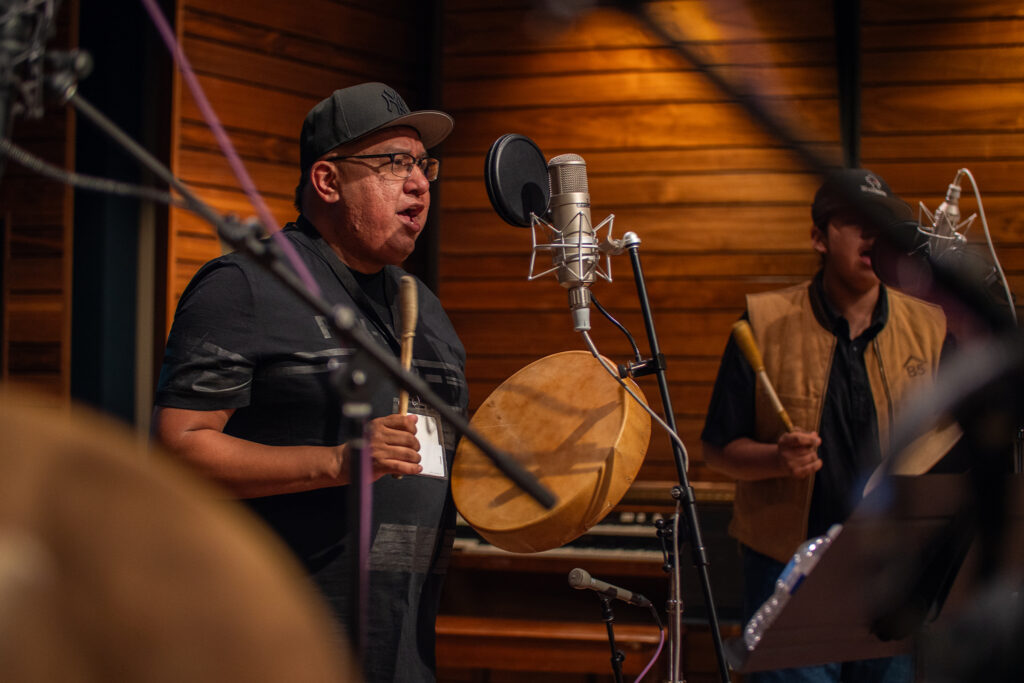
A recording bursary offered through the National Music Centre is back for its fourth year, and it’s a serious game-changer for Indigenous musicians in Canada.
“Ohsoto’kino translates in Blackfoot to ‘recognise the voice of’, and that perfectly illustrates what the programme is about,” said Dave McLeod, Chair of NMC’s National Indigenous Programming Advisory Committee. “We’re recognising Indigenous voices and creating a platform to enter a professional studio setting so we can showcase new music from the community.”
Canada has long been a hub for developing Indigenous talent, and the music scene has gained serious forward momentum in the last decade. Past recipients of the Ohsoto’kino Recording Bursary include JUNO Award-winning powwow and round dance artist Joel Wood, Inuit-style throat singing duo PIQSIQ, country singer Chelsie Young, singer-songwriter Raymond Sewell, traditional groups Blackfoot Singers and Warscout, among others.
Open to First Nations, Métis, and Inuit artists across Canada, the annual bursary supports both traditional and contemporary Indigenous musicians. Two selected recipients will receive a week-long recording session at Calgary’s Studio Bell, home of the National Music Centre, with access to world-class studios and NMC’s renowned “living collection” of musical instruments.
The National Music Centre is located on the traditional lands of the peoples of the Treaty 7 region, including the Blackfoot Confederacy (make up of the Siksika, Piikani, and Kainai First Nations), the Tsuut’ina First Nation, and the Stoney Nakoda (including the Chiniki, Bearspaw, and Wesley First Nations). The City of Calgary is also home to the Métis Nation of Alberta, District 6.
Artists are selected by NMC’s National Indigenous Programming Advisory Committee, and submissions are welcome from all musical genres. Applications are now open and close on March 1, 2026, at 11:59 pm MT.
Developing voices
Thanks to the generous support of TD Bank Group, the National Music Centre’s Ohsoto’kino Indigenous Programming Initiative has empowered artists since 2022. It was recently renewed for an additional three years, indicating an unwavering commitment to developing Indigenous talent in Treaty 7 territory and beyond.
“When we speak of the Indigenous community, we’re talking about a lot of artists that are getting a clear sense of their voice, a clear sense of where they come from, and cultural grounding as well,” said McLeod. “Those are all aspects of becoming, or being, an Indigenous artist. There might be language involved, there might be protocols to what you’re singing about, there might be community relationships… that all impacts the music, the integrity of what you’re doing and where it’s coming from.”
Since 2015, Canada has worked with Indigenous partners to respond to the Truth and Reconciliation Commission’s 94 Calls to Action. The 83rd call to action directly prioritizes funding and collaborative opportunities for Indigenous and non-Indigenous artists.
“We call upon the Canada Council for the Arts to establish, as a funding priority, a strategy for Indigenous and non-Indigenous artists to undertake collaborative projects and produce works that contribute to the reconciliation process,” it reads. This bursary is a direct response to that call, and it’s actively working to promote collaboration amongst Canada’s Indigenous community — including 630 First Nations communities representing more than 50 distinct Nations and languages.
“Indigenous music and Indigenous artists are celebrated at National Music Centre like nowhere else in the country,” added McLeod.
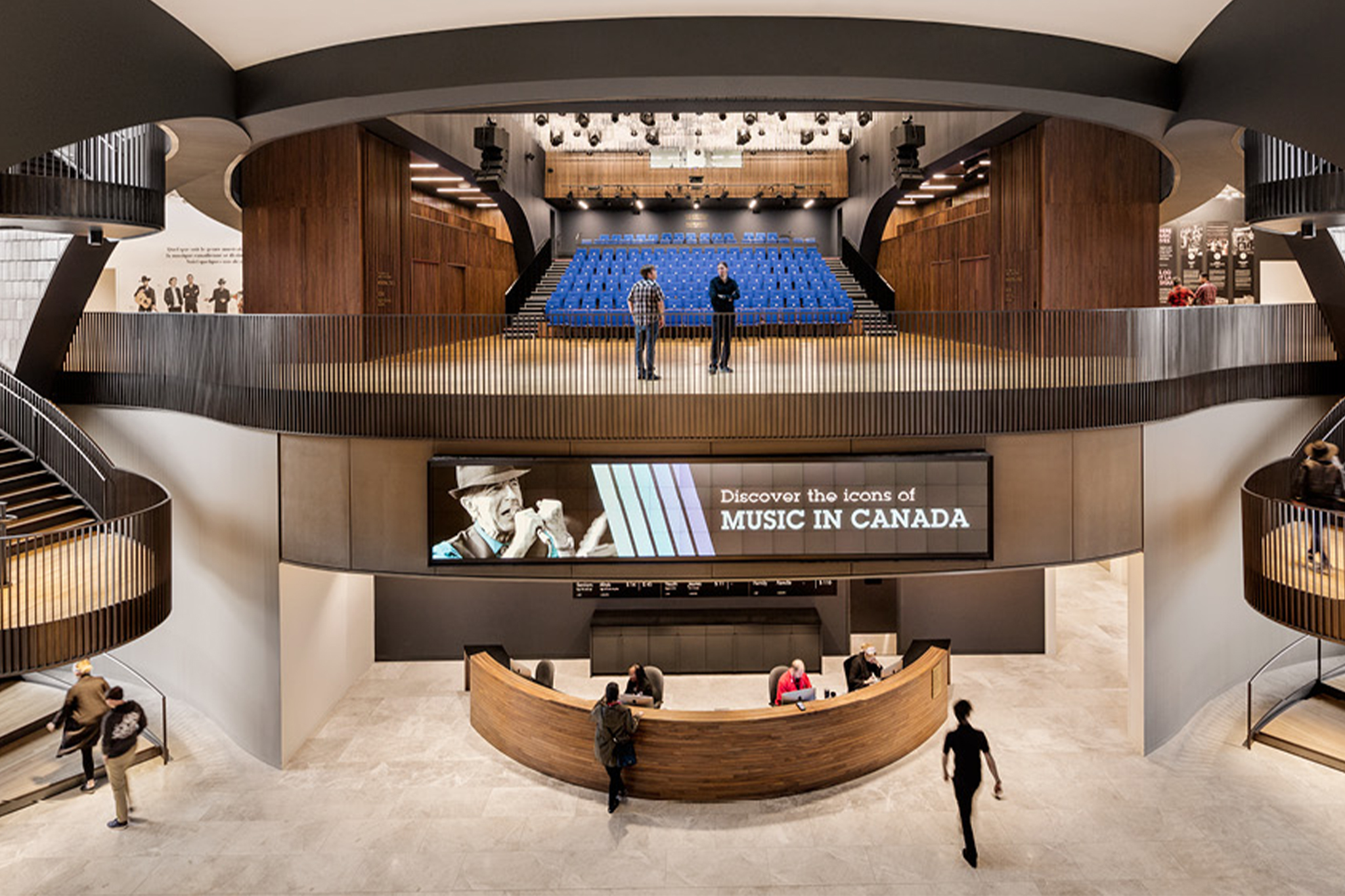
World-class instruments and recording studios
The National Music Centre boasts a “living collection” of more than 200 instruments, something that McLeod says is particularly eye-popping for musicians.
Twenty per cent of the living instruments are maintained in functioning order, and applying artists can browse the current list of equipment available. All instruments are maintained by NMC’s experienced in-house technicians and together span more than 450 years of music history.
“When musicians arrive at the National Music Centre, they have the opportunity to play world-class instruments that you can’t find in too many places in the country,” says McLeod.
The recording studios at the National Music Centre are highly coveted amongst local musicians, and work by audio engineer Eric Cinnamon has shown up on records including Shaela Miller’s After the Masquerade and Bennett Mitchell’s Mouse.
“[Recipients] will have full use of that equipment,” said McLeod. “Plus, they have a selection of studios to use, and the array of equipment in there is mind-blowing. You’ve got equipment used by the Ramones to the Rolling Stones.”
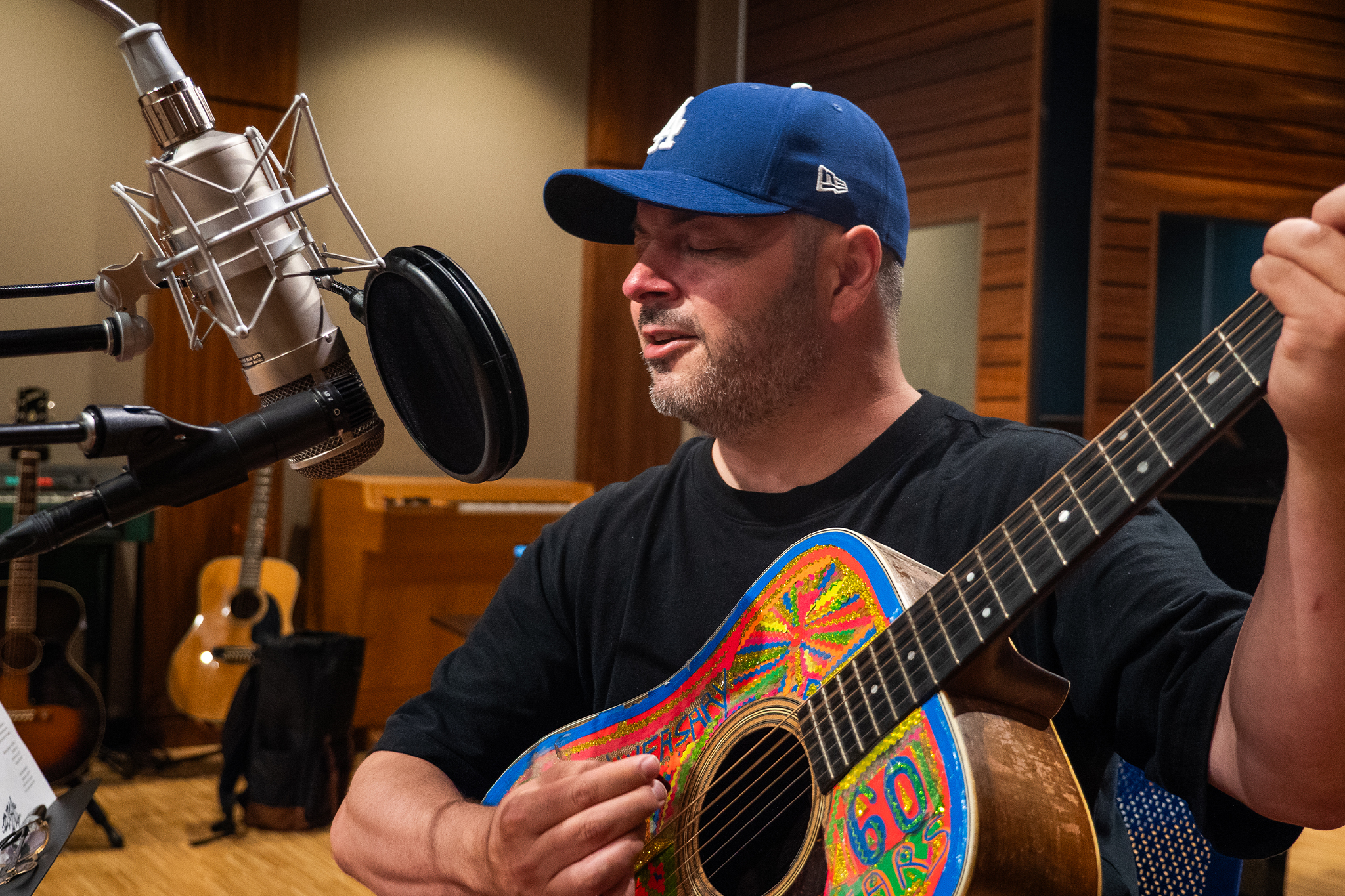
Applications open until March 1, 2026
Indigenous musicians across Canada are encouraged to apply, and the selection committee will accept applications until March 1, 2026.
“With access to world-class recording studios, a vast collection of instruments, and expert guidance, artists are given the creative tools to make their dreams possible,” says McLeod. “We’re excited to hear what comes next.”
When: Applications accepted until midnight, March 1, 2026
Where: Studio Bell, home of the National Music Centre — 850 4th St. SE, Calgary
Related Posts:
A free live concert with Canada’s top emerging music talent is coming to Calgary
9 smaller venues where you can experience great live music in Calgary

Em Medland-Marchen
Em is a Staff Writer for Curiocity Calgary. They are passionate about live music, rose gardens, iced coffee, and walks along the Bow River.
Read articles