





The developers at Wildlight Entertainment, the studio behind Highgaurd, had worked under a big umbrella before; the studio’s founders created Titanfall and developed Apex Legends under publisher EA, about as big of a gaming company as it gets. But four and a half years ago, they were ready to set off on their own.
“We had a vision for building a studio, which is Wildlight, that could be a home for a lot of talented people that we had worked with,” Wildlight co-founder and CEO Dusty Welch told Polygon during an interview at a recent press event for Highguard, Wildlight’s debut game.
Wildlight started with a small team of five or six people and remained that size for some time before gradually ramping up over the years. It’s now about 100 people, around 60 of whom previously worked on Apex Legends and Titanfall. “We wanted to create an environment that was special and unique,” Welch said, “and not have the burdens that you might get at a big publisher at a big company.”
The team at Wildlight knew what it wanted to stand for, and also what type of game it wanted to make. “We started setting some very light guidelines for us, like creating a multiplayer competitive shooter was one of the things that we wanted to tackle, lean into our strengths,” co-founder and studio head/game director Chad Grenier said.
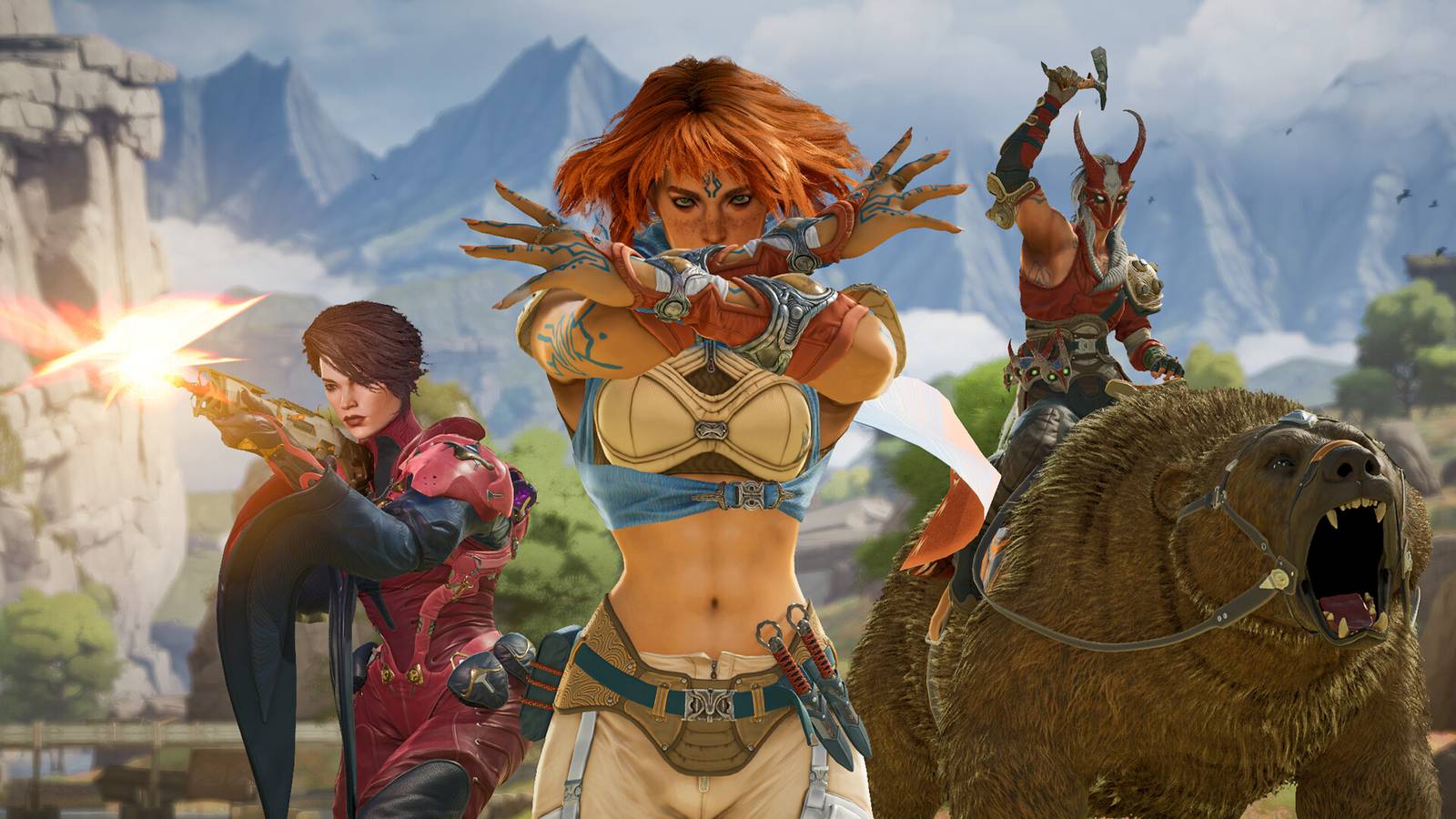
Leaning into those strengths resulted in Highguard, Wildlight’s first project — a co-op multiplayer game that looks to invent a subgenre of first-person shooters. In it, players fight for control of an item that will allow them to break into the opposing team’s base, opening it up for them to blow up certain objectives to obtain victory. It’s a bit like a MOBA, but through the lens of Apex Legends.
That creative swing has proven to be polarizing so far. While Highguard gained some positive early buzz from a pre-launch preview event, players haven’t been as high on it now that it’s in the wild; it currently sits at a 67 on Metacritic and has over 23,000 “Mixed” reviews on Steam. It’s not a runaway success, but it has found some players who have resonated with it amid some wider confusion over what it’s doing. Getting the game out at all was a bit of a victory for Wildlight, though, and one that only came after years of development following a period where the studio had to figure out what its debut game was even going to look like.
“We explored so many different directions early on, even as much as a game design per day by every employee,” Grenier said. “So, okay, it’s Tuesday. What’s everyone’s Tuesday pitch? Okay, well, let’s come back on Wednesday. Everyone come with a new pitch.”
What matters most is that the game is loved by the people who played it.
Many of those ideas were tossed out. The ones that stuck around? They’d provide some guidance for Wildlight. “What this team is really good at doing is picking an initial direction and letting it take you where it takes you, where we don’t hold onto any particular idea too preciously,” Grenier said. “It’s a bit of a wild ride, but the result is that you get something very design-focused that the team is really into and you sort of solve all the other problems later. […] What you’re playing today was three years of wild exploration and a year of polishing what’s out there right now.”
Though Wildlight batted around plenty of ideas, one thing was always certain: The studio was going to make a shooter, despite how crowded of a genre that space is. In the years since Apex Legends launched in 2019, Call of Duty has remained a tentpole of the genre, Battlefield returned to top of the food chain with Battlefield 6, Arc Raiders and Helldivers 2 have recently exploded in popularity, and Marvels Rivals offered a hero shooter built around the most popular superheroes around. But Wildlight isn’t worried about any of them.
“I don’t think that there’s a game out there that is like ours,” Grenier said. “I think there’s games out there that have elements that you’ll see in our game, but I honestly feel that nothing out there is a similar experience.”
Welch shared that confidence, and shot down the notion of “shooter fatigue” among gamers. “The metrics, the data shows there’s more play time with more monetization happening. […] Shooters as a category continue to be the rocket fuel that propels the gaming space.”
Creating something new in the shooter genre is as big of a swing as any, but that’s exactly what the developers at Wildlight like to do. Lead designer Mohammad Alavi noted how “one of the biggest problems with having the success of Apex [Legends] is you’re kind of locked into the success of Apex, right?” That success limited the risks the team at Respawn Entertainment could take, but being independent allowed Wildlight to start taking risks again: “We try to hopefully be creative and innovate in the shooter space,” Alavi said.
That creativity doesn’t come without challenges, however. “The hard part is trying to do that all from scratch at the same time,” product and publishing VP and game writer Jason Torfin said. “So we’re starting on a new engine, we are starting a new IP. We have no tech. We’re building a team from scratch. […] You try to do all of that at once and you realize, ‘Oh, there’s a reason why a lot of these companies are big.’ There’s a lot of things to do.”

Wildlight does have an advantage over other newly formed independent studios in that a good chunk of its team has worked together for years across different games. “You have this built-in trust and this way of working and communication that makes a lot of those challenges surmountable,” Torfin said.
As an independent studio, Wildlight isn’t beholden to shareholder values or meeting certain profit benchmarks. “We’re fortunate to be independent,” Welch said. “So we have the opportunity to meet our goals,” which is to have Highguard, and by extension Wildlight, “be beloved by as many people in the world as they can and build a highly respected studio.”
Reaching as many players as possible was a large factor in making Highguard free to play. “There’s no barrier to entry — play our game, have an appreciation for it hopefully, and let us know all those experiences,” Grenier said. “That’s what I love about making games.”

Other shooters have attained success at mid-tier prices, like Helldivers 2 and Arc Raiders (both of which retail for $39.99), and, of course, Call of Duty still ranks as a best-seller at $69.99. “Did we at least look at [charging for Highguard], because you’ve got some examples over the past four years of people doing different business models? Sure, but it just didn’t fit in with where we wanted to go as a company, our long-term goals,” Welch said. (Highguard is monetized through cosmetic microtransactions.)
To Wildlight, creating a game that “people love and becomes a part of them” is what’s most important, according to Grenier. “Whether it gets a thousand people or a hundred million people, it doesn’t matter. What matters most is that the game is loved by the people who played it.”
![31st Jan: The Social Network (2010), 2hr [PG-13] – Streaming Again (6.9/10)](https://occ-0-953-999.1.nflxso.net/dnm/api/v6/Qs00mKCpRvrkl3HZAN5KwEL1kpE/AAAABSNZffQ2uImXGFir9S_mH2_OG_5bG_N276LUb_FGh665N-aVa-pge_UD7C4kzCBeTb7hzhjw5ONxamrZYwoBCxNlSCNOL9Y0KHeJ.jpg?r=7db "31st Jan: The Social Network (2010), 2hr [PG-13] – Streaming Again (6.9/10)")

