

![3rd Apr: The Truth and Tragedy of Moriah Wilson (2026), 1hr 37m [TV-14] (6/10)](https://occ-0-8151-1007.1.nflxso.net/dnm/api/v6/0Qzqdxw-HG1AiOKLWWPsFOUDA2E/AAAABTy08Qxggik5OkHNDsFcEg56qVeTZpjgXGndrk-p95_fx_15dtiJdQhqX2SHYSaH9df3S9qsYxOZvdINhTYEPrqYbCkE9MkkGcgf9UcIvINdLK8sE8EuWBPtFIuQ44z4mn8tYzxaT54VzR35WDAl-u5FpeLaeVfGePRXRFUQj6jIPw.jpg?r=0c5 "3rd Apr: The Truth and Tragedy of Moriah Wilson (2026), 1hr 37m [TV-14] (6/10)")



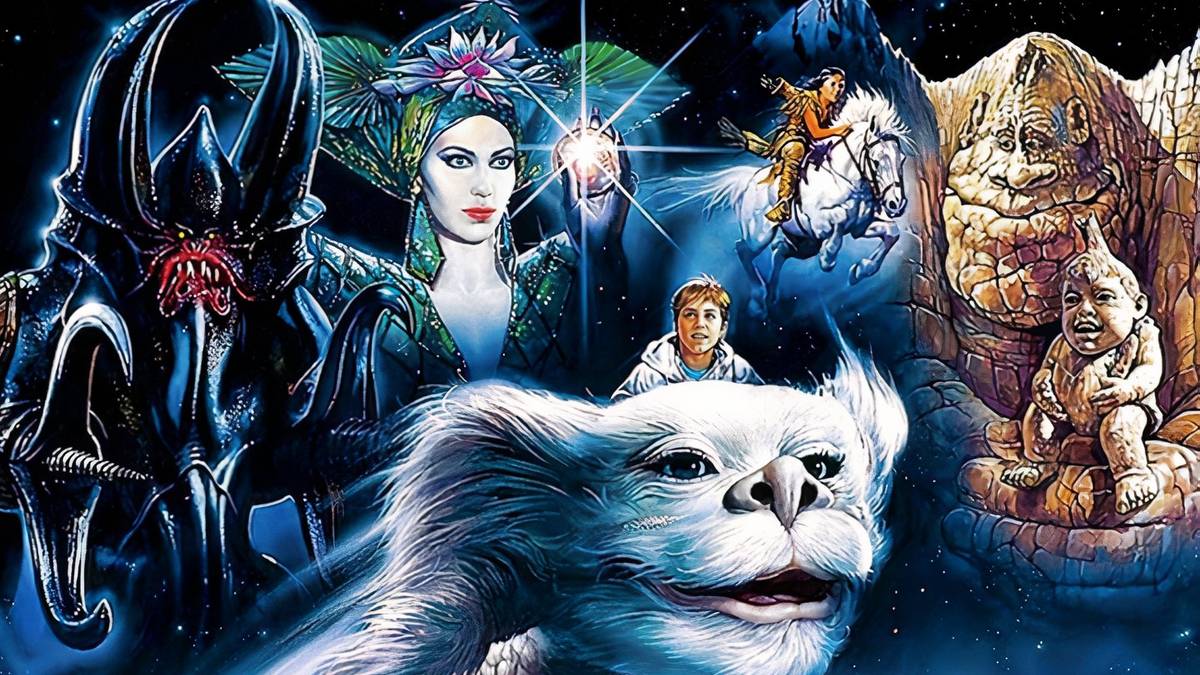
The end of the 1984 fantasy film The NeverEnding Story is truly triumphant.
After the young boy Bastian (Barret Oliver) spends the entire movie reading a book about the brave child warrior Atreyu (Noah Hathaway) and the dozens of whimsical creatures that populate the land of Fantasia, he is literally absorbed into the book and told by the childlike empress (Tami Stronach) that, despite Fantasia’s recent destruction by the mysterious “Nothing,” he can restore everything with the power of his imagination. All he has to do is wish Fantasia back into existence. When he asks how many wishes he gets, the empress tells him, “As many as you want.”
Then the movie jumps to a joyous Bastian riding on the back of the majestic, fluffy wish dragon Falkor (voiced by Alan Oppenheimer) as they fly through a fully-restored Fantasia. He even flies Falkor all the way back to the real world to hilariously seek revenge on some bullies who tormented him early in the film.
That ending is maybe the most uplifting thing ever put to film, so it’s only natural for the viewer to want to capitalize on that feeling. But I implore you, no matter how high you’re feeling at the end of The NeverEnding Story, do not try to extend that ebullience by turning to the 1991 sequel The NeverEnding Story II: The Next Chapter, a movie so bad and unimaginative that it will quickly fill you with that same Nothing that enveloped Fantasia.
In an effort to have this dissuasion sink in, I’ll tell you that nearly everyone in the movie was recast, save for the surly old bookstore owner Carl Conrad Coreander (Thomas Hill). The role of Bastian was taken over by the late Jonathan Brandis who, despite being a competent young actor, never feels like the same kid. Both Atreyu and the childlike empress are back too, but with new actors they also feel different.
Some of the more magical creatures return, but there’s something wrong with each of them. For example, Falkor has a very different, deeper voice and, in place of his soft brown eyes, his irises are now blazing red. The Rockbiter is back too, but now he has a baby, which is absolute nightmare fuel.
The movie even tries to give us a new NeverEnding Story song which nobody on Earth or in Fantasia ever, ever wanted.
However, the overall plot is really the worst thing about it. In the sequel, Bastian is sucked into Fantasia in the very beginning of the movie (which I guess is fine). Once he arrives, an evil witch casts a spell on him where: every time he makes a wish, he loses a memory. By the end, he even loses his last memory of his deceased mother. So even though wishes are the most wonderful, magical thing in The NeverEnding Story, wishes are bad in The NeverEnding Story II.
Okay, hopefully that’s enough to deter you from The NeverEnding Story II, because now I’d like to point out the one and only good thing that happened as a result of the film.
When The NeverEnding Story II: The Next Chapter came to theaters 35 years ago in February 1991, it temporarily revived an important tradition for Warner Bros. by being distributed with a new Bugs Bunny short — the first theatrical Bugs Bunny cartoon since 1964.
After being a standard part of the moviegoing experience since the 1930s, by the 1960s belt-tightening by major movie studios — plus the rise of television animation — led to the end of short, usually seven-minute cartoons being distributed with films of all types (not just kids movies). While the Looney Tunes characters and shorts were thriving on television at that time thanks to preexisting theatrical shorts being repackaged for TV, new material with the characters waned for decades on end.
But when Bugs Bunny’s 50th birthday was being commemorated by Warner Brothers in 1990 via a big TV special and all kinds of merchandise, the studio also decided to create a brand-new theatrical short in Box-Office Bunny. (It didn’t hit theaters until early 1991, but since Bugs Bunny technically first appeared in 1938, it’s best not to quibble over the dates).
Box-Office Bunny was directed by Darrell Van Citters and it begins with Bugs Bunny’s home being covered up by a new multiplex. When he then pops his head out from his hole, he appears in a busy movie theater, so he decides to chill and check out the movie. Unfortunately, the usher is Elmer Fudd, who asks for a ticket (which, of course, Bugs doesn’t have). A moment later, a chase ensues between Bugs and Elmer Fudd and, soon, a theater-going Daffy Duck gets into the mix too.

Besides the anniversary, Box-Office Bunny is significant in that it was one of the first major appearances by the characters following the death of Mel Blanc, the prolific voice actor who’d played basically all of the Looney Tunes characters since the late 1930s. Here, Bugs, Daffy and Elmer were played by Jeff Bergman, who would go on to voice the characters many times since.
In truth, Box-Office Bunny isn’t a great Looney Tunes short. The jokes are fairly predictable and the five-minute runtime seems noticeably shorter than the typical seven minutes the cartoons were given in the classic shorts. But the very fact that it was made and put into theaters was a win for the character and for Looney Tunes as a whole, which originated on the big screen. And while no one could ever truly replace Blanc, Bergman’s near-seamless transition into the characters sent the signal that the Looney Tunes could exist past Blanc’s lifetime.
So while The NeverEnding Story II: The Next Chapter is truly a terrible sequel that quite literally undermines the whole point of the first film, I regrettably have to concede that, by virtue of its pairing with Box-Office Bunny, there is one good thing about it. Which, I should point out, is one more positive attribute than The NeverEnding Story III has — don’t even get me started on that movie.