![3rd Apr: Sampradayani Suppini Sudhapoosani (2026), 2hr 24m [TV-14] (6/10)](https://occ-0-858-92.1.nflxso.net/dnm/api/v6/0Qzqdxw-HG1AiOKLWWPsFOUDA2E/AAAABUkloexpnDgSlcIC7bdaJ9RDAjdlOuHW4PAPMzwvElhG-EcxuK0FK_fm09-GW0aQjq505ObK3qnQev7c7DBjvO19zPV4-kSegg0GC1A3YmDVpmJ5OSEnuHeY-askyQRC0CNNoQ7LZfsgfLkoxrQcwshOIbtkkUZqqwJF1WUXfMRVOg.jpg?r=295 "3rd Apr: Sampradayani Suppini Sudhapoosani (2026), 2hr 24m [TV-14] (6/10)")





Government Shutdown 2026: House set for key vote
Virginia Democratic Congressman James Walkinshaw has introduced a bill to protect and pay all federal employees and service members during shutdowns. He spoke with FOX 5 to discuss the proposal.
WASHINGTON – Another government shutdown is looming as Congressional lawmakers continue to squabble over ongoing Immigration and Customs Enforcement (ICE) actions.
What we know:
The sticking point of negotiations is funding for the Department of Homeland Security (DHS) in the wake of the fatal shooting of 37-year-old Alex Pretti at the hands of federal immigration authorities in Minneapolis.
Democrats are demanding several new restrictions on immigration enforcement, including that officers take off their masks and identify themselves and obtain warrants for arrest; they argue that these reforms are necessary to ensure transparency and public trust.
Republicans oppose tying policy changes to funding bills, arguing that DHS and ICE should be funded without conditions to avoid a shutdown.
The backstory:
Earlier this month, the House passed a roughly $1.2 trillion spending package to end the partial government shutdown that ran from Jan. 31 to Feb. 3. Lawmakers must now reach a deal by the end of the day Friday in order to avoid another shutdown.
Due to provisions laid out in President Donald Trump’s One Big Beautiful Bill, ICE itself would be minimally affected by another shutdown, but other DHS agencies, such as the U.S. Coast Guard and Secret Service, would be highly impacted.
Here’s a list of them:
Transportation Security Administration (TSA)
Around 95% of TSA’s employees are considered “essential,” according to the agency. This means that during a shutdown, they are required to continue working without pay.
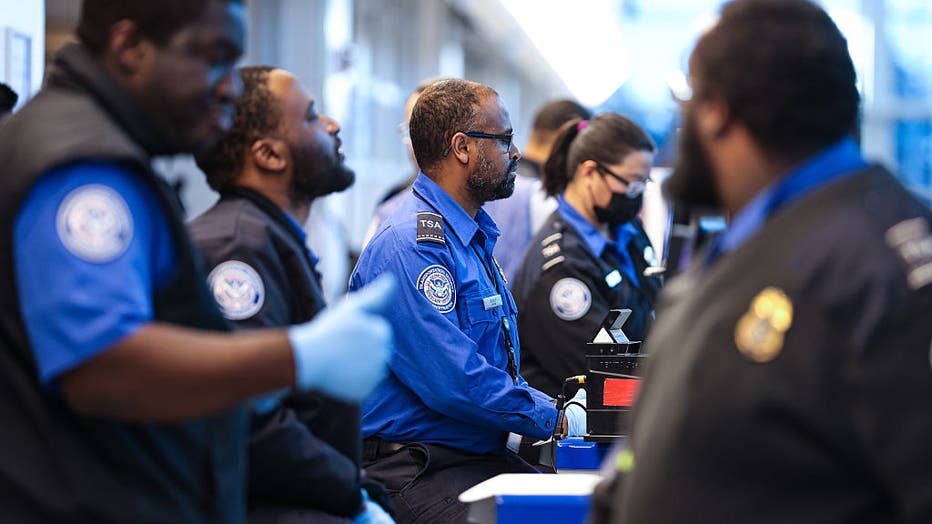
Transportation Security Administration (TSA) agents screen travelers at Ronald Reagan Washington National Airport (DCA) in Arlington, Virginia, US, on Monday, Jan. 26, 2026. Photographer: Valerie Plesch/Bloomberg via Getty Images
The longer a shutdown goes on, call-outs from these employees become more common, the agency states.
“Higher call-outs can result in longer wait times at checkpoints, leading to missed or delayed flights, which has a cascading negative impact on the American economy,” according to TSA.
Federal Emergency Management Agency (FEMA)
Similar to TSA employees, roughly 85% of FEMA’s employees are considered essential, meaning they too would be required to work without pay, according to a memo that’s since been deleted from DHS’ website, but is noted by POLITICO.
The agency would also continue to process disaster aid applications, but as Gregg Phillips, an associate administrator at FEMA testified on Wednesday, the agency’s remaining funds would be significantly pinched in the event of a major disaster.
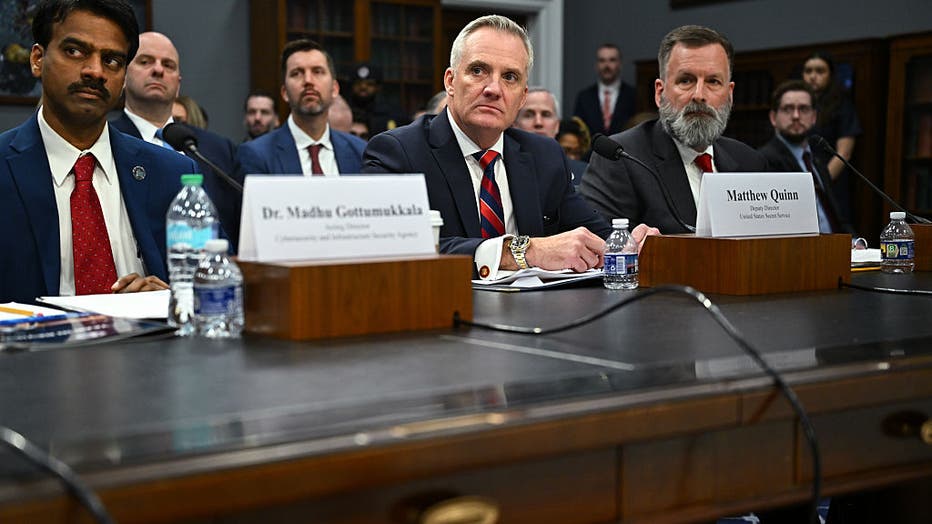
Dr. Madhu Gottumukkala, acting director of the Cybersecurity and Infrastructure Security Agency, from left, Matthew Quinn, deputy director of the U.S. Secret Service, and Gregg Phillips, associate administrator of the Office of Response and Recovery
U.S. Coast Guard
The U.S. Coast Guard is also funded by DHS, and not the Department of Defense, despite it being a branch of the military.
According to the maritime law enforcement agency, members working abroad would continue to do so. Like essential TSA and FEMA employees, members of the Coast Guard who are deemed essential—which is the vast majority of them—would continue to work.
“A funding lapse has severe and lasting challenges for our workforce, operational readiness and long-term capabilities,” Vice Admiral Thomas Allan Jr., acting vice commandant of the U.S. Coast Guard, testified Wednesday.
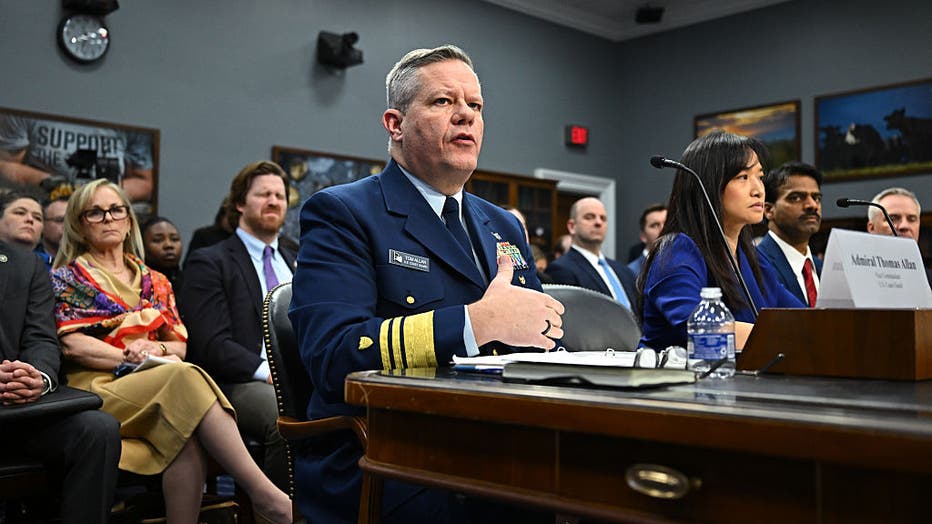
Vice Admiral Thomas Allan Jr. (far left), acting vice commandant of the U.S. Coast Guard, testifies during a House Appropriations Subcommittee on Homeland Security hearing in Washington, DC, U.S., on Wednesday, Feb. 11, 2026. Photographer: Graeme Slo
Secret Service & the Cybersecurity and Infrastructure Security Agency (CISA)
Although the majority of the Secret Service’s workforce would continue to work during another shutdown, those in lower level roles such as human resources are usually furloughed, as noted by POLITICO.
Only about a third of the Cybersecurity and Infrastructure Security Agency’s (CISA) employees are deemed essential, meaning they would also work without pay. The other two-thirds would be furloughed, according to GovInfoSecurity.
This agency defends the United States’ cybersecurity infrastructure against physical and cyber threats.
A shutdown would mean that essential training for those working within the agency would be delayed and the agency’s ability to defend its networks would be affected, according to Acting CISA Director Madhu Gottumukkala, who testified before the House Appropriations subcommittee on Wednesday as well.
The Source: Information above was sourced from NPR, New York Magazine, the Transportation Security Administration, PBS, POLITICO, GovInfoSecurity, the Cybersecurity and Infrastructure Security Agency and previous FOX 5 DC reporting.
![3rd Apr: The Truth and Tragedy of Moriah Wilson (2026), 1hr 37m [TV-14] (6/10)](https://occ-0-8151-1007.1.nflxso.net/dnm/api/v6/0Qzqdxw-HG1AiOKLWWPsFOUDA2E/AAAABTy08Qxggik5OkHNDsFcEg56qVeTZpjgXGndrk-p95_fx_15dtiJdQhqX2SHYSaH9df3S9qsYxOZvdINhTYEPrqYbCkE9MkkGcgf9UcIvINdLK8sE8EuWBPtFIuQ44z4mn8tYzxaT54VzR35WDAl-u5FpeLaeVfGePRXRFUQj6jIPw.jpg?r=0c5 "3rd Apr: The Truth and Tragedy of Moriah Wilson (2026), 1hr 37m [TV-14] (6/10)")