


![29th Apr: Allegedly with Ellison Barber (2026), 1 Episode [TV-MA] (6/10)](https://occ-0-1381-999.1.nflxso.net/dnm/api/v6/0Qzqdxw-HG1AiOKLWWPsFOUDA2E/AAAABcFYvCDbLMA6BBhdbHEEZjpPL8RHba_M0iOMuPWY1qTgbCVVeJmi_byeCcPcWA4_Iy78pPMLphu2812M07mA65vUd29QTxrRZxBxKWfrb4RhV3UuHFrQKIHD8pLX1x8nKaDQl9BhWwBfFWTSuB7KVxWC0LGh-qpGAwYrjwhpFlqy3U4_LSWW2FmUnbPD2NVChdKQ2l1OR1zzym2C__0Qf--HBLdCkSg0pRrwugjAedwQEpQic60sls6BO4bfHg54gfc11tWDlOMeM3-mZpdedjP_77MKqw_mTbUdxMtXTV2QMx7lMgHGg0xCeNpsQyGj6Gtoh-vLz06ztPRqs9zR-U9CSimc8QsqW514igP7uDU5xee_h1xjXmSdwTjIQg.jpg?r=a4a "29th Apr: Allegedly with Ellison Barber (2026), 1 Episode [TV-MA] (6/10)")




Playwright-actor Pamela Mala Sinha is in the spring of her creative life, with several projects on the go during the first third of 2026. In a trilogy of articles for Intermission, critic Nirris Nagendrarajah, a participant in Neworld Theatre’s Page Turn program, documents this fertile artistic period; his methods include interviews and extended behind-the-scenes observation.
This Q&A serves as the series’ second part. The first is available here.
A few days before Christmas, I met with Pamela at the Varda Lounge on the third floor of the TIFF Lightbox.
Since I had a movie to catch and she was in the area, it was a convenient setting for our conversation. Butterflies in my throat, I had saved us a table by the entrance, but as soon as she walked in, she gravitated to the centre, where there was more light, more space, more potential. It’s a sensibility I find she’s also demonstrated in her plays, which include 2022’s New and her first play: the multiple Dora Award-winning Crash. A filmed version, directed by Alan Dilworth, is in the final stages of development.
Crash, which premiered at Theatre Passe Muraille (TPM) in 2012, is a striking, poetic memory play. Narrated in the third person, The Girl — played in that production by Pamela — looks back at the deterioration of her father’s health while simultaneously confronting the traumatic aftereffects of a sexual assault. As Alan, who’s also its original director, puts it in the published script’s foreword, the play daringly brings to the stage “the universe inside the labyrinth of a girl’s mind.”
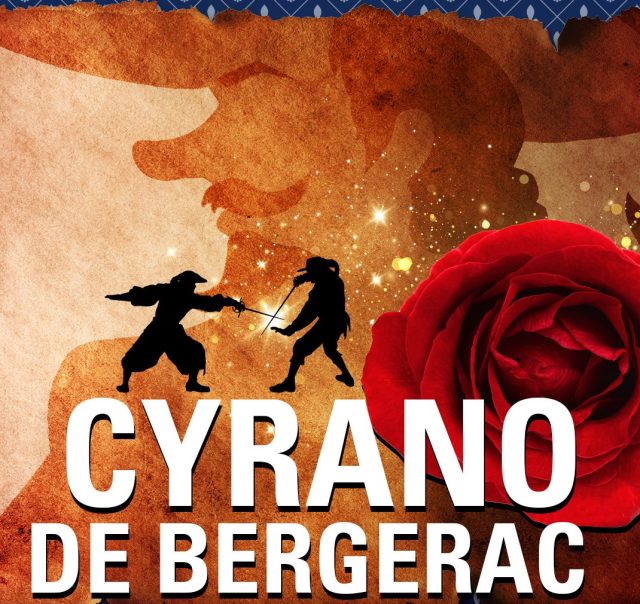
Having now closed after a two-week February run, the Montreal premiere of Crash — directed by Krista Jackson, starring Ghazal Azarbad, and produced by Montreal’s Imago Theatre — decisively re-positions Pamela’s relationship to it. The prospect of relinquishing her original vision and opening the work up to new possibilities prompted her to reflect on her artistic growth.
Over the course of 90 minutes, Pamela and I spoke about her trajectory from actor to first-time playwright with Crash, the frustrations and anxieties of being a working artist, and the way her family has consistently inspired both her creative and personal lives.
Our conversation has been edited for clarity and length.
Nirris Nagendrarajah (NN): You were saying, you’ve always wanted to be an actor?
Pamela Mala Sinha (PMS): All I wanted to do was act — to interpret other people’s gorgeous work. Writing was never the plan.
NN: Was there a moment when your artistic practice shifted into writing?
PMS: It wasn’t a single moment. I was living in L.A. and had just started working as an actor on a new show for HBO. I had flown back to Toronto for the weekend to be with my father at a routine biopsy, when we learned he had cancer and that it had metastasized to the bones. I never went back to L.A. — my friends packed up my apartment there and my brother, Debahis [Sinha] and I moved in with our parents. My father was given six months to a year, but he lived for 18 months because, along with our extended family of friends, we filled that house with so much life and love. After he died, we all went through our own grieving process, but, for me, it felt like 50 per cent of the reason that I was alive was gone.
The grief about my father’s death was distinct from the grief I carried from the assault that had devastated my life. But common to both is the overwhelming powerlessness I felt to affect change. I had fought against the immeasurable grief of the rape for so long. I had made it through my years at the National Theatre School in the throes of acute PTSD, fighting to be there even when it wasn’t good for me, because there was no other life for me outside of it. I was still fighting, but the fight had transformed over the years, but then, after my father died, it once again felt like there was nowhere big enough to hold what I was feeling. Because he was so much of my anchor to this world, functioning in it without him in it seemed impossible to me.
NN: How did your husband, the playwright and mathematician John Mighton, factor into this?
PMS: John had written Half-Life, a stunning play about dementia, aging, and love. I remember asking him, ‘Why don’t you write about my PTSD and the terrible weight of it those years when we were together? Write about that.’ He said, ‘Why don’t you?’ Those three words changed my life: Why don’t you? I said, ‘Because I’m not a playwright.’ I had written a short story, “Hiding” [published in Dropped Threads II, an anthology edited by Carol Shields and Marjorie Anderson], and a piece about going to Benares that my mother had included in the notice of death, but that was it. John had read both, which were written years apart, and suggested I look at these stories as the basis of a one-person show. I told him I didn’t want to act anymore. He said, ‘Then just write.’
NN: And?
PMS: First I applied for several grants and was turned down for almost every single one. My applications included “Hiding” as the piece I wanted to adapt for the stage and one artistic director (AD) told me — and I’m paraphrasing —‘the story as a play would be holding an audience hostage without giving them the capacity to take a break’ (as the AD had several times while reading). ‘It would be irresponsible to put it on stage.’ They felt so strongly about it that they weren’t even going to give my application to their jury to assess. When I read that email, the feeling I had been fighting since the morning after the assault in Montreal — that I no longer ‘fit’ in the world — must be true. If the theatre couldn’t hold my effort to transform my experience into art, to try and create something of beauty from the darkness, what could? And then a final response came from an AD who said, ‘I don’t know how you’re going to do it, but do it.’ So I started to write.

NN: Those were the series of disappointments that led up to writing Crash?
PMS: Yes. When I finally finished a draft I felt okay about, I gave it to Daniel Brooks and Iris Turcott. Because their aesthetics and approaches to story and structure were so different, I knew any notes they agreed on would be something I’d have to pay attention to, and I was right. Daniel showed an early draft to the director Chris Abraham, who said: ‘It’s beautiful, but I’m not the person for this play. But I think I know who is.’ And he sent it to Alan Dilworth.
By October, Alan — we’d never met — called me and I told him I didn’t have any grants or a venue. He said, ‘We’ll do it on a doorstep if we have to, but we’re doing it.’ That fall, I read a short excerpt, directed by Alan, for the Buzz Festival, [a monthly evening of works in-development at TPM], hosted by artistic director Andy McKim. In December, Alan called saying he’d just bumped into Andy on the streetcar. He told him he had a cancellation for April in TPM’s Backspace and would offer us that slot if we wanted it. I said: ‘But I haven’t finished the play.’ Alan said: ‘You’re going to have to finish it, because rehearsals start in April.’ If it hadn’t happened that way, I’m sure I would have been working on that play for years.
NN: After all the rejection, did it feel validating when you started performing it?
PMS: I was working with Alan, Kimberly Purtell (set and lighting design), Cameron Davies (projections), and Debashis doing the sound. From the moment we started collaborating together, nothing mattered but serving Crash. We were such a small company, and the Backspace is such a jewel. Even though I was alone on stage, they were my scene partners. I’d never done a one-person show, and I was really stressed about that. So, unsurprisingly, after the first day of rehearsal, I got strep throat. We had such little rehearsal time — two weeks, with two days of tech. In the depths of my panic at losing precious rehearsal days and a high fever, my dear friend Kristen Thomson said: ‘It’s the writer dying and the actor being born. Whether you think you’re working or not, there’s something very, very deep happening to you, and you need to trust it.’ I took a lot of courage from her words and decided to believe in them.
It was such a profound blessing to discover Crash with these incredibly gifted artists and then offer it to an audience. Not for approval, but to experience something I couldn’t articulate outside of this play. The only fear I had before we opened was the possibility that if people knew the play was ‘true’ that it would get in the way of experiencing it as art. I remember, at the time, the wonderful Jon Kaplan wanted to do an interview and I said, ‘I want to do it, but I don’t want to put that part out there.’ He completely understood that ‘not knowing’ is part of the play. Is The Girl her? Or is it the girl that she once was? That’s the poetry of The Girl, and the ambiguity was essential to how the work was received. After the first run, I was able to free myself from this fixed idea that ‘knowing’ or ‘not knowing’ might compromise how someone might experience it.
NN: For me, Crash is your father play and New is your mother play. Yet between the two works there are certain connections like the symbolic figures such as the dance of the Rudaali, known as the weeping women. Are these aspects subconscious or consciously sought out?
PMS: Incorporating my culture in my writing is conscious but also fluid. The Rudaali’s mourning on behalf of another captured the dissociation The Girl needs in that moment of the play. I felt the epic nature of this dance captured the depth and breadth of a grief that The Girl does not want to experience herself.
NN: It’s not a relief, it’s not catharsis.
PMS: Exactly. And dance communicates what words cannot. Monica Dottor, who conducted such thorough research, choreographed the Rudaali and my mother, Rubena Sinha, taught me the original choreography of a dance drama about a 12th-century saint Mahadevi Akka, which was produced by Cubiculo Theatre in Winnipeg. I had a very clear memory of my mother dancing to one of Mahadevi’s poems, about the moment after men had torn her sari off and [the God] Shiva was nowhere to be found. I was eight then, and the power of those words and the images were burned into my brain. I thought: if The Girl is remembering her mother, she could be remembering that moment of her dancing. It must have been subconscious, because I had no relationship to those poems until after I was raped. But if you read them now, it’s evident that something similarly devastating happened to her.
When I asked my mother to teach me the original choreography, she was very funny about it: ‘I don’t remember,’ she said, ‘It was so long ago.’ But when I showed her what I remembered she immediately started correcting me. It all came back to her. It was so powerful working with her on this for Crash, because neither my brother nor my mother read the play before all this began.
I’d asked them: ‘Do you want to read the play? I’m speaking about shared personal moments — I don’t want to misrepresent you in any way.’ They both said no. They said: ‘Everything in this play is your experience of something we shared. How can it be wrong?’ They were so generous.

NN: What was your mother’s reaction to seeing it?
PMS: She was so proud. There are a few things she didn’t know had occurred during that period. My best friend had his hand on her shoulder from start to finish.
NN: No matter how close you are, there are certain things that remain unshared between parents and children.
PMS: I remember I challenged her once about why she didn’t open up to her friends when we were going through a hard time. I was really sick and my parents were paying $1,000 a day for me to be in this hospital in L.A. She said: ‘They will lock up their daughters because, in their minds, they will attach to the belief that the assault only happened because you were living away from home alone, and that’s not true. I love these girls and I won’t do that to them. And if he didn’t kill you, their pity will.’ I said: ‘So you’re never going to tell them?’ ‘No,’ she said, ‘But you will. I don’t know how or when, but you will. And when you do, no one will dare pity you.’
NN: It’s a common thread in your life. John’s telling you you’re the one who has to write it. Then your mom says you’re the one who has to tell it. Why were you holding back?
PMS: Crash is not the kind of play I would ever want to write. This is a play I was compelled to write. I absolutely do not want to be in circumstances where I need the theatre to hold this piece. I would do anything not to have it, but I do.
NN: Your X account is called @madwritergirl. Where did that come from?
PMS: It’s how I experience writing — kind of a madness in a way. But there is joyfulness in it, too. To say ‘I’m a playwright’ took a long time. It still gets stuck in my throat because I see these writers who have dedicated their lives solely to writing. I’ve only been writing since 2012, so I’m still learning. I think you have to be humble about what you don’t know. What more can I learn? How do I become better? My father used to say: ‘Don’t look for the answer, look for the better question.’ I hope that is where I live as an artist. And as a human.
NN: Finally, how do you feel about Ghazal Azarbad taking over The Girl for Imago Theatre?
PMS: I feel our original production is forever, it’s in the ether. Theatre is ephemeral, but somehow it lives even when you’re not watching it. Our beautiful production is buoyant and present and gives grace to this new iteration. Krista Jackson has invited me in for the first five days of rehearsal, but I don’t feel like my presence will hold Ghazal back. From the beginning Krista assured me that, as a living playwright, I would be a resource for them. Whatever I have to offer, I am happy for them to take or leave. [Ghazal] is The Girl now and the text is hers and Krista’s to interpret. It will be profoundly moving to experience it in the audience. I can’t wait.

Nirris Nagendrarajah is writing this three-part series of articles as part of Page Turn, a professional development network for emerging arts writers, funded by the Canada Council for the Arts and administered by Neworld Theatre.
This feature is unrelated to Intermission’s partnered content. Learn more about Intermission’s partnership model here.

WRITTEN BY
Nirris Nagendrarajah
Nirris Nagendrarajah (he/him) is a writer and culture critic from Toronto who writes about literary fiction, film, opera, theatre and himself. In addition to Metatron Press, his work has appeared in MUBI Notebook, Little White Lies, CBC Arts, Literary Review of Canada, The Film Stage, Ricepaper, Ludwigvan, In the Mood Magazine, and Cha: An Asian Literary Journal. He is currently part of Neworld Theatre’s Page Turn program and received the 2026 Telefilm Canada Emerging Critic Award from the Toronto Film Critics Association.
LEARN MORE


