
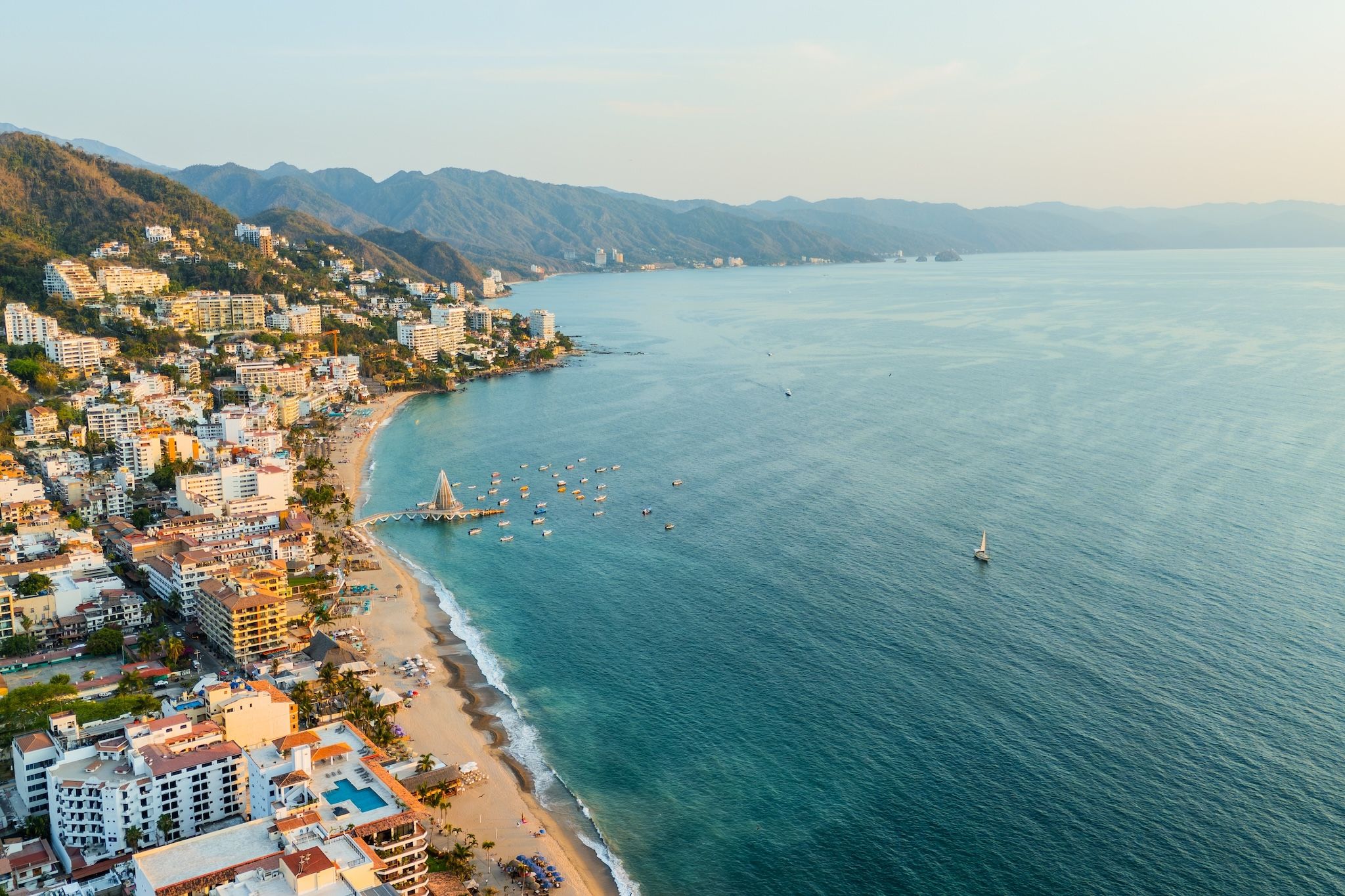






Roma Luciw’s 15-year-old son jumps off the pier at Ramon’s Village Resort on San Pedro island in November, 2025.Roma Luciw/Supplied
When your kids are toddlers, it feels like you have an infinite amount of time with them. The days are chaotic, joyful and exhausting.
When they’re teenagers – old enough to carry their own bags, go ziplining and enjoy ceviche – it feels like a race against time. Finding space to travel between school, summer jobs, friends and sports is a logistical feat.
My son Luka is 15, still in that sweet spot when a few days off school won’t matter much, which is how we manage to squeeze in an extra-long weekend in Belize, a tiny Central American country we’d long wanted to explore.
Belize is famous for its beaches, islands and atolls, for its world-class diving, adventure tourism and extensive Maya sites. What we discovered was a nation of easygoing people with delicious local dishes, a country working to preserve its nature and wildlife – and build out its cultural tourism. (We did also love the beaches.)
I finally let go of my travel dreams enough to help my son realize his own
We landed in Belize City in November and hopped on a single-engine airplane with a dozen other passengers for a 15-minute flight along the coast to the town of Dangriga. We didn’t need to fly (by Canadian standards, it would have been a doable two-hour drive) but the aerial views of lush rainforest and sparkling blue coastline were spectacular – and my son snagged a cockpit seat next to the pilot.
From there it was a short drive to Hopkins, a sleepy fishing village. At the open-air hotel bar we ordered tacos, a shrimp ceviche and – for me – a rum cocktail; for Luka, the first of many fresh fruit juices. Luka is a foodie, so meals with him are a delight. But we’re not here just to eat.
Hopkins is the cultural heart of the Garifuna people, descendants from Indigenous Carib and Arawak peoples and West African slaves, who escaped or were shipwrecked in the region. Many arrived in Belize in 1823 after being exiled from the Caribbean island of St. Vincent.
The natural swimming holes at the Rio on Pools.Roma Luciw/Supplied
Today, only 3 per cent of Belize’s population are Garifuna. We visit Palmento Grove, an eco-cultural tourism business run by the Martinez family, to learn about the history, cuisine and music of the self-described “cassava people.”
“The idea is to live the culture, every day. And to share it with others,” Uwahnie Martinez says.
In a large outdoor kitchen, she and her sister-in-law give us a hands-on cooking lesson where we pick, drain and shred coconut, before adding dried jackfish with fresh herbs, onion, garlic and spices to a pot over the fire. I stir while Luka mashes plantain with the stamina and strength of a teenager.
The ensuing fish stew, called hudut, is delicious, spicy and rich, and nearly puts us into a food coma ahead of the drumming lesson. The Martinez sisters adore Luka’s enthusiasm – and his appetite.
A 100-step temple at the Maya archeological site of Caracol.Roma Luciw/Supplied
The next day, we leave Hopkins for a drive along the beautifully named Hummingbird Highway to San Ignacio, where we will explore ancient Maya ruins. Driving in Belize is relatively easy; there are only a few highways and the main roads are in good shape. Our guide tells us that there are only nine traffic lights in the entire country.
Outside of our luxurious accommodations, we do see poverty in Belize. We pass shacks built on concrete blocks, single-room homes patched together and rusting cars. Locals sell everything from banana bread to coconut oil on the side of the road.
Luka and I pepper our guide with questions, and he tells us about the current state of the country, its history and hopes for the future. Belizeans, we learn, are natural conversationalists and proud of their homeland.
Time and time again as we travel the country, we find the Belizean people relaxed and welcoming, eager to share stories and quick to laugh.
A prisoner’s cell at the top of the temple at Caracol.Roma Luciw/Supplied
The next day, Luka and I rise with the sun again – a tip of the hat to my teenager, who didn’t complain once – to see the Maya archeological site of Caracol. Unearthed in the 1930s when it was found deep within the thick jungle, the limestone temples of Caracol are a historical marvel: the earliest dated monument traces back to 331 AD.
Our guide regales Luka and I with gory details of raids, rituals and beheadings. After climbing the 99 steps to the peak of the highest temple – the king’s throne and chambers – we can see Guatemala in the distance. I bet Luka he wouldn’t climb down into a dark eerie space where legless prisoners were held, but he proves me wrong.
Lunch, courtesy of our guide, is the unofficial national dish of Belize: rice and beans, topped with stewed chicken and some token greens. Packed in Tupperware and made with love, it is delicious. It’s worth noting – and celebrating – that fast food franchises like McDonalds or KFC doesn’t exist in this country.
An hour later, we are cooling off at the natural swimming holes at the Rio on Pools. Luka and I exchange grins as we float and bump our way from the waterfall at the top to the cascading interconnected granite pools below.
Our final Belizean destination is the island of San Pedro. Melva from Belize Food Tours is our guide to some of the best food we’ll eat on this trip.
She walks us past the flashy, shiny tourist restaurants to the small local places, the ones with affordable prices on chalk boards, plastic white chairs and meats that have been stewing in pots for hours.
Ceviche and tostadas, at the restaurant in Ka’ana Resort, San Ignacio.Roma Luciw/Supplied
We sample an array of decadent tacos – the pibil or pork slathered in chimichurri, jalapeno and chipotle hot sauce, which was Luka’s favourite. We dig into conch fritters and conch ceviche, fish empanadas, fry jacks and tortillas fried (tostadas) and puffed (salbutes). I taste Belizean beer and yes, more rum. I am too full to eat my key lime pie but a certain 15-year-old comes to my aid.
Our last morning brings one of my favourite moments of this mother-son trip. We board a boat off the dock in front of our hotel and half an hour later, we’re swimming with dozens of black nurse sharks and some stingrays.
When we move to the coral reef of the Hol Chan Marine Reserve, our guide points out a barracuda, stonefish and pufferfish. But it’s spotting three green turtles (two of them babies) that thrill us most. Luka’s excitement is contagious, reminding me that despite the styled hair, long limbs and endless appetite, there are still traces of the little boy who loved turtles.
When it was time to pack our bags for the trip home, I asked Luka what was his favourite part of this trip. At a time when the world seems to have become less kind and friendly, I was struck by his answer: “The people, of course.”
Sunrise view from the Belizean Dreams Resort in the town of Hopkins.Roma Luciw/Supplied
If you go
Air Canada and WestJet offer direct flights to Belize from Toronto, Montreal and Calgary. Pack bug spray and carry it with you everywhere. My son and I were covered in mosquito and sand fly bites, mostly from the knee down.
Wondering where to stay? Our spacious room in a beach-facing villa on the edge of the intimate Belizean Dreams Resort in Hopkins felt like a dream. (Rooms from US$769 a night, including meals, local drinks and transportation.) In the upscale Ka’ana Resort in San Ignacio, we were upgraded to a villa with a private pool. (Rooms start at US$200 while the average daily rate is US$532.) On the island of San Pedro, Ramon’s Village Resort is a favourite among travellers, with its thatched-roof cabanas and restaurant facing the sea. (Rooms from US$185 a night while the average daily rate is US$235.75.)
The writer was a guest of the tourism board of Belize. It did not review or approve the story before publication.