

![17th Mar: Mark Normand: None Too Pleased (2026), 54m [TV-MA] (6/10)](https://occ-0-8162-586.1.nflxso.net/dnm/api/v6/Qs00mKCpRvrkl3HZAN5KwEL1kpE/AAAABfNsUWVoIYjefZ0AhC6nBrxa81blJlzXWab25bheiwMj8mP7dydJgX1zmLc5hTDO761e5EjQ8qUYfXWSzOq4hatLla5lRykTW-JwfOOLN8a-a1Vz7OPPetZiDUSzu33pWWC_BYoPbX8XJBom423ijvKyfyYgBCWsYzfrVeXOiY8I8w.jpg?r=fc9 "17th Mar: Mark Normand: None Too Pleased (2026), 54m [TV-MA] (6/10)")





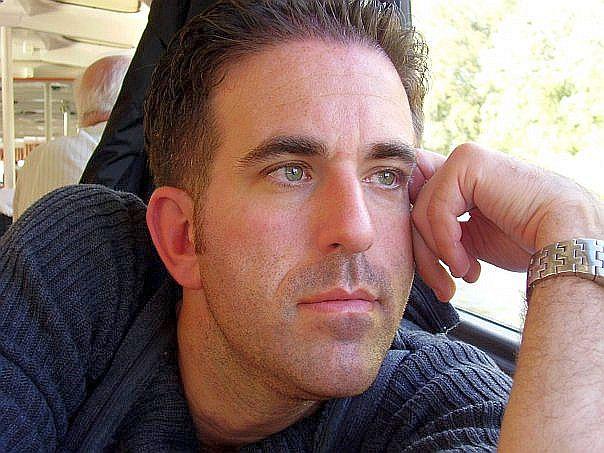
An Interview with Mr. Meir Bar-Giora (Hungary/Israel/China), theatre and performing arts agent based in Shanghai.
Meir Bar-Giora is agent /manager of FCE Fringe Cultural Entertainment Agency, promoting leading Israeli and international artists in theatre, dance, and visual arts. A media, new media, and theatre professional with over 20 years of experience, he has worked in broadcast and production studios in roles ranging from production and writing to technical direction. He has also developed creative content and design projects in collaboration with animation studios and advertising agencies. For more than 15 years, Bar-Giora has taught Media, New Media, Film, and Video Art at various institutions in Israel. He has been affiliated for nearly two decades with the The Shlomi Center for Alternative Theater, where he creates video art projects, co-develops performances, and represents the theatre internationally. He is currently developing his own performance project, combining the Center’s artistic vision with his personal creative approach. In addition to representing prominent theatre and dance artists, Bar-Giora works in new media design, interactive scriptwriting, production, and creative direction. He also provides marketing and PR services to both commercial and artistic clients. He holds an academic degree in Communication and Teaching and is a Film major from the Camera Obscura Film & TV Academy, specializing in directing and scriptwriting.
Ivanka Apostolova Baskar: As a theater agent operating between artists, institutions, festivals, and markets, how do you define your core responsibility today: advocacy, curation, negotiation, or strategic dramaturgy?
Meir Bar-Giora: An agent’s role concentrates influence; they shape who gets visibility, what work is produced or performed, which networks open up, and how an artist’s public and financial life develop. That influence is legitimate and necessary, but it is power nonetheless and therefore requires ethical guardrails. An agent ethically holds significant but delegated power: enough to open doors and shape reputations, but not to override an artist’s agency. Discipline that powers, through binding transparency, fiduciary accountability, independent oversight, fair compensation norms, and cultural commitments to service and equity. These measures preserve the positive role agents play while limiting exploitation and concentration of cultural gate keeping.
IAB: The figure of the agent is often invisible in public discourse, yet decisive in shaping careers and repertoires. How much artistic power do you believe an agent ethically holds, and how do you discipline that power?
MBG: An agent ethically holds substantial delegated power: they control access to opportunities, shape public perception, negotiate terms that affect livelihoods, and influence what work gets produced or seen. That power is legitimate only insofar as it advances an artist’s goals, autonomy, and long-term well-being rather than the agent’s short-term gain. Agents legitimately wield strong artistic power, but it must be bound by fiduciary duties, transparent processes, contractual limits, independent checks, and cultural norms that protect artist autonomy and promote equitable access.
IAB: Where do you draw the line between representation and co-authorship? At what point does strategic guidance begin to shape the artistic language itself?
MBG: Representation becomes co‑authorship when an agent’s contributions move from facilitating opportunities and strategy to directing, creating, or materially shaping the work’s expressive content or form. When guidance consistently alters an artist’s artistic decisions, voice, or compositional choices in ways that would not have occurred without the agent, you’re in co‑author territory. If the agent’s input materially alters an artist’s expressive choices, treat that as creative labor deserving explicit recognition, consent, and fair economic and moral attribution. Keep representation and creative authorship contractually distinct unless both parties knowingly choose to merge them.
IAB: When you encounter a new artist or collective, what signals tell you this is a long-term voice rather than a short-term success?
MBG: Depth of Artistic Vision, Consistency of theme and tone: Long-term artists maintain a clear core identity even as their style evolves. Curiosity and restlessness: They explore and redefine their boundaries rather than chase trends. Authenticity and Self-Possession. They have a distinct sound from the start, showcasing unique voices or concepts that feel genuine. Longevity is linked to artists who frame their own narratives instead of letting virality define them. Relationship to Community and Context: Legacy artists emerge from a community or movement, often lifting others through collaboration and mentorship. Capacity for Reinvention. They evolve naturally without losing their essence and embrace creative risk rather than sticking to successful formulas. Resonance Beyond the Moment: Their work rewards repeated engagement and prompts deeper cultural reflection beyond mere trends. Bonus: Signals in Early Career Stages: Look for insights in their second or third release, their process articulation in interviews, and the caliber of collaborators and mentors they attract.

Photo Credit: Meir Bar Giora.
IAB: How do you balance protecting an artist from institutional pressures while still pushing them into spaces that might be uncomfortable but transformative?
MBG: The artist’s voice and artistic integrity take precedence over institutional demands. However, we often find compromises and creative solutions for technical issues, performance spaces, and props.
IAB: Do you believe in career dramaturgy shaping an artist’s trajectory over the years as a coherent narrative of risks, failures, and breakthroughs? If yes, how consciously do you construct that arc?
MBG: Yes, career dramaturgy can significantly influence an artist’s journey. Viewing a career as a dramaturgical arc, comprising themes, tensions, recurring choices, and turning points, enables you to make strategic decisions and create a coherent narrative that takes into account both personality and context. Some artists plan meticulously, while others prefer to improvise. Ideally, aim for a blend of both: establish a clear thematic foundation while maintaining tactical flexibility, so that risks, failures, and breakthroughs contribute to a meaningful, improvisational story. Collaborate with funders and learn from setbacks to enhance your journey.
IAB: You operate in a system where theaters, festivals, and funding bodies hold structural power. How do you negotiate for artists without reproducing the same hierarchies that marginalize experimental or politically difficult work?
MBG: I adopt a professional approach in representing the artist’s work, ensuring that I do so to the best of my abilities. We advocate for our perspectives and articulate our views assertively and without compromise.
IAB: In your experience, what do institutions most often misunderstand about contemporary artists, and what do artists most often misunderstand about institutions?
MBG: The impact of an artistic director’s personality and beliefs cannot be underestimated. When an artist’s vision is clearly understood, it prompts us to consider the true depths of their artistry. For those who embody a diva persona, it is essential that their body of work validates such an attitude. After all, the success of any creative endeavor ultimately hinges on the balance between artistic integrity and the demands of content and budget.
IAB: Have you ever refused to place an artist in a prestigious context because the conditions of production compromised the artistic or ethical integrity of the work? What does such a refusal cost in real terms?
MBG: I refused, said no, stood my ground, and advised that the final decision belongs to the artist. These costs are typically financial, meaning a deal might not be signed. However, compromises can usually be made.
IAB: Artists emerging from alternative or experimental scenes often face pressure to “translate” their work for mainstream stages. What should never be translated? What must remain unassimilated?
MBG: Preserve the aesthetic, ethical, and structural qualities that make the work critical, risky, and generative. Avoid allowing mainstream translation to dilute what gives the work its significance. Translation can expand its reach, but it must not compromise the work’s critical, formal, and ethical core. If adaptation is necessary, do so with permission, care, and mechanisms that protect these non-negotiable elements.
IAB: Can institutional theater truly host radical forms, or does it inevitably neutralize them? From your insider position, where have you seen real transformation happen inside institutions, and where has it failed?
MBG: If a product is not marketable, there will be no incentive for investment. This assertion, however, may not apply universally, particularly in the context of institutions dedicated to art exhibitions. Profitability is influenced by a multitude of factors, with options within the performing arts exhibiting more adaptability in terms of generating revenue.
IAB: How do you protect the fragility of experimental practice when it enters professionalized, market-driven circuits?
MBG: In my perspective, art is an essential component of life that cannot be compromised. The courage displayed by artists directly correlates with the quality of their work. While art may require a certain level of appreciation that not everyone possesses, it remains a significant and impactful experience.
IAB: When you present artists internationally, how do you navigate the tension between local specificity and global legibility?
MBG: The work is self-representative; it encompasses a range of themes, with some conveying universal messages, while others are more context-specific.
IAB: Do you ever fear that international circulation turns artistic work into a kind of cultural export product? How do you resist exoticization, branding, and simplification?
MBG: One should remain authentic to one’s principles without offering apologies for doing so. Furthermore, it is essential to identify an art house that possesses a distinct artistic identity and ideology. Such establishments and values are not subject to commercial compromise.

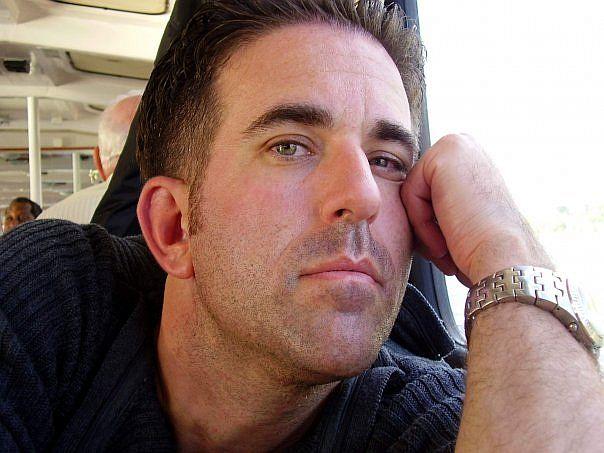
Photo Credit: Meir Bar Giora.
IAB: What responsibilities does a theater agent carry when moving work across cultural, political, and ethical contexts, especially in regions marked by conflict or ideological polarization?
MBG: We strive to uphold diplomacy and professionalism at all times. Our focus is on the matter at hand, rather than the involvement of governmental entities.
IAB: Let’s talk frankly: how broken is the current economic model of contemporary theatre? Who carries the real risk: artists, agents, or institutions?
MBG: Funding for art and culture is often inadequate. Agents typically operate on a commission-based model, which means that without successful sales, their financial stability is jeopardized. In contrast, institutions receive funding that allows them to sustain operations, while artists are entitled to a substantial portion of the profits generated.
IAB: How do you help artists build economic resilience without forcing them into aesthetic compromises?
MBG: Artists primarily focus on the creation of art, often at the expense of financial gain or personal well-being. While a commercially successful piece may generate substantial profits, the process of producing and performing art often involves navigating significant challenges. In this context, the artist’s role is to optimize financial resources by ensuring that the budget and the necessary tools and support are effectively managed to meet the various needs of the project.
IAB: Do you believe theatre agents should also act as strategists of sustainability, thinking about burnout, precarity, and long-term livelihood, not only premieres and tours?
MBG: No, to each his own.
IAB: When representing multiple artists with competing needs and limited institutional space, how do you decide who gets priority, and how do you live with that decision?
MBG: The final decision regarding projects ultimately rests with the artistic director or buyer. I prioritize specific initiatives based on strategic needs or the engagement status of various artists. Each project holds significant value, akin to being my own responsibility; I hold them in equal regard. While some endeavors resonate with me on a personal level, others achieve high sales performance.
IAB: What ethical red lines do you refuse to cross in negotiations, even when the opportunity seems career-defining?
MBG: The artists I work with receive compensation without incurring any personal expenses.
IAB: In a time of political pressure on cultural institutions, how can a theater agent protect artistic dissent without turning it into a marketable pose?
MBG: I am Israeli and represent Israeli artists and cultural institutions, which means I frequently deal with political issues and boycotts. There are no easy solutions to these challenges. The influence of propaganda and the presence of violent, paid individuals should not be underestimated. Generally, countries that support Israel and its cultural centers are more straightforward to engage with. In contrast, criticism of China is less accepted. As for Russia, my approach varies. I do not boycott my Russian colleagues or the artistic community, nor do I boycott those in China.
IAB: Do you see the role of the theater agent evolving toward something closer to a cultural producer, curator, and political mediator?
MBG: Individuals will persist in performing their respective roles to the best of their abilities; multipurpose professionals are uncommon in this industry.
IAB: How will digital platforms, hybrid formats, and global touring reshape the power of intermediaries in theater over the next decade?
MBG: Intermediaries in the industry will be transformed rather than eliminated. The rise of digital platforms and global touring will reduce traditional gate keeping roles while creating new ones. In the coming decade, we will see displacement, reconsolidation, and specialization, shifting power from physical venue gatekeepers to hybrid gatekeepers who combine distribution, data, rights management, and production. Intermediaries that offer bundled services such as rights, technology, audience data, and legal/logistical support will gain influence, while those focused solely on single functions risk becoming commoditized.
IAB: If the traditional theatre system were to collapse tomorrow, what new ecosystem of mediation between artists and audiences would you want to help build?
MBG: I come from an artistic background that holds the belief that performers and audiences are two sides of the same coin. Our focus is on personal stories and the ideology of artistic expression in the present moment. By merging different spaces and encouraging free-flowing artistic expression alongside research and experimentation, we can create dynamic environments. These multi-functional centers can serve as places for creation, performance, meditation, and connection.


Photo Credit: Meir Bar Giora.
IAB: What part of your work remains invisible but essential, the labor no one sees, yet theater cannot function without?
MBG: I’ve learned that marketing, sales, and production are crucial for the survival and success of any project. Without these elements, a work may simply become a shelf piece. The efforts of professionals in these areas never cease before, during, and after a show runs. No one can function effectively or survive financially without them.
IAB: Looking back, where do you feel you intervened at the right moment in an artist’s trajectory, and where do you think you waited too long?
MBG: Balancing the egos of artists can be challenging while also maintaining a professional plan to help them achieve their goals. My approach is to trust the professionals to do their jobs while ensuring that the artists understand the consequences of their demands and actions.
IAB: If your professional legacy were to be defined by one principle, would you want it to be the protection of artists, the disruption of institutions, or the invention of new structures of support?
MBG: The artist comes first. Our motto is to protect the artist, which stems from a deep understanding of what it truly means to create art. By safeguarding the art and breaking down barriers together, we ensure that our work is not only fulfilling but also brings numerous personal and professional rewards.
IAB: Thank you very much, dear Meir.
(Skopje/Shanghai, 2026)
This post was written by the author in their personal capacity.The opinions expressed in this article are the author’s own and do not reflect the view of The Theatre Times, their staff or collaborators.
This post was written by Ivanka Apostolova Baskar.
The views expressed here belong to the author and do not necessarily reflect our views and opinions.