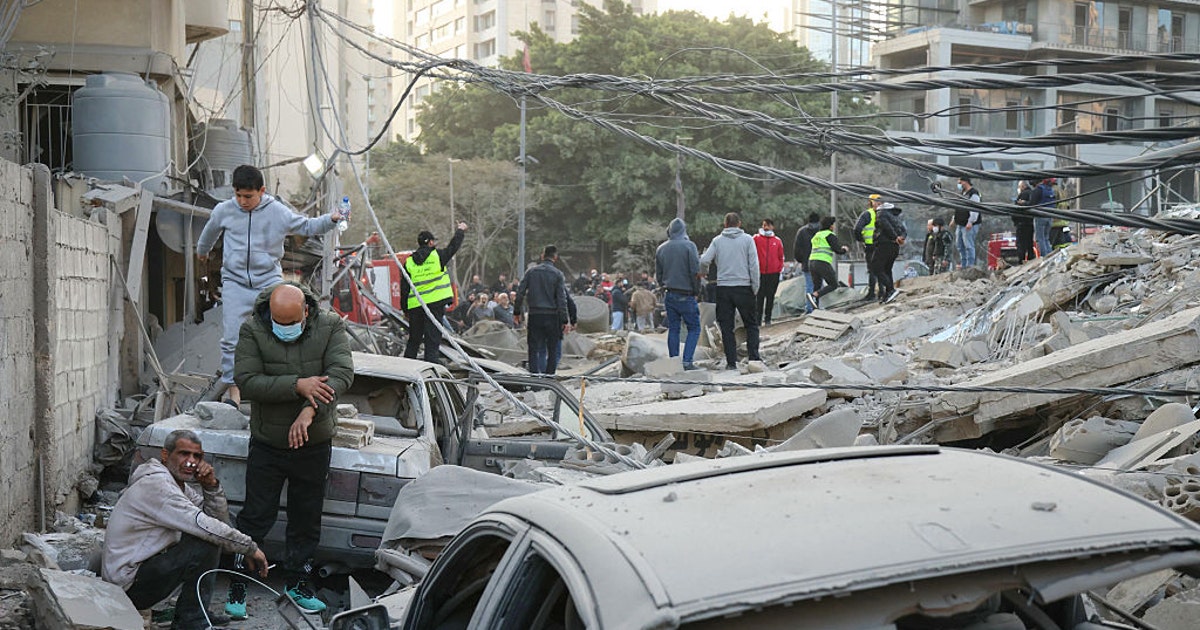






At a recent Sunday dinner with his mother and older sister in London, Ont., Julian Munds posed a question he’d never imagined seriously asking his family: What should we do if the United States invades Canada?
He felt like a conspiracy nut even raising the subject. It could never happen, right?
Except nobody laughed.
“We suddenly realized we all had this quiet anxiety,” Mr. Munds said, “and that we needed at least to have an idea of what to do.”
His mom said she’d grab her pills and Lucy, her beloved Bichon Frisé, and get out of the city. His sister would stuff her kids in the car and also make a run for it.
Mr. Munds, 38, able-bodied with no dependants, but untrained in combat, was undecided: Should he join them, or stay and resist?
A year ago, brainstorming invasion escape routes over pot roast would have been like discussing how to survive a zombie apocalypse: entertaining if you’re into that kind of thing but an exercise in implausibility.
However, around the time that Mr. Munds and his family sat down for dinner in late January, U.S. President Donald Trump, having just wrapped an attack on Venezuela, was coveting Greenland, “one way or another.”
The same week, during a speech to world leaders in Davos, Switzerland, Prime Minister Mark Carney warned that countries “not at the table, are on the menu,” ending any pretense of cozy Canada-U.S. relations.
Mr. Trump responded by posting a picture of a map in the Oval Office: Greenland was swathed in the Stars and Stripes. So was Canada.
Donald Trump shared this AI-generated photo on Truth Social in January, soon after his forces captured the president of Venezuela.Truth Social
Mr. Trump has been using stars-and-stripes maps like these since before he became president: This exchange with the Liberal Party of Canada was from the weeks leading up to his inauguration.X, Truth Social
All those taunts about Canada becoming “the 51st state” now sound less like the rants of a peevish president and more and more like a White House idea being workshopped into reality.
Canadians have not only lost faith in their American friendship – many now see the United States as a pressing threat. In a Globe and Mail-Nanos survey conducted online and by phone in late January, three-quarters of respondents agreed that the United States is not a trustworthy ally. One in five said they believed an American invasion is likely, and only half dismissed it outright.
And to think: a blink of an eye back in time, our long, undefended border was a wonder of the world.
At this point, of course, it’s just nerves. But who isn’t justifiably nervous? Mr. Trump’s policies have delivered chaos and violence to his own citizens. He lavishes praise on tyrants with expansionist appetites and talks about dropping bombs “just for fun.” On Feb. 27, he mused about a “friendly takeover” of Cuba; the next day, he attacked Iran with Israel’s support, engulfing the Middle East in war.
During interviews with a dozen Canadians who see the world as generally precarious and the United States as a threat to Canada’s sovereignty, what came across was a restless instinct to do something, to prepare somehow. But what? Stock up on toilet paper and batteries? Dig a cold cellar in the backyard? Get a gun?
To clarify, these aren’t survivalists prepping for the end of days or conspiracy theorists scanning for tanks at the border. Are they being pragmatic, they often wondered out loud, or paranoid?
From book stores to coffee shops, Canadian businesses have been showing their local pride (and disdain for all things American) since Mr. Trump began challenging Canada.JEFF KOWALSKY/AFP via Getty Images; Melissa Tait/The Globe and Mail
In Inmanyways, the country already feels under siege.ways, the country already feels under siege. Arbitrary tariffs launched to weaken the economy certainly seem invasion-adjacent. So does the open courting of separatist-leaning citizens, the performative hand-wringing about an Arctic in need of Big Brother’s protection and the normalization of annexation as inevitable. You’d be foolish to not to watch your six with a neighbour like that.
In response, the federal government has increased military spending and announced an expanded civilian reserve. Mr. Carney has also taken a friendship-fostering transatlantic tour to firm up a middle-power alliance.
But governments cannot carry the only shield. “Resilience is not developed in an ivory tower somewhere far away,” said Anastasiia Kudlenko, a Ukrainian researcher at the University of Sussex in England, who studies how societies survive adversity. “It comes from within an individual, a community or a nation.”
This resilience grows out of the fierce, well-defined identity that has kept Ukrainians fighting for their homeland against a stronger foe. It’s fostered by the whole-of-society defence that Sweden and Finland have created to keep Russia at bay. We saw it when Canadians united to boycott American destinations and products.
It doesn’t matter if the Americans decide to play nice again. The future guarantees plenty of other emergencies (remember those rising oceans and heat waves?) that will require an organized culture steeped in common cause and shared care.
Maybe we just needed to imagine enemy soldiers marching on Main Street to find it.
Tracy Elliott and Marc J. Chalifoux
Learn to make a fire – so you can keep a stranger warm
“I don’t think the Americans are coming any time soon,” said wilderness expert Brian Rice, the owner of Three Ravens Bushcraft in North Cooking Lake, Alta. But being good at basic skills – the kind that our grandparents knew – “will go a long way if things go bad.”
He quotes his former mentor, Mors Kochanski, an esteemed Canadian survival instructor: “You don’t want to be learning how to swim when you’re falling out of the canoe.”
Many Canadians are already brainstorming how to be self-reliant in a worst-case scenario. In Calgary, Coleen Howitt and her husband have informally mapped out a garden expansion to include a squash crop on the front lawn, with rabbits and chicken in the back.
Coleen Howitt and her husband have been working on their garden to be more self-reliant.Courtesy of Coleen Howitt
This winter, Paul Crossley, a former soldier, was searching for the next available gun-licence class in Victoria to attend with his 16-year-old son – just in case.
Dawn Hopper, an investment adviser and portfolio manager in London, Ont., has her survival supply list printed out and stored in a safe place. Should an invasion happen, she has a plan to hide with her loved ones at a friend’s farm, where they will pool their talents and fight for the resistance.
“If I am only concerned for my own survival, and nobody else,” Ms. Hopper said, “I would not want to survive at all.”
Preparing properly for an emergency is presented as a civic duty in Sweden’s recently updated civilian defence booklet, “If Crisis or War Comes,” which was distributed to all households in November, 2024. “We all need to contribute Sweden’s resilience,” the brochure states. The message is clear: Be prepared and self-reliant, for your own protection – and for your country.
A resourceful population allows paramedics and firefighters to focus on the most vulnerable, Mr. Rice said. Knowing CPR means you can help your neighbour. A garden can feed your neighbourhood.
Among the skills he recommends: Learn how to start a fire when it’s cold and wet. (But don’t complicate things. “We have thumbs that work. Carry a Bic lighter.”) Practise using a drill. Store enough food, supplies and cash to last a week or so without power. As for getting a gun, Mr. Rice, who served in the military for 25 years, says no one should own a firearm unless they are prepared to take on the required training and practice to become competent.
But no matter how much you prepare, he says, no one survives a crisis alone. One day, you’ll need a skill you don’t have, struggle with a weight you can’t carry or hurt from a wound you can’t heal. And when that day arrives, your most valuable resource won’t be the canned beans in the basement. It will be the community you created in calmer times.
John MacDougall/AFP via Getty Images
Organize an emergency-planning party with your neighbours
That edgy nervousness many Canadians are feeling, like a mouse caught within pecking distance of a hungry bald eagle, is “perfectly normal,” said Maja Allard, preparedness and defence strategist for Gotland, Sweden. “It’s part of the process, when you go from unaware to aware of how small and vulnerable we are.”
The 61,000 residents of Gotland, an island in the near-middle of the Baltic Sea, have a fraught perspective on small and vulnerable. Their piece of rock is a valuable foothold for the North Atlantic Treaty Organization – and, in any conflict, a likely enemy target.
After Russia invaded Ukraine in 2022, Ms. Allard began fielding queries from worried locals: How can I help? How can I feel more safe? Less alone?
So she invented Stark socken – “Strong village,” in English – to encourage the residents of each community to sit down and plan how they would survive together if war broke out. They were charged with creating a collective plan for essentials such as food and power.
If villagers decided they needed training, it was covered by the regional government. They were warned not to make lists that could fall into enemy hands, and to focus on small ways they could make a difference, not the big picture they couldn’t control.
One town hosted community dinners so working parents could discuss emergency preparedness while their children played. Ms. Allard began to hear about new friendships, and neighbours offering to help each other with current needs.
“It’s been a force of nature,” she said, “to see the power that blooms when people sit down and talk about how they can have each other’s back if times get hard.”
Sweden, historically a neutral country, has been rethinking its defence since joining NATO in 2024. Its Gotland Island is a vulnerable spot in many scenarios of Russian invasion.Ints Kalnins/Reuters
Mr. Rice worries that too many Canadians “have shifted focus to what’s important to me and my family,” while underestimating the safety and strength of community.
“Remember when you could go next door and borrow a cup of sugar? I bet our kids don’t,” he said.
When Scott Duff first moved to Wainfleet, Ont., he made certain he could borrow a cup of sugar. Mr. Duff, a volunteer firefighter who owns a landscaping company, knocked on his neighbours’ doors, introduced himself and left his phone number in case they ever needed anything.
Mr. Duff hunts deer and has fruit trees. He now knows a farmer who will trade chicken for venison and a gardener keen to swap asparagus for apples. If he needs a hand, he knows whom to ask. He’s confident, he says, in his neighbourhood’s ability to pool resources in a crisis.
On the other hand, he lived in a four-unit apartment building for 15 years in the nearby city of St. Catharines and barely knew the other tenants.
“We have to build that sense of community with boots on the ground,” Mr. Duff said. “Go out and introduce yourself.” Otherwise, he asked, “How do we know we can trust each other?”
Know what you’re fighting for
When the Nazis occupied France during World War Two, the village of Le Chambon-sur-Lignon chose resistance over capitulation. Residents hid Jewish citizens, forged documents and refused every request to hand them over to the authorities. Everyone in the village participated, even the children.
As English philosopher Jonathan Glover writes in his book Humanity: A Moral History of the 20th Century, this bravery originated from several sources, among them a much-loved Protestant minister who preached about standing up to evil and set an example with his actions. Early acts of defiance, such as refusing to require students to salute the puppet Vichy government’s flag, also helped establish a pattern of resistance.
Ultimately, Dr. Glover suggests, so many villagers believed in one honourable, necessary action that it became impossible to do otherwise and maintain respect. As Christians, they could not turn away a stranger in need.
“The capacity to resist,” Dr. Glover wrote, “is not only a matter of individual psychology, but also of a shared moral culture.”
In a more secular age, these values can be developed through education, culture and national pride – by being able to clearly articulate what we stand on guard for.
Marianna Kovtun, right, and Marina Gorobets are Ukrainian Canadians who attended a rally for the war-torn country in Halifax last month.Aly Ambler/The Globe and Mail
When Marianna Kovtun, newly arrived in Halifax from wartorn Ukraine, asked Canadian friends to define their culture, she was often confused by the answer, inevitably some variation of “we are different from Americans.”
Growing up not far from the Russian border, her parents, both physicians, had imprinted Ms. Kovtun with a strong national identity, teaching her about the sacrifices made for Ukraine’s independence and reminding her that she was the first generation to freely speak and study in her own language.
She was 19 when Russia launched its full-scale invasion, and her mom put her on a train out of the country; she expected to return in days. Four years later, her parents are still fighting back home and she lives in Nova Scotia, working as a nurse and raising awareness about the war by volunteering with the local Ukrainian community.
She holds on to her heritage and identity, she says, because it’s her job to safeguard it. “For me it’s much more than just a border.”
Both Ms. Kovtun and Maryna Horobets, the president of the Nova Scotia chapter of the Ukrainian Canadian Congress, wonder why Canadians struggle to define the country’s values, when they – as foreigners – can see them so clearly.
How about the message that being gracious and kind is a strength, suggests Ms. Horobets, pointing to how opposition politicians joined hands – literally – to offer support after the school shooting in Tumbler Ridge, B.C.
Or what about, Ms. Kovtun says, “how Canada was basically the first to start opening the doors to different cultures, not just insisting on their own.”
Canadians should ask themselves: What are they prepared to protect at all costs? “When you know what you stand for,” Ms. Horobets said, “you find courage.”
Aly Ambler/The Globe and Mail
Have faith in your fellow Canadians
Many Canadians have already found that courage, sometimes unexpectedly. When Monica Muller, a Vancouver writer and illustrator, heard the predatory rhetoric coming out the White House, she felt an unflinching ferocity to defend her country at all costs.
“I never knew I had that inside myself,” says the self-described pacifist. But then, the idea of an invasion is something she “never imagined could even be the faintest possibility in my lifetime.”
Now more than ever, Ms. Muller suggests, Canadian need to talk more about what unites them. “We are most separate when we are silent.”
She shouldn’t feel alone, because she isn’t. In an online January survey by Ipsos Reid, 50 per cent of Canadians said they’d be willing to sign up for a formal training program to prepare for the possibility of an invasion, and 43 per cent said they would personally fight, even it meant being injured or killed.
Suzanne Corno, a senior in Kelowna, B.C., is one of the latter – prepared, along with her husband, she said, to “pick up whatever weapon” whenever she’s needed, to defend Canada.
Growing up in Edmundston, N.B., Ms. Corno crossed the international bridge to Madawaska, Me., as if the border barely existed. She had her first Big Mac there in the early 1970s and, at 18, her first Budweiser. Everyone she knew had friends and family who lived and worked on both sides.
Now, at 70, she’s vowed: “I will never step foot in the United States again.”
To think that she’ll never again see some of her favourite places makes her extremely sad, Ms. Corno says.
“It’s devastating in a way, but it’s reality. We need to adjust our mindset.” She cites a line from the 1935 dystopian novel It Can’t Happen Here by Sinclair Lewis: “It can happen here because we think it can’t.”
In London, Mr. Munds has decided that should the Americans invade, he’ll stay put and contribute to the resistance he expects will rise up against foreign occupiers. Meanwhile, he welcomes a national conversation that delivers patriotic clarity and an end to defining his country as not-American, not-British, not-French.
“Culturally, we lived kind of asleep for the last 50 years,” he said.
Standing on our own, we now have a reason to decide who we are.
Take the first step now
Last November, Sahaidachnyi Security Center, a Ukrainian think tank formed after the 2022 Russian invasion, published a booklet with recommendations for grassroots defence based on Ukraine’s experience.
“Imagine the unimaginable,” the authors wrote. “Think through your contingency plan and prepare with a clear mind.”
For Nora Scholten Macey, 75, and Roz Isaac, 72, friends in Victoria, their minds are clear. “I’d rather be on the paranoid side,” Ms. Isaac said, “than unprepared.”
“The chances of being invaded by the United States is not zero,” Ms. Scholten Macey said. “Even 1 per cent is unbearable to me.”
The two women met in early February, part of a group that had gathered at a crowded pub to discuss a civilian resistance. Every Wednesday since then, they have demonstrated on behalf of Canada’s sovereignty in front of government buildings, dressed proudly in red and white.
They each have their own motivations. For Ms. Isaac, the image of U.S. Immigration and Customs Enforcement officers rounding up citizens in the street was a flashback to the stories her family told about the erosion of freedom in 1930s Germany. Her Jewish father barely escaped the country after the family’s cigar factory was seized by the Nazis.
Roz Isaac says she’s been troubled by images of ICE arrests. This one is in Minneapolis, until recently the target of a massive federal crackdown on immigration.Leah Millis/Reuters
Ms. Scholten Macey’s inspiration is her mother, who fought in the Dutch resistance during the Second World War, forging extra ration tickets for families secretly housing Jewish neighbours, exchanging intelligence from a radio hidden in the woods, and sabotaging trains carrying Nazi supplies.
“My mom fought Hitler,” Ms. Scholten Macey said. “Her blood is in my veins.”
Their public protest doesn’t need to change policy, they say, to grow a resistance; it only needs to give people a chance to stand together. “It’s the most incredible feeling,” Ms. Isaac said, “that sense of solidarity.”
It’s also our best defence. We don’t need to wait for uniforms and top-down instructions. We can gather together – at first-aid classes to learn vital skills, at community dinners to co-ordinate resources, or even online to discuss our shared values. Not everyone needs to be a soldier, but we all should understand the mission.
“If we all reached out to even one person so that they don’t feel alone, so they know that if something were to happen, we would be together, that would go a long, long way,” Ms. Hopper said.
Even if the world sorts itself out, we will have become more united, more self-sufficient and more neighbourly. There are worse ways to prepare for a zombie apocalypse.
Chad Hipolito/The Globe and Mail
A world on guard: More from The Globe and Mail
The Decibel podcast
A U.S. invasion of Canada is a far-fetched scenario, but our military has already modelled a hypothetical version of it, The Globe reported in January. Ottawa bureau chief Robert Fife spoke with The Decibel about the model and what tactics Canada could borrow from conflicts in Ukraine and Afghanistan. Subscribe for more episodes.
Commentary
Ira Wells: A new age of ‘total war’ may be approaching. Are young Canadians ready?
John Wright: Speed is the new sovereignty in the Arctic
Debra Thompson: Trump is obsessed with Canada – and our rebuke of his advances is growing more dangerous
![18th Mar: Skylines (2020), 1hr 53m [R] – Streaming Again (5.4/10)](https://occ-0-1081-999.1.nflxso.net/dnm/api/v6/Qs00mKCpRvrkl3HZAN5KwEL1kpE/AAAABSChABQi80GD60KfTBpK_lv39sFWDt9RYwRw_AHQtJtbIqlfxNJDnctaAs-l2eCTmG3tdJd27hZ0gQUs9GMCd1WY0jF8YuaAA-oM.jpg?r=66a "18th Mar: Skylines (2020), 1hr 53m [R] – Streaming Again (5.4/10)")