![19th Jun: RADWIMPS 20th Anniversary Live Tour (2025), 2hr 40m [TV-PG] (6/10)](https://occ-0-937-2705.1.nflxso.net/dnm/api/v6/0Qzqdxw-HG1AiOKLWWPsFOUDA2E/AAAABRlWFniyb6VIOTYeEjgT3MzBZn3xdHD0imw4t9814n6CFXtxl-RLI8t78jDtKiCPk1ahTMBTOaPBd7Ga07Q7QLjDfTEOFoslDNbN1HjyHES477TIWbZENo7j09XgEgVStodrwoDiSsPmPvh2IqlHMK3u46oDLU-tIYfy4fbGLmtRGg.jpg?r=28a "19th Jun: RADWIMPS 20th Anniversary Live Tour (2025), 2hr 40m [TV-PG] (6/10)")






In plays including Bears, After the Fire, and The First Métis Man of Odesa, Cree-Métis playwright Matthew MacKenzie has centred Indigenous perspectives while examining how identity and power operate within both personal and political spheres.
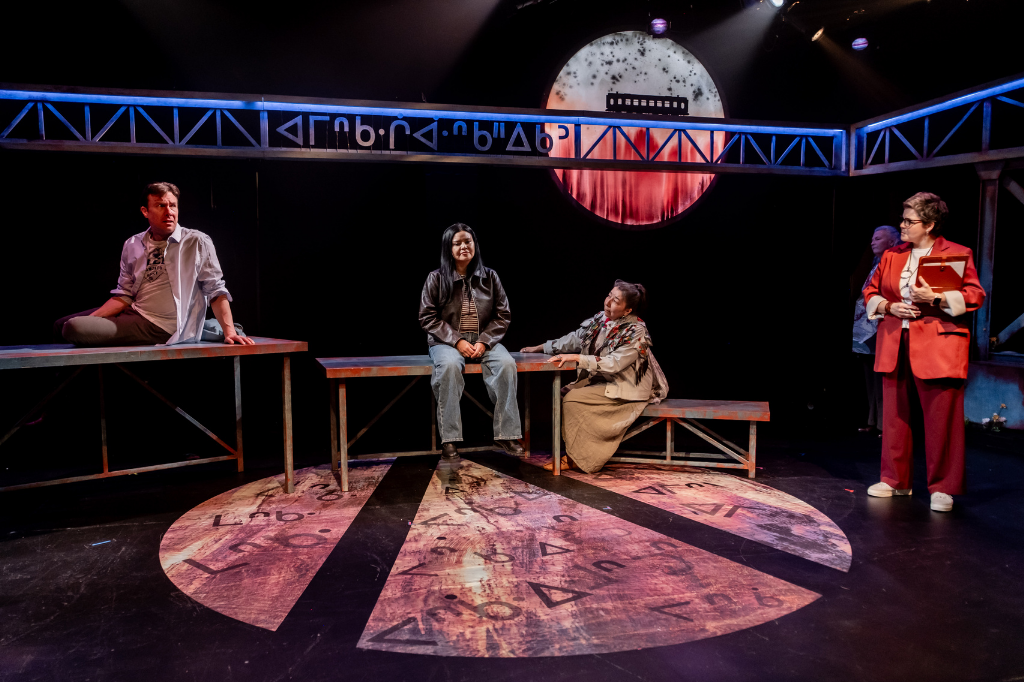
Strife, MacKenzie’s newest work, continues that line of inquiry, focusing on Monique, an oil-patch worker navigating a family and community reckoning after the violent loss of her brother, Nathan, an Indigenous climate activist. As she grapples with her grief, she is drawn into a recurring dream in which she reconstructs his bones under the guidance of a spectral Owl — a presence that blurs the boundaries between the physical and spiritual worlds.
Intermission connected with MacKenzie over email for a brief Q&A about his play, making its world premiere at the Tarragon Theatre Extraspace in a Punctuate! Theatre production. His responses have been lightly edited for length and clarity.
Strife seems to centre the question of who gets to speak for Nathan after his death. What drew you to that idea?
Indigenous folks are sometimes spoken about by settler culture as a monolith. By including Indigenous characters with varying backgrounds and different politics, I’ve tried to craft a story that can compellingly share a range of viewpoints. As our director, Yvette Nolan, has said repeatedly throughout the development process, “All these things are true at once.”
The synopsis mentions Monique’s recurring dream and the presence of the Owl. What can you share about how that element functions in the piece?
I’m very interested in how our dream world impacts our waking world. When going through periods of grief or sudden change, I have had vivid dreams that at times torment me. In time, I realized that these weren’t nightmares, but my brain trying to help me make sense of something that I couldn’t make sense of when I was awake. I’ve tried to capture this feeling in my depiction of Monique and her recurring dreams.
In other interviews, you’ve spoken about the challenges of navigating identity and authority within communities. How did those ideas shape your approach to writing this play?
In both theatre and academia, Indigenous artists and scholars are often asked by settler institutions to speak on behalf of all Indigenous people on any number of subjects — from treaty rights to something as specific as what kind of bison meatball to serve at a catered event.
I’ve been fortunate to have Elders Jerry and Jo-Ann Saddleback to speak with about cultural matters, as well as artistic mentors Christine Sokaymoh Frederick and Sheldon Elter, who have helped me navigate an industry [theatre] that can sometimes commodify identity. Not every Indigenous artist or scholar has access to Elders or mentors, which can lead people to seek answers from questionable sources or to arrive at them on their own.
In Strife, I try to show the different directions Indigenous people may take when seeking knowledge, while also addressing historic injustice.
Strife was developed through workshops and community consultation. What’s one way that process changed the piece?
We were recently in Lake Nipissing First Nation, presenting Strife at Big Medicine Studio, built and run by [the non-profit arts organization] Aanmitaagzi. In conversation with one of the group’s founders, Sid Bobb, he spoke about the importance of Indigenous people having sovereign conversations.
My hope is that Strife will be seen as one of those conversations: a space where Indigenous characters engage with Indigenous issues on their own terms, free from parameters set by settlers.
What kind of conversation do you hope audiences leave the theatre having?
Good ones!
Strife runs at Tarragon Theatre from now until April 27. More information is available here.
Tarragon Theatre is an Intermission partner. Learn more about Intermission’s partnership model here.

WRITTEN BY
Krystal Abrigo
Krystal is Intermission’s Publishing and Editorial Coordinator. A Scarborough-based writer of Philippine and Egyptian descent who enjoys reading bell hooks, Audre Lorde, and James Baldwin. At any given moment, you can probably find her at a concert, or on a long walk somewhere in Toronto (or elsewhere).
LEARN MORE