








The age-old science vs. faith debate is often the focal point of classic genre films. In Robert Zemeckis’ Contact (1997), Dr. Ellie Arroway (Jodie Foster) embarks on a one-woman mission after scientists receive conclusive proof of extraterrestrial life. But once first contact is established, Arroway experiences something so unbelievable it cannot be proven in front of a scientific council. Religious fanatics interpret her encounter as proof of divine existence, while the scientific community views it with harsh skepticism. While Arroway isn’t able to resolve this ideological conflict, she puts her faith in this unscientific encounter after it fundamentally alters her perspective on life.
While science fiction often leads the way, the horror genre is also ripe for clashes between science and religion, especially when it deals with the supernatural. In Michael Mohan’s Immaculate (2024), science becomes fuel for religious fervor, which is pushed to the most horrifying limits. This tense Catholic horror stars Sydney Sweeney, whose nuanced performance here often goes underappreciated in the face of mega-hits like The Housemaid and Euphoria, which is currently making headlines with its long-awaited third season. But while those roles — and Sweeney’s upcoming Gundam movie — get all the attention, Immaculate is worth your time as well.
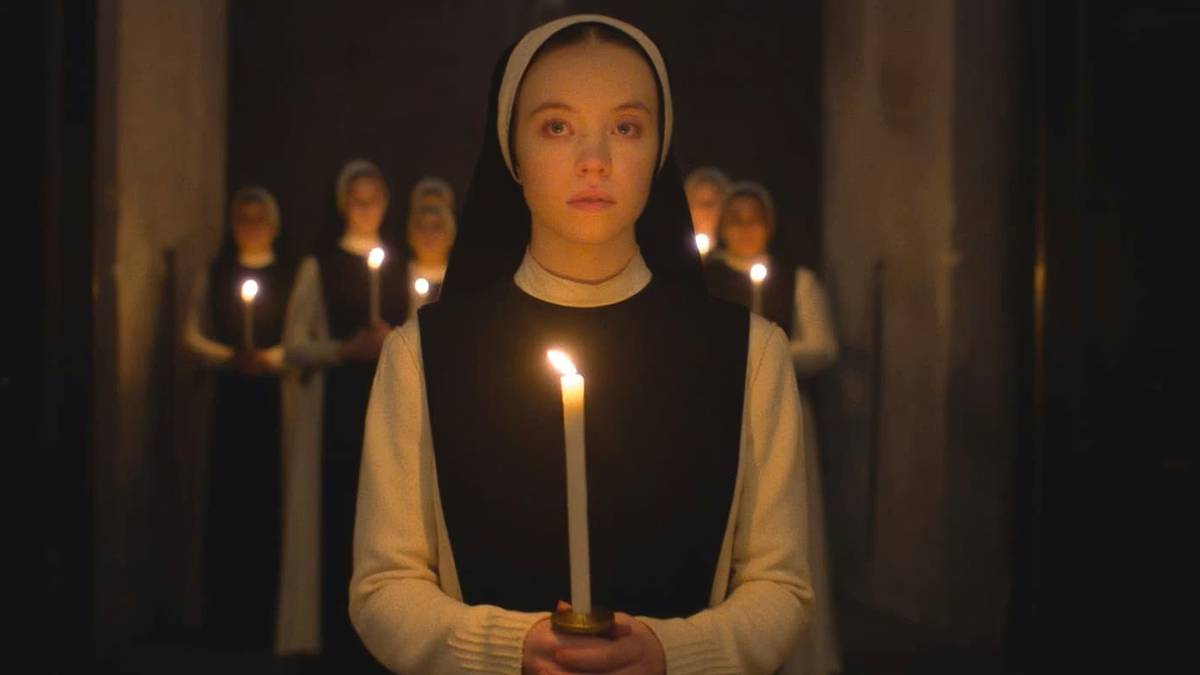
In Immaculate, Sweeney plays Sister Cecilia, an American nun who believes she survived a near-death incident as a child when she drowned in a frozen lake and was briefly declared dead due to God’s will. This hook immediately introduces a subtle clash between logic and faith. Was Cecilia’s survival the result of a miraculous stroke of luck? Or was she truly chosen by God to fulfill a holy purpose?
Immaculate deliberately leads us astray before answering these questions. Cecilia travels to Italy to devote herself to an all-female convent that doubles as a hospice for aging nuns. This invitation is extended by the charismatic Father Sal Tadeschi (Álvaro Morte), who seems a bit too invested in her arrival. The Gothic interiors of the convent are both beautiful and unsettling, with shadows that hold stomach-churning secrets gradually peeled back. While Cecilia seems content to be here, it’s hard not to notice that something is amiss. Cross-shaped scars are glimpsed on an elderly nun’s feet, and the chapel’s most-prized relic — a Holy Nail used to crucify Jesus — takes on a disturbing importance.
Mohan’s inspirations for Immaculate aren’t subtle. Cecilia has a harrowing nightmare in the same vein as the one in Rosemary’s Baby (1968), and becomes pregnant shortly after, despite being a virgin. Expectations for a demonic offspring storyline are set from this point on, an oft-repeated trope in religious horror like The Omen (1976) and Eli (2019). That said, Immaculate blends such inexplicable phenomena with cold, hard science.
Turns out that — spoiler alert! — Cecilia’s pregnancy isn’t a miracle or a curse, but the result of a gross scientific experiment that uses DNA samples from the Holy Nail to impregnate unsuspecting nuns. We learn that Father Tadeschi is a geneticist who has been trying to create a messiah for decades, but has only created malformed fetuses so far. Cecilia seems to be the exception, and the unwitting “chosen one.”

A clash between faith and logic can lead to existential anguish. In Danny Boyle’s Sunshine (2007), the crew aboard the Icarus II undergo intense pressure because they’re unable to resolve the tension between empirical data and the spiritual awe they feel while restarting the dying sun. Some begin worshiping the sun as a deity, while others give in to religious fanaticism by attempting to annihilate the human race.
Science fiction stories like Sunshine and Contact usually have more leeway to explore these themes with a philosophical bent (the exception being sci-fi horror flicks like Alien: Romulus, where a miraculous pregnancy becomes the source of terror). We rarely see horror movies use this clash outside an in-your-face declaration that scientific data falls short while comprehending the supernatural, like in The Exorcist (1973) or The Prince of Darkness (1987). Mohan’s Immaculate does something fascinating with this premise and plays around with visceral giallo sensibilities while at it.

Tadeschi’s actions subvert the science vs. faith conflict in the most ghoulish ways. On the one hand, Tadeschi takes the clinical route to cause forced pregnancies instead of relying on something more esoteric, like a ritual. At the same time, he withholds clinical care from his victims on the pretext that scientific minds wouldn’t be able to comprehend the holy nature of this “miracle.” There isn’t any tension between science and faith here, as men like Tadeschi (and the women who aid him) operate on apathetic hypocrisy to control female autonomy with every tool they can wield. They’re willing to burn victims alive to grease the cycle of abuse and justify their crimes with Bible verses etched behind holy statues.
Sweeney is the saving grace of Immaculate, which might’ve played off as a clichéd genre title without her injecting a measure of vulnerability into Cecilia. Things get plenty gruesome as the anxieties pile up, and Will Bates’ haunting score sustains the frights. In the end, Immaculate might not be the most inventive critique of religious hypocrisy, but it gets the job done.
Immaculate is available to stream on Hulu.