









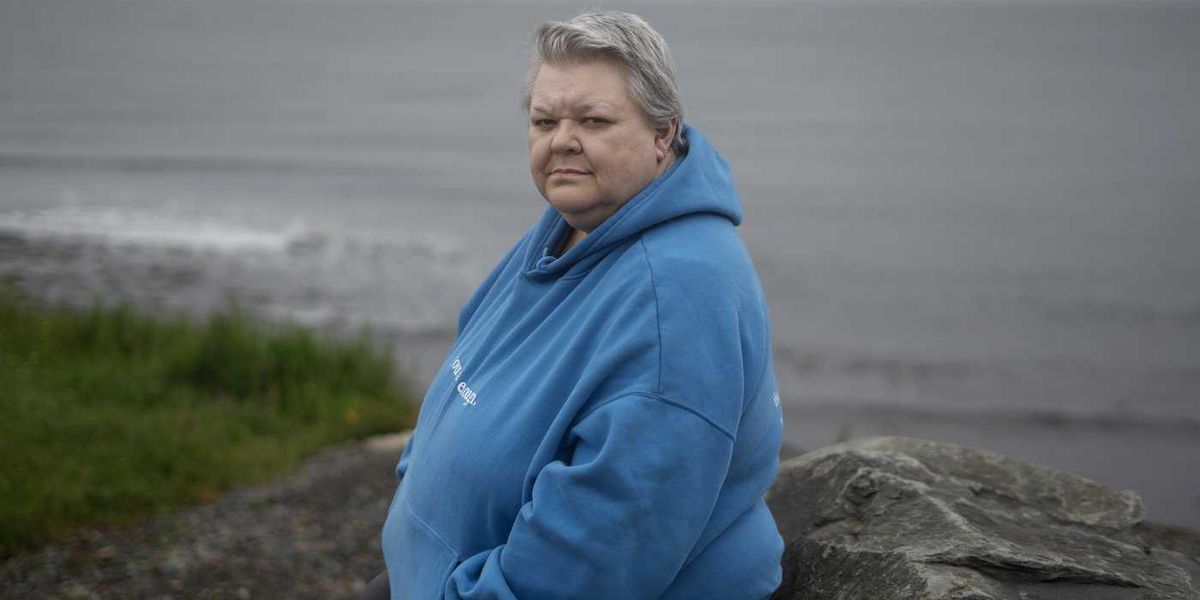
Betrayed. Dehumanized. Devastated.
These are the words some Canadians use to describe how they feel about a special government committee recommending not to expand medical assistance in dying to people seeking the procedure for a mental illness.
On June 17, the recommendation was released, stating that there was a lack of consensus on whether it was possible to determine if a patient has any prospect of getting better, and how to distinguish a MAID request from suicidality.
Reading the decision from bed, Kyle Thomson felt like a ghost. The 52-year-old had been waiting to apply for years, ever since the government first asked a group of experts to study the matter in 2021.
“People don’t understand what it’s like to have all of your hope, like, you’re holding all of hope around you like the tightest hug possible, trying to walk head first into a hurricane wind, trying to cross the finish line, and you’re almost there, and they move the finish line on you and you’re left alone, cold and scared,” Thomson says.
He squeezes his eyes shut behind black rimmed glasses.
The report was prepared for the federal government in advance of a long-awaited decision on whether to allow MAID for people who are suffering because of a mental illness, or if they should be permanently excluded. Justice Minister Sean Fraser said he will review the report before deciding on the government’s next steps.
Most witnesses who spoke at the committee hearings were opposed to the expansion. A number of psychiatrists said they worried people who don’t have access to proper mental-health treatment would seek MAID. Some also raised concerns about how providers could determine with any degree of certainty that a person’s mental disorder is irremediable.
Psychiatrist Dr. Mona Gupta is among the experts who hold the opposite view. She asks why the committee did not hear from people who live with mental illness and who want access to MAID.
“The idea that the only person in five years that they would hear from with lived experience would be someone who didn’t want MAID and who was opposed to MAID, I think is telling,” she said.
Dr. Margaret McKinnon, a clinical psychologist, was invited to share her story of living with major depressive disorder for 40 years. She said she would have applied for MAID had it been available a year ago. “Instead, I am now in a period of primarily sustained recovery, despite my previous persistent wish to die,” she testified in April 2026.
The report has a section on lived experience, though the rest of the people included did not testify, and instead wrote briefs.
Thomson, who has persistent depressive disorder, says he asked to testify, but in emails with a committee clerk reviewed by The Canadian Press, he was told that the panels were “quite full.”
Now, he says he feels “backed into a corner,” unsure of what to do next.
Some who are in a similar position have turned to the law to make the case for their eligibility, while others are looking to travel abroad and apply for the procedure. The Canadian Press spoke to four people about the impact this decision has had on their lives.
If you or someone you know is thinking about suicide, support is available 24/7 by calling or texting 988, Canada’s national suicide prevention helpline.
DANELIA CHACON
Dr. Danelia Chacon is applying for a medically assisted death in Switzerland, where she believes she could qualify.
“I live a very torturous life,” Chacon says from her kitchen table in Ottawa.
The 74-year-old retired pediatrician says she can remember feelings of depression and anxiety as young as six years old. She was beaten throughout childhood by her father, who died by suicide about 40 years ago.
Her stomach still clenches in knots at the memory of his traumatizing death. “That feeling I want to spare my daughters and my granddaughters from having. So that’s why I would like to have medical assistance with dying,” says Chacon.
She came to Canada from Venezuela with her two daughters at the age of 28. She got a job as a pediatrician in London, Ont., and every day, she would transform herself into a presentable physician to go to work.
At home, she says her self-worth was dismal. She describes her mood swings as “out of this world.” She would explode like a volcano with anger at her daughters if they so much as missed curfew. Now, she marinates in the guilt of it all.
Two years ago, she says she was diagnosed with borderline personality disorder. She also has post-traumatic stress disorder. She’s taken medication for depression and anxiety for decades, she says, and sees a therapist, tried ketamine and ayahuasca treatments, and has been ruled out for electroconvulsive therapy. “I’m tired,” Chacon says.
As a physician seeking MAID, she’s frustrated by the differentiation of a mental and physical illness.
“What I have is equivalent to an incurable cancer. So a stage four cancer metastatic everywhere — that for which there is no cure, because I have no cure whatsoever.”
“I shouldn’t be treated any different than someone who has the proper cancer and who is receiving palliative care.”
Lisa Marr, a retired paramedic who lives with PTSD, poses in Cow Bay, N.S. on Wednesday, June 24, 2026, where she goes to watch the waves and think of her parents in times of stress.
THE CANADIAN PRESS/Darren Calabrese
LISA MARR
Lisa Marr says she feels like she’s treading water. Some days she can cope and her passion for helping others is stronger than her will to die. Others, the former paramedic describes spiraling at the sound of an ambulance and can’t rise from the recliner in her living room.
“There’s no predicting what I’m going to be like on any day. That’s really what troubles me the most,” Marr says from her bedroom in Eastern Passage, N.S., red poppies plastered on the wall beside her.
It’s been almost a decade since the 56-year-old retired, but night terrors still torment her with recollections of people she could not save.
Marr says she has been diagnosed with complex post-traumatic stress disorder, bipolar II disorder, treatment-resistant depression, a generalized anxiety disorder and attention deficit disorder. She says she’s also had unsuccessful bilateral knee replacements, surgery on both shoulders, seven fused disks in her lower back and is waiting on bariatric surgery. She uses a walker, and can’t go for more than five minutes without sitting down.
“I’ve suffered a lot of physical pain. And it is nothing compared to what goes on in my head,” Marr says.
That’s what devastated her about the committee’s recommendation not to make MAID an option for people with mental disorders, she says.
“They don’t believe our pain is the same,” Marr says.
She lists the therapies she has tried: cocktails of medications, ongoing weekly therapy, and a treatment that aims to simulate nerve cells in the brain to improve major depressive symptoms. But nothing has helped for more than a couple months, she says.
She runs a peer support group for women of service with PTSD, many who can’t talk about what happened to them, and that has given her purpose. Right now she feels relatively stable, but says that could change on a dime.
“When I can’t see light at the end of the tunnel, that’s when I get really dark and that’s when I want to end it,” she says.
JOHN
John, whose real name is protected by a court-ordered publication ban, began rigorously reading the law in 2025, when he sensed the parliamentary committee was unlikely to recommend expanding MAID to mental health.
“I was really angry,” says John, a man in his late 30s living in the Halifax area.
“I’ve kind of found a way to work around the restriction. I shouldn’t have to,” he added, speaking from his living room couch as his cats wrestled nearby.
John says he was diagnosed with depression at age 10. His earliest memories are of powerful emotions, mostly anger, and the abuse he says he faced at the hands of his father, who he says once made him squat in a corner for 12 hours without food or water.
He was diagnosed with a borderline personality disorder more recently, which he says is like lacking emotional skin and feeling agony at the slightest touch.
In 2020, John says he was ready to die by suicide, but took a step back when he heard the federal government was going to expand MAID. He decided to try to find a way to keep living for two years before he sought the life-ending procedure, in large part because of his partner.
“I would like her there at the end. I would like it to be peaceful,” he said, adding that she does not know he is seeking MAID, which is why he requested a publication ban on a judicial review involving his case.
Since childhood, he’s cycled in and out of hospital during major depressive episodes. Doctors’ assessments reviewed by The Canadian Press show John has tried multiple anti-depressants, but reported that they make him angry and violent. Since 2020, as his two-year wait turned to six as a result of government delays, he says he went to a community mental health team in Halifax, tried more medications, and electroconvulsive therapy, to no avail.
Health providers sent him for brain scans to try and understand his aggressive response to medications, and incidentally found he had multiple sclerosis. The chronic disease is in its early stage, medical records show. John says he hasn’t noticed symptoms, which means he does not meet the criteria for MAID, which requires that the patient is in an advanced state of decline.
However, the diagnosis is now the foundation of his MAID application.
John began closely reading the law after he learned of a constitutional challenge in Ontario arguing the exclusion of people with mental disorders was discriminatory. He came across an interpretation of the law by Jocelyn Downie, a professor emeritus at the faculties of law and medicine at Dalhousie University, that appeared to apply to his circumstances.
There are three criteria for MAID eligibility: A) a person must have a serious illness, disease or disability, B) they must be in an advanced state of irreversible decline, and C) either A or B causes enduring and intolerable suffering, Downie says, placing an emphasis on “either.”
“You have to have A and B and either A or B can cause C,” Downie says simply, as a literal reading of the statute.
Using that logic, Downie says the mental health exclusion in the Criminal Code is written into the serious and incurable illness criteria, but there is no exclusion written into the section on the advanced state of decline. “That means that a mental illness can be the cause of your advanced state of irreversible decline in capability,” she says over a phone call, as long as the person also has a serious and incurable illness.
“So how that applies to me is I have MS,” John says, “so I can use my MS to satisfy ground A, or criteria A. And criteria B, I can then use my psychiatric disorders to qualify for. And then C is of course more subjective, but can come from either illness.”
John says the MAID program in Nova Scotia has agreed to assess him with this interpretation in mind. His first appointment is this week.
“If this is the compromise that I have to make, which is a slower process, but one that might get me to where I need to go in the long run, I’m willing to engage with it.”

Kyle Thomson is shown selfie handout photo taken in Brampton, Ont. in June 2023.
THE CANADIAN PRESS/Handout-Kyle Thomson
KYLE THOMSON
Thomson tried to take his own life at the age of 18 after his first heartbreak. A friend had also excluded him from a party and he says he felt so low he couldn’t handle it. He ended up in a coma for a week and in a mental health facility for a month.
Many years later, in the wake of a separation from a longtime partner, he wanted to take his own life again and was admitted to hospital. Medical records show his emotional instability, impulsiveness, chronic feelings of emptiness and perceived sense of abandonment translated to a diagnosis of a borderline personality disorder.
He could no longer work or pay rent. He moved into his sister’s house in Shelburne, Ont. He could not afford the therapist he had started seeing at $180 per hour near the end of his relationship. He’s been on a wait list for a psychiatrist for about six years.
A need for more access to mental-health services was noted as a “recurring theme” in the special committee report, which referenced some witnesses arguing that “[w]e have an obligation to provide access to mental health treatment before providing access to MAID.”
Thomson has visited the emergency department in crisis three times in the last couple years and told health providers he wants to die.
“They’ve left me with nothing,” he says of the parliamentary committee.
“It’s just, I want out and I can’t see another way.”
This report by The Canadian Press was first published July 6, 2026.
Canadian Press health coverage receives support through a partnership with the Canadian Medical Association. CP is solely responsible for this content.
By Hannah Alberga | Copyright 2026, The Canadian Press. All rights reserved.

![31st Aug: Nine to Five (1980), 1hr 49m [PG] – Streaming Again (6.45/10)](https://occ-0-273-1001.1.nflxso.net/dnm/api/v6/0Qzqdxw-HG1AiOKLWWPsFOUDA2E/AAAABfvo3GVv8I8tb8zEN4axg5zuScBYn88awQbzVQRH_vCtpvSG7P-LD6HSSd-8EG6V4xxsIa2MIA1YvyeU9UpV9Du82kdOJGxCV7BG-_LSy7Vg58B0JIbq_sc-8DJ6bHGgHphOeY3nrgRmWjPrvcwIZWE2s3GIpseI9pEoEOA5OLfXNw.jpg?r=d7a "31st Aug: Nine to Five (1980), 1hr 49m [PG] – Streaming Again (6.45/10)")