

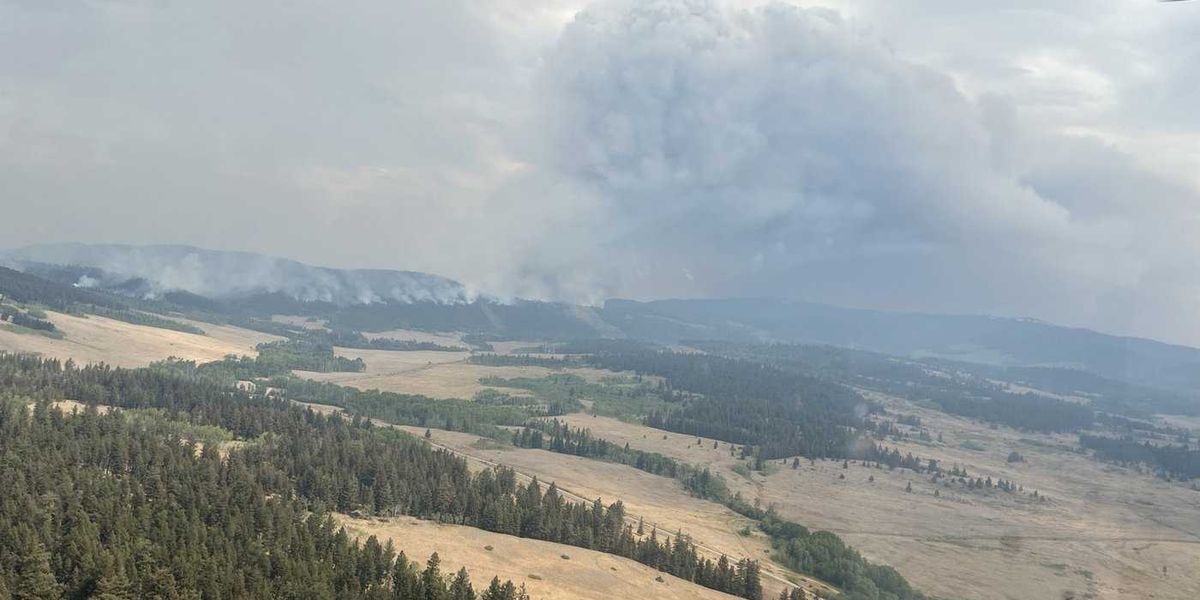





When heavy smoke from Ontario’s wildfires drifted down south people on Polymarket placed their bets on when New York’s dangerous air quality would improve, wagering nearly US$54,000 in three days.Eduardo Munoz/Reuters
The heavy smoke from Ontario wildfires drifted down to New York City last week and turned the sky a hazy orange. Pickup soccer games were cancelled. Public libraries and local police stations handed out face masks. And over on Polymarket, people placed their bets on when New York’s dangerous air quality would improve, wagering nearly US$54,000 in three days.
Prediction markets make it exceptionally easy for users to gamble on the outcome of real-world events. These online platforms – led by the two biggest, Polymarket and Kalshi – have exploded in popularity over the past year. In mid-2025, their combined monthly volume of global bets totalled US$2-billion, according to the Pew Research Center. By this April, it was closing in on US$24-billion.
The vast majority of the bets are staked on sports and politics, such as the winner of the World Cup (US$5.7-billion wagered) or the next prime minister of Ethiopia (US$229-million and change). But there are now options to put money on weather disasters, too.
Prediction market Kalshi scores big with $27-billion FIFA World Cup windfall
Among them: Will a Category 5 hurricane hit the United States this year? Will an 8.0-magnitude earthquake strike the world this month? What about an earthquake in L.A. before 2027? Or in Japan before 2030? What about sea ice in the Arctic – will it retreat by more than 5 million square kilometres before summer is up?
Last year, people gambled almost US$240-million just on Kalshi’s climate-related markets. They’re on pace to pass US$1-billion by the end of 2026.
And while prediction markets have been largely off-limits for Canadians, who can only access the U.S.-based platforms by disguising their location with a virtual private network, Kalshi has partnered with Wealthsimple on an app coming this year. Sports bets won’t be allowed on Wealthsimple Predict. But climate-related trades will.
During the 2026 World Cup, Kalshi blanketed U.S. airwaves with ads of Croatian soccer star Luka Modrić betting on high temperature records.KAMIL KRZACZYNSKI/AFP/Getty Images
“The number of extreme weather disasters are on the rise. The impacts on people are on the rise,” said climate researcher Katharine Hayhoe, chief scientist of the Nature Conservancy. “So if you’re looking for something getting worse and worse that gives you more and more chances to bet, I’m very sorry to say climate change offers those opportunities.”
Kalshi hasn’t exactly been shy about drawing that connection. The prediction market tapped Luka Modrić to serve as a brand ambassador, and during the World Cup, Kalshi blanketed U.S. airwaves with ads of the Croatian soccer star mulling a bet on his phone. “Will 2026 be the hottest year ever?,” it offered. The odds overwhelmingly favoured yes.
Modrić, incidentally, played his final World Cup match under an extreme heat warning in Toronto, where the humidity made it feel like 44 C, city organizers scrapped plans for outdoor watch parties, and the hydration breaks were wholly justified.
Betting on potentially fatal temperatures and climate calamities can seem grim and nihilistic. “Heat records were being smashed throughout the tournament, and the ad appeared to be completely unselfconscious of this irony,” Ms. Hayhoe said. “It’s like betting on whether your own house will be destroyed. It demands a psychological distance.”
Evidently lots of people have achieved that psychological distance. They gambled on the duration and fallout of the devastating L.A. wildfires early last year, staking more than US$1.2-million on Polymarket in two weeks, Aeon Magazine reported. And soon, they’ll be able to bet on a new prediction market called Wyldfyre, which just launched with an express focus on California fires. The tagline: “You can’t predict wildfire. But you can trade on it.”
Ms. Hayhoe worries the growth of climate prediction markets could incentivize people to put their thumb on the scale. In California, already, roughly 90 per cent of wildfires are started by humans. Almost all of them are accidental, sparked by burning trash or bonfires or gender-reveal pyrotechnics. Fewer than 10 per cent are due to arson.
In April, though, a mystery trader netted US$21,000 by allegedly tampering with a Paris weather station. Data from the station was used to settle Polymarket wagers on daily temperature highs. Apparently, someone whipped out a lighter (or maybe a hairdryer) to mess with the sensor and score big.
There is another, more promising, less criminal prospect to all this weather betting, however. Recent research from Columbia University found that taking part in climate prediction markets increases concern about global warming – and can even win over some climate-change skeptics.
During the devastating L.A. wildfires, people gambled on the duration and fallout of the blazes, staking more than US$1.2-million on Polymarket in two weeks, Aeon Magazine reported.Mario Tama/Getty Images
“Climate change is the perfect problem for the brain, because the brain is very bad at thinking about its own future,” said Moran Cerf, a neuroscientist at Columbia Business School and co-author of the study. “Prediction markets are a mechanism that allows us to bring the future into the now.”
Prediction markets are coming to Canada – and young investors are already betting on them
More than 1,000 participants were given $20 and invited to place actual bets on climate events: if July would be the hottest month in a decade, for example, or if C02 levels would pass a certain threshold in August. Once people had a financial stake in the matter, they began to investigate past weather patterns and average sea levels; they taught themselves about air pollutants and global warming indexes.
“By holding a stock in the future, people became more aware of and worried about climate change,” Mr. Cerf said. That proved true across the political spectrum. Even those who doubted human-caused climate change – a number on the rise in Canada, according to a new Angus Reid poll – began to shift their view. “In making money off the science, they ultimately believed the science,” he said.
They also demonstrated greater support for climate action, allocating their winnings to various environmental organizations and politicians who championed the cause. That led Mr. Cerf and his co-authors to consider a new possibility. If people had the chance to gamble not only on climate disasters but climate solutions – like clean energy targets or electric vehicle uptake – their investment in those solutions might deepen further.
The researchers even met with Polymarket and Kalshi to suggest different wagers, but so far, interest has been muted. “If they were to believe there is money to be made on these trades, it could be a great economic tool to change people’s psyches,” Mr. Cerf said. It’s at least a decent bet.