

![1st Oct: The Game (1997), 2hr 8m [R] – Streaming Again (6.85/10)](https://occ-0-2433-2430.1.nflxso.net/dnm/api/v6/0Qzqdxw-HG1AiOKLWWPsFOUDA2E/AAAABfjygdKbNMwuXMp_quskOx8HQ54h40Ag_u1m3_E4GS65tD_DtqNh0ypXyIFblBUNpfWipNY9KAylO2BTQE1ePcrw_RaYrDaTrjg8.jpg?r=d01 "1st Oct: The Game (1997), 2hr 8m [R] – Streaming Again (6.85/10)")



![1st Oct: Happy Halloween Playlist (2026), 10 Episodes [TV-Y] – Streaming Again (6/10)](https://occ-0-2433-2430.1.nflxso.net/dnm/api/v6/0Qzqdxw-HG1AiOKLWWPsFOUDA2E/AAAABT71JDLs5byCeK3FRKWGPZikQ-fOwbyjMIO83wnxojP_mvuS34g8alZCn7VSL6FRuQS8f9CPiQ6arvgulPMHQx0MnZIexAWRDncEnL6F8xNxU1DhUzLMX1Kxt_7n3dcrUEKtZcFJUxO8pD3zFTowOMpKvmCVYKvP8NbZ50hmFkk.jpg?r=8b5 "1st Oct: Happy Halloween Playlist (2026), 10 Episodes [TV-Y] – Streaming Again (6/10)")




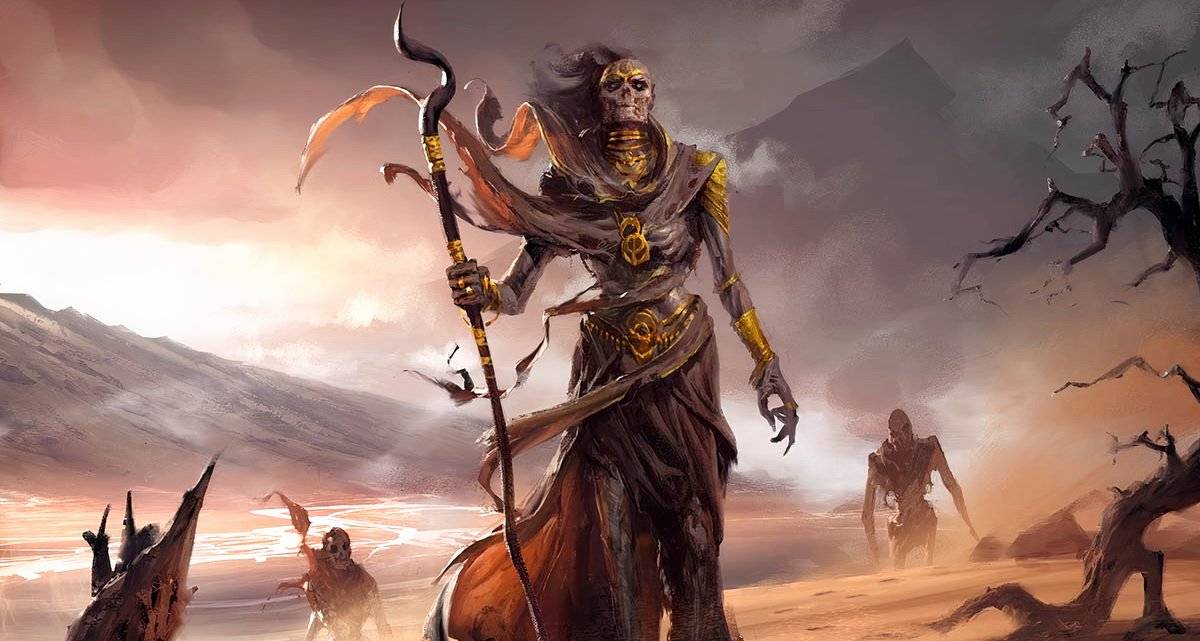
Everyone knows how this story ends. A brave but probably stupid archaeologist ventures into an ancient tomb, perhaps with a crew. They dodge traps and ignore warnings etched into stone walls in hieroglyphics. Once the sarcophagus is disturbed, the mummy rises to immediately claim its first victim. Even if some intruders survive, they’re almost always cursed — until the mummy hunts them down and devours their souls. Somehow, Magic: The Gathering once managed to tell that entire story through the mechanics on just one card. It’s a shame that it’s been buried for more than 15 years.
In a recent interview with Polygon, vice president of Magic design Aaron Forsythe and senior creative designer Doug Beyer reflected on the lasting legacy of Magic 2012, a core set that recently celebrated its 15th anniversary. When asked about cards from the set the team expected to be more memorable that somehow got lost to time, Beyer had a decidedly spooky answer.
“I definitely thought Vengeful Pharaoh would see a bit more play,” Beyer said. “It was such a flavorful top-down design — a creepy mummy who was cursed to leap back to life whenever someone dared to disturb your hallowed tomb.”
In a set with zero legendary creatures, Vengeful Pharaoh sort of feels like it should be one. For a cost of five mana (two colorless and three black), you get a 5/4 zombie with deathtouch. That’s already pretty spot-on flavor for a mummy. Even if it merely touches you, you’re dead. It’s powerful but slow, especially considering it requires three black mana to play, which is harder to pull off in multicolor decks.
The really interesting part is the second ability:
Whenever combat damage is dealt to you or a planeswalker you control, if this card is in your graveyard, destroy target attacking creature, then put this card on top of your library.
There’s a lot to unpack here, but from the top down it tells a really interesting story: anyone who disturbs the tomb by attacking while the mummy is buried awakens the undead creature and is killed right away. Then, the Vengeful Pharaoh starts the very slow crawl of restarting the loop by going to the top of your library. The instant-kill effect is good, but placing Vengeful Pharaoh at the top of its owner’s deck means they likely have to draw it, pay another five mana to play it, and lose it in combat again for its ability to trigger. (Unless they’re also utilizing mill and/or sacrifice strategies, which are both fairly common in black.)
“I think the curse ended up landing mostly on the person who chose to put it in their deck!” Beyer said. Much like your average undead Egyptian king, Vengeful Pharaoh is quite inflexible as a card, which is probably why it hasn’t seen much play in the years since. Of the 4.86 million Commander decks logged in EDHREC, Vengeful Pharaoh only appears in 0.14% of them, and they’re all predictably zombie decks. It’s a popular choice in Egon, God of Death // Throne of Death decks since the Throne side mills a card at the start of your upkeep. Another is Taigam, Sidisi’s Hand which skips your draw step to instead have you look at the top three cards of your deck before putting one into your hand and two into your graveyard. To run Vengeful Pharaoh effectively, you need a way to circumvent having to pay its full cost over and over and keep it in your graveyard. Otherwise, it really does feel more like a curse for whoever put it in their deck. You sort of have to build your entire deck around the possibility that the pharaoh might show up in your hand.
“I thought it would make more of a splash,” Beyer said. “I believe it has literally only ever been printed in M12. Maybe someday it’ll hop back out of the graveyard once more.”

Forsythe explained that Vengeful Pharaoh arose out of an internal design contest “to make the most flavorful versions of resonant concepts,” and he won his own contest with the card. In a July 2011 design blog post, Magic head designer Mark Rosewater wrote about how Vengeful Pharaoh was actually emblematic of a huge shift in the way the game was being designed at the time.
Before Magic 2010, the annual core sets had always been reprints of cards that were previously introduced in expansions. But Forsythe had the ingenuity to think outside the box.
“One of the big discoveries that Aaron made which led to Magic 2010 (and thus to Magic 2012) is that Magic needs to have a place where we can put cool card designs that don’t easily fit anywhere else,” Rosewater wrote. “Vengeful Pharaoh should be able to exist without waiting for Magic to visit an Egyptian-themed world (don’t worry, I’m sure we’ll get there one day). If we want to maximize Magic‘s ability to make cool, resonant cards, then there has to be a place to put them. The core set is that place.”
For most of Magic’s history, core sets provided a recurring home for curated and accessible assortments of setting-agnostic cards. But they rotated out of Standard rather quickly. That model was replaced with 2024’s Foundations, a sort of definitive core set that will remain Standard-legal until 2029.
“Honestly, I now think that the annual core set model was a little flawed,” Forsythe said. “I’m much happier with the Foundations model we have now — but these sets were great places to put setting-agnostic cool individual Magic cards.”
Foundations may offer a sturdier backbone for Standard, but Vengeful Pharaoh demonstrates what we lost when the annual core set approach was sunset: a home for strange, self-contained designs that could tell an entire story on a single card. For now, this pharaoh remains exactly where it was designed to be… buried and waiting for someone to disturb its tomb.