








If you ever do a deep dive into Charles Schulz’s Peanuts, you’ll find a lot that’s remarkable about the first decade of the strip’s run. Like many American newspaper comics, there’s a lot of what modern fans might call “early installment weirdness,” as both Schulz’s art style and characterization hadn’t yet settled down. Everyone’s a little off-model, and most of them act quite differently from who they’d eventually turn out to be.
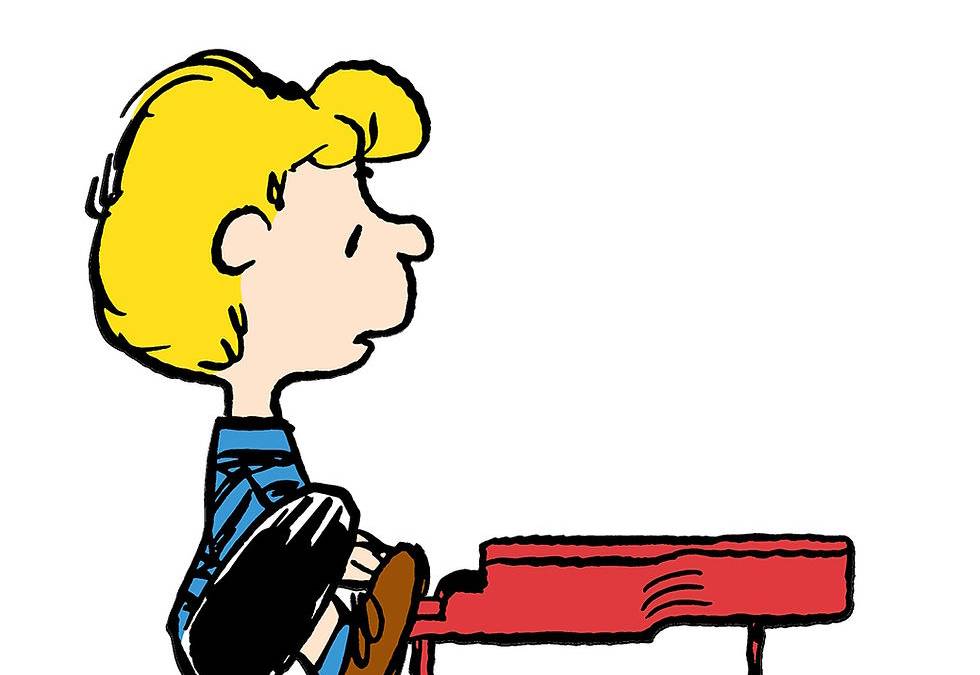
Like Sally and Linus, Schroeder enters Peanuts as a baby, first appearing in the strip for May 30, 1951. A few months later, Charlie Brown tries to show Schroeder how to play piano, in a comic inspired by Schulz’s daughter Meredith, but it turns out the kid is already a musical prodigy. That quickly became Schroeder’s primary character hook for the next 40 years, alongside his love of Beethoven.
Schroeder subsequently got aged up. By the 1960s, he was depicted as being roughly the same age as most of the rest of the core Peanuts cast, which is when he entered heavier rotation as one of the gang.

It’s rare to see Schroeder anywhere but behind his trademark piano (or as the nearly-unrecognizable catcher in Charlie Brown’s baseball team). While he fell out of regular use in time, especially in the 1990s as Rerun Van Pelt took center stage, Schroeder is largely a vehicle for Schulz to run some surprisingly elaborate musical gags, such as the various strips where Schroeder’s sheet music takes on a strange life of its own. Schroeder also ends up spending a lot of time dealing with Lucy’s one-sided crush on him.
The music is the message

Charles Schulz, as a general rule, wasn’t quite as fond of comic surrealism as other newspaper cartoonists. While he did use Snoopy’s overactive imagination as a ready excuse to take Peanuts into bizarre new settings, such as World War I, most of the day-to-day humor in Peanuts came from situations and wordplay.
That meant when Schulz did play with the format, it hit harder than usual. Schroeder in particular was the focus of an unofficial series of music-based visual gags, which popped up once or twice a year between roughly 1981 and 1991.
If you haven’t seen these strips before, it’s worth keeping an eye out for them on your next reread. Schroeder’s other go-to jokes – being annoyed at Lucy or being a classical-music snob – have their moments, but Schroeder’s musical theater is an underrated joke in the Peanuts canon.