





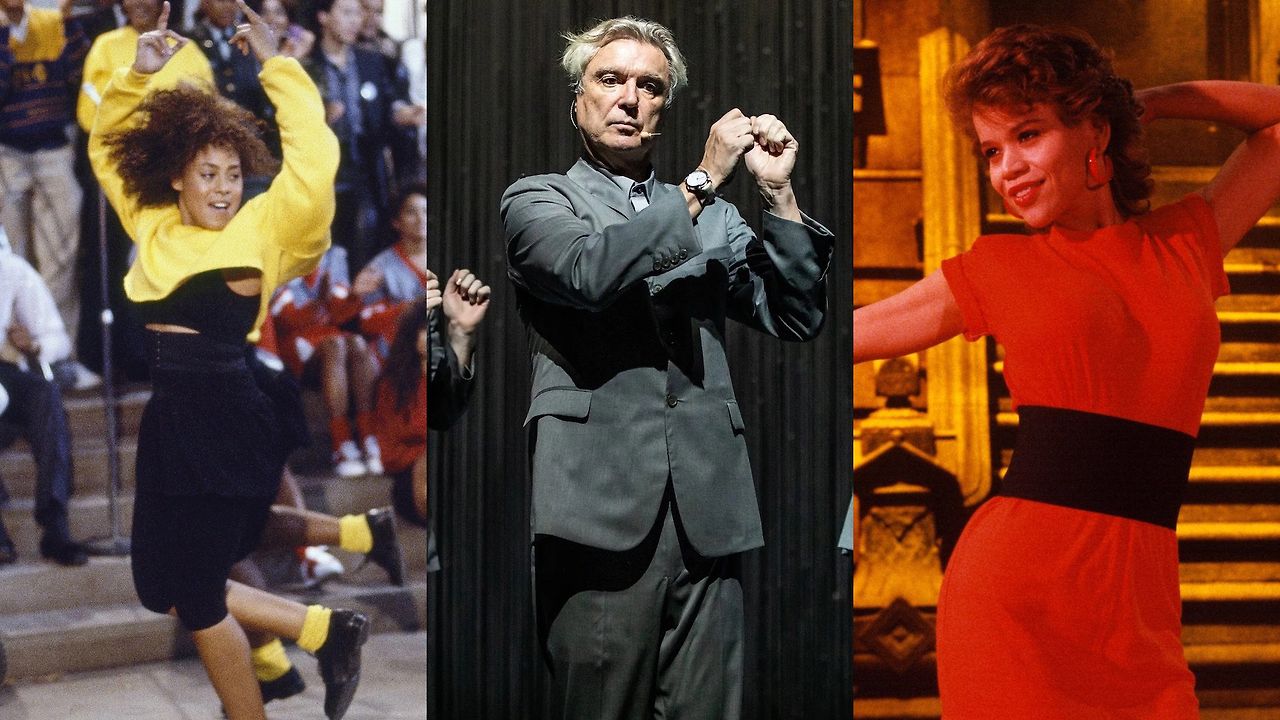
Arriving today from the Criterion Collection, their release of American Utopia features a 4K digital remaster, a new documentary highlighting the film’s creative team, a conversation between Byrne and Lee, an essay by critic K. Austin Collins and an appreciation by critic Jia Tolentino. It’s also part of a long line of Lee’s many musical moments. Some of these instances are just that, brief encounters between song and dance in She’s Gotta Have It, Malcolm X and Highest 2 Lowest. Other occurrences have happened over the span of entire movies: School Daze, Bamboozled, Passing Strange, Chi-Raq and, of course, American Utopia. All of these films are born from a life spent in and around melody, from childhood through film school.
Lee grew up in an artistic household. His father, Bill Lee, who composed the scores for the director’s first four films, was a jazz bassist and pianist known for collaborating with Duke Ellington, Aretha Franklin, Gordon Lightfoot and more. “My use of music and my understanding of music, I have to give all the credit to my father, because he introduced me to music—jazz, as he would say, the only real music—at a very early age,” Lee explained to Delroy Lindo in a 1999 conversation, a talk, like many I’ll reference in this piece, that can be found in the book Spike Lee: Interviews. To Lindo, Lee says that he saw his father play at clubs like the Beer Inn and Village Gate, and the Newport Jazz Festival. In a 1991 Playboy interview with Elvis Mitchell, Lee recalled needing to turn his Beatles music down when his father came home. “He didn’t like no music besides jazz. [Shouts] ‘Turn that bad music off!’,” said Lee.
Along with his father’s musical background, Lee’s mother, Jacqueline, a teacher, also nurtured his artistic interests. Because Lee’s father hated Hollywood films, she’d often be the one to take Lee to the movies. Speaking to Mitchell, Lee remembers seeing Hatari, Goldfinger, Dr. No and A Hard Day’s Night with her. She also took him to Broadway shows. The combined exposure by his parents inspired Lee’s sister Joie to turn to writing and acting—frequently in her brother’s films, like Mo’ Better Blues and Crooklyn—and his brother Cinqué to become a drummer, photographer, actor and director. Lee would, of course, go on to earn his MFA from NYU.