![3rd Apr: Arrival (2016), 1hr 56m [PG-13] – Streaming Again (6.95/10)](https://occ-0-953-999.1.nflxso.net/dnm/api/v6/0Qzqdxw-HG1AiOKLWWPsFOUDA2E/AAAABbyc5Sh_RWoGtmSuG5QfdcG2dXp5TYrsgWcGETFbn6IVSs-21oI1FBuoXmQhUnHuwNOjGkLQgZ8Ko12oINhf4TS9v_uySaChZ1By.jpg?r=5c0 "3rd Apr: Arrival (2016), 1hr 56m [PG-13] – Streaming Again (6.95/10)")


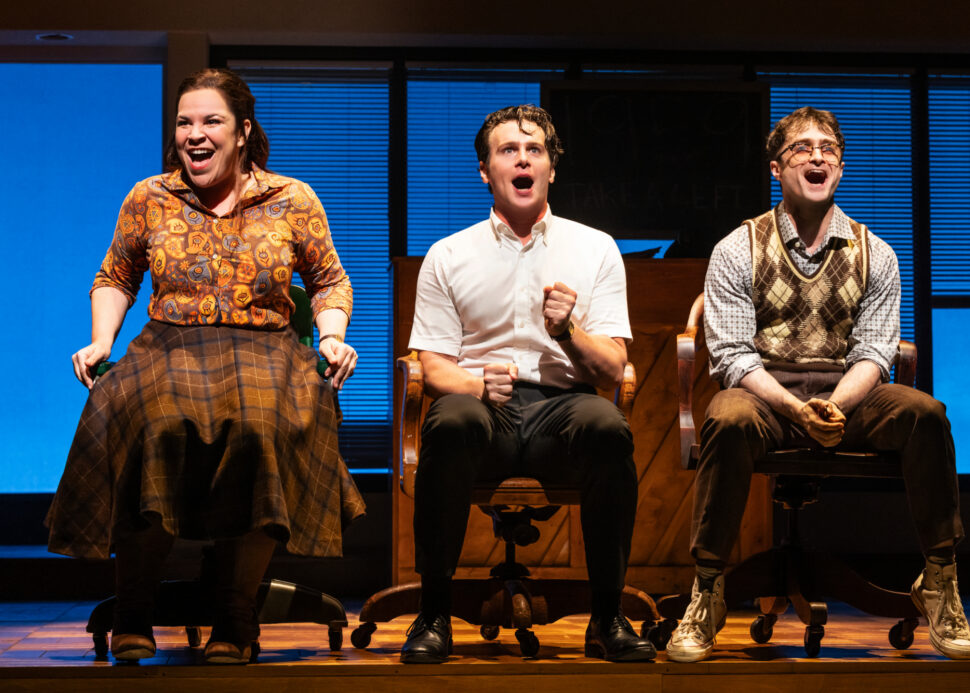






Pamela Mala Sinha is in the spring of her creative life.
The acclaimed actor and playwright is currently working on Nirvana, a film adaptation of her Governor General’s Award-nominated play New. In February, Montreal’s Imago Theatre is staging a production of Sinha’s one-person show Crash, which will, for the first time, feature an actor other than the playwright (namely Ghazal Azarbad). And in March she’ll appear in Theatre Aquarius’ production of Murder on the Orient Express. On top of all this, she’s developing a new play, Majesty, for which she’s mining India’s archives and working with her biggest cast yet.
I first met Pamela last year at Tarragon Theatre, having recently seen her scene-stealing performance in the 2024 film Shook, and she told me to keep in touch. When I was selected to be part of Neworld Theatre’s Page Turn program, and learned of this fertile 2026 period for Pamela, I pitched Intermission a trilogy of articles following her during this busy time, keen on learning how a play comes to be, and how a writer sustains their practice in the industry.
There are few other Toronto theatre artists who, like me, are second-generation writers consciously pushing back against the stereotypes projected onto their work and subverting these expectations instead. Pamela was very open to the prospect of taking stock of her career and invited me into her practice over the course of a few months. Due to the familiarity and mutual respect we established during this process, I will refer to all artists by their first names.

Early in January, I found myself in Pamela’s dining room.
I was observing a rehearsal of New for its recording on CBC’s PlayME podcast series the following afternoon.
Multidisciplinary artist Zorana Sadiq, featured on this recording of New, knows the PlayME process well, having recorded her own show MixTape for the series. “It’s like being kidnapped for the day,” she said, referring to the session’s long hours. “But it’s theatre.”
Set in Winnipeg in 1970, New centres a handful of Bengali immigrants whose desires collide within the melting pot of a housing complex. In the opening scene, Qasim, a doctor in love with the white nurse Abby, marries Nunzha, a fellow Bengali in India, over the phone. This act ripples through the six other characters’ lives when Nunzha arrives at Winnipeg’s airport three months later. Other characters include Aisha, a staunch feminist who wants to start a family with her distant husband Ash; and Sita, a dancer who tries to process the grief of a stillbirth alongside her dismissive husband Sachin.
The two-act play — first produced by the Royal Manitoba Theatre Centre in association with Necessary Angel Theatre Company — had its world premiere in Winnipeg in 2022, followed by a 2023 run at Canadian Stage’s Berkeley Street Theatre.
For the recording, Alan Dilworth, director of the original production, returned alongside the male actors: Ali Kazmi as Qasim, Fuad Ahmed as Sachin, and Shelly Antony as Ash. But the women actors were all, as it were, new to it: Zorana as Aisha, Lisa Ryder as Abby, and Ellora Patnaik as Sita, with Pamela, who’d originally played Sita, stepping into the role of Nuzha.
Over two intense days of rehearsal and recording, I paid attention to how Pamela viewed her work through the possibilities and limitations posed by this audio-only iteration. It was her hope that she convincingly embodied Nuzha, that the recording should retain her intentions, and that the personal and political histories operating between the lines were honoured.

ACT ONE: THE REHEARSAL
“Just think the thoughts and say the words,” Alan advised in his opening remarks.
We were seated around a long dining table, scripts open before the artists.
“The exciting challenge,” Pamela added, “is to keep the pace and earn the pauses without an audience seeing the characters in action.”
Interruptions were rare as the reading began, but, when her character Nuzha arrived at the airport, Pamela broke the silence. “There needs to be more hesitation there,” she told Fuad, whose character Sachin later gravitates toward Nuzha, meaning his hesitation critically initiates a central narrative arc.
Her notes throughout the afternoon were in this vein of articulating characters’ motivations. She emphasized that pauses, switches between accents (bolded in the script), and instances of overlapping dialogue required more careful delivery than they would in person, since these sonic resonances now carry increased weight.
“They are trying to attain an equilibrium that is unattainable,” Pamela remarked to the cast about the most dramatic scene, set during Diwali and meant to have what she referred to as a “pressure-cooker feel,” which she was vocal about not having quite reached that day. In contrast, I felt that the ending scene, between Qasim and Nuzha, effortlessly stuck the landing of both finding a new beginning for themselves.
Before the rehearsal began, Alan had told me that in his experience performing for microphones rather than a live audience would render the material more intimate. I think this proved true.
For instance when Sachin and Nuzha, each harbouring their respective loneliness, connect for the first time, Fuad and Pamela, seated directly across from each other, locked eyes and seemed to experience the impulse to embody it rather than merely energetically read the lines. Alan’s eyes widened in enthrallment, his mouth agape. Afterward, we giddily applauded.

From time to time throughout the five-hour rehearsal, I would glance over to observe Pamela, who rocked back and forth when everything flowed, bit her lip when a two-hander became charged, and furrowed her eyebrows whenever she readied to issue a “gentle reminder.”
Before her were three piles: the backs of the pages that had already been read, the stack of scenes to come, and a blank page for her to write herself notes. It became clear from the outset that she would need to amend the text before the morning, in order to make explicit what could no longer be implicit or left to the Foley artists.
For instance, she’d later translate a stage direction — “ABBY steps up behind him. She hands him his lighter” — into a line for Abby: “Take my lighter. Why don’t you keep it with your pack like a normal person?”
Even though I’ve previously been in rehearsal rooms with playwrights present, I was surprised to find that this text — even though it’s been published and toured — remained so mutable to its creator. Knowing that Pamela was shaping the film adaptation, and had stayed up the whole night working on extensive, inspiring notes from a story editor, only furthered my sense that New was still in a state of evolution.
After everyone left, Pamela showed me where she works — a remotely beautiful study on the second floor with a grey analyst’s couch in the centre of the room, a poster of her husband John Mighton’s 1993 play Body and Soul leaning on the wall, the couple’s cluster of Dora Awards on a dustless bookshelf.
Back at the dining table, she scooped up mushroom pâté with a slice of bread, and spoke of how overwhelmed she was with all the work ahead of her for the film, and now the play too.
“But it’s your creation,” I said. “If anyone is going to do it, it has to be you.”
“I know,” she said faintly smiling, her eyes twinkling through the exhaustion.

ACT TWO: THE RECORDING
I turned my page and scanned the dimly lit room. Pamela sipped her coffee. Alan adjusted his headphones. Zorana pushed a light out of the way. Fuad showed Ali a photo of his newborn. Shelly read over his lines. Ellora snuck bites of a crumbly muffin. Lisa stretched.
Studio 205 at CBC Toronto Studios is small enough that a sound as minor as shifting in one’s chair, or a morning grumble from one’s stomach, picks up on the track. There were three microphones — a logistical issue to be solved for every scene — and flimsy music stands that weren’t initially high enough, requiring inventive forms of elevation and stabilization.
Produced and hosted by Laura Mullin and Chris Tolley, PlayME, now in its eighth season, treats audio drama, both entertainment and archival, as something closer to cinema than theatre.
Chris, working as sound engineer, had divided each scene into “units,” with group scenes broken up even further into a number of “takes.” If an actor made a mistake, they resumed from the beginning of a line, and if the sound was “blown” and a specific line-reading needed to be re-done there were “punch-ins,” or “wilds,” which were multiple variations of a single line.
“I got what I need,” Chris would say after each unit, looking over to Alan and Pamela for confirmation.
Pamela straightened her script and informed Ali of new additions she’d made: in the over-the-phone marriage she added the lines, “Yes, I have the photo,” and “Yes, I have the contract” — minute implementations that provided the listener with crucial information.
Later on, Ali suggested recording the sound of “feeding a ladoo,” a ball-shaped Indian sweet, since the Foley artists might have difficulty finding such a culturally specific sound; similarly, Ellora, a professional dancer, brought out bangles to re-create Sita gesturing “water” and “river.”
I found re-takes particularly interesting. Witnessing the implementation of a nuance — emphasizing a capitalized word, softening the accent of the character to alter their age, barreling through to the end — furthered my immersion in the audio-only theatrics.
At one point Zorana asked Pamela if her character, Aisha, was tipsy in a scene. Without hesitating, Pamela responded: “Of course, that’s why she bumps into the furniture, and why Ash suggests whether she might want tea.” The tea had been insignificant to me, but I found its sudden illumination a testament to the fact that no word in the play was arbitrary, or unearned.

The Diwali scene, as expected, remained an issue, with six actors on the studio’s three mics. They practiced the choreography of switching places repeatedly, the tension in the scene finding a mirror in the room. After a couple of false starts, they broke the scene down into isolated units, fine-tuning the pace of each as they progressed toward its climactic precipice, and eventually arrived at a place where Pamela and Alan were satisfied.
It was decided early in the day, when it became evident that nine hours wouldn’t be enough time to record the whole play, to focus on completing the group scenes. The team would return at a later date, either en masse or in pairs, to complete the remaining two-handers.
Before I left, Pamela asked me what I thought.
I told her that, while it differed to the usual rehearsal process, where the eyes of the audience were of utmost concern, the attunement to the aural reception appeared most beneficial to a playwright. I added that I’d enjoyed watching her unpack her intentions, from the words uttered to the nebulous silences enveloping them, and her discovery of the necessary finishing touches. She concurred, saying she’d shared thoughts and feelings that’d never surfaced before.
As she gathered her script off the floor, dense with notes on playing Nuzha, I realized how much of the creative process is an ongoing negotiation with one’s dreams and the realities of their materialization. It was from her imagination this world of meanings sprung. Then I suddenly recalled her dedication to the relatives who inspired New: “If anything here offends, I know you’ll forgive me. If there is something here you find remotely beautiful, you are the reason.”
Nirris Nagendrarajah is writing this three-part series of articles as part of Page Turn, a professional development network for emerging arts writers, funded by the Canada Council for the Arts and administered by Neworld Theatre.
Intermission reviews are independent and unrelated to Intermission’s partnered content. Learn more about Intermission’s partnership model here.

WRITTEN BY
Nirris Nagendrarajah
Nirris Nagendrarajah (he/him) is a freelance culture critic from Toronto whose work has appeared in LudwigVan, OperaWire, MetRadio, Polyester, Fête Chinoise, In The Mood Magazine, and Cha: An Asian Literary Journal. He was an Assistant Dramaturge for ‘Unmute,’ which premiered at 2024’s Toronto Fringe Festival, and is currently at work on a novel about the anxiety of waiting.
LEARN MORE