





![31st Jul: The Fast and the Furious (2001), 1hr 46m [PG-13] – Streaming Again (6.4/10)](https://occ-0-8753-92.1.nflxso.net/dnm/api/v6/0Qzqdxw-HG1AiOKLWWPsFOUDA2E/AAAABQZuJHGwIspQBQbIDBRnv8G2DqTd1VGzmS045gT9CbfHzfOVg57ZVZX6IOahNT2EdvI_Jc3o6G7HhD1TmDO7yj8UC45liF04E2SL.jpg?r=d58 "31st Jul: The Fast and the Furious (2001), 1hr 46m [PG-13] – Streaming Again (6.4/10)")





The leviathans in Subnautica 2 are way too big and creepy for comfort, so it’s quite useful to know their habitats — from now on, you can avoid those locations like the plague. Unless, of course, you’d like to see them for yourself, in which case we can point you in the right direction… But don’t say we didn’t warn you.
Here’s a list of all leviathans in Subnautica 2 and where to find them.
[Ed. note: Before you dive in, be sure to open the character menu and enable all landmark signals. This will make it easier to spot the locations mentioned in this guide.]
Where to find every Leviathan in Subnautica 2
Leviathans are the largest and typically most dangerous creatures in Subnautica 2. Because of their size, you will only encounter them in open water (not in shallow areas like the starting reef). In the case of the Collector Leviathan and Shiver Leviathan, you will hear boss music when you’re close. Should you wish to obtain their data entry (containing their names and general info), it is possible to scan them, though you may not survive the attempt unless you’re playing in creative mode.
Whether you’re about to risk your life or would like to have a look at Subnautica 2‘s leviathans from a safe distance, here’s an overview of every leviathan currently in the game and where to find them.
Collector Leviathan
This giant squid leviathan is probably the first one you’ll run into, as it commonly spawns in the deep gorge between the starting reef and the Alien Ruins (a signal that appears after investigating the Tadpole Pens). The Collector Leviathan may also appear in the open ocean north or slightly south of the Alien Ruins signal. If you’d like to reach the Alien Ruins in one piece, stick to the seabed and hide between rocks when the Collector Leviathan appears.
As long as you’re inside a tadpole, though, there’s a good chance you’ll survive an attack by the Collector Leviathan; try to move away and hide from view before the tadpole breaks. If you meet the Collector Leviathan while swimming, and it manages to grab you, you’ll be eaten at once.
Deepwing Brooder Leviathan


The Deepwing Brooder may appear anywhere as long as it’s open ocean (including the gorge between the Lifepod and Alien Ruins). This chunky manta ray leviathan is very rare, but when it spawns, it usually spawns in groups of three. The Deepwing Brooder Leviathan is the only docile member of its kind; you can safely scan it without getting hurt.
Great Jaw

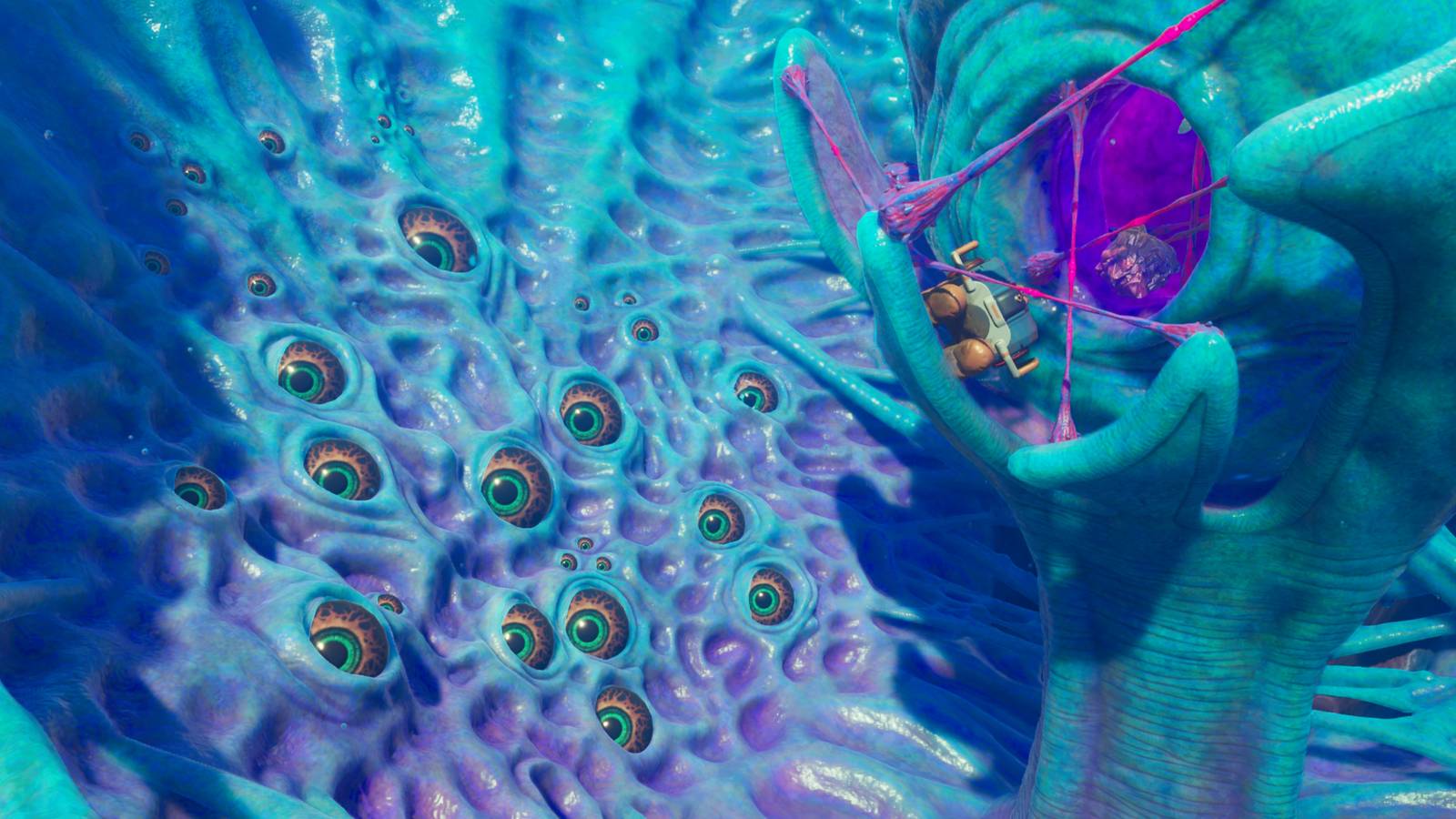
The giant clam leviathan is located exactly 310 meters south of the Lifepod at a depth of 40 meters. Its core is filled with lithium and other loot, but if you touch the purple strings, the Great Jaw snaps shut, trapping you inside unless you quickly swim away. It then produces a green poison that proves fatal unless you’re trapped with (nearly) full HP. Note that the Great Jaw only snaps shut if it can see you; if you break the purple strings but hide inside the core, out of sight, the leviathan might go back to sleep without harming you.
Shiver Leviathan

This winged, beaked, three-headed leviathan may appear northeast of the Alien Ruins, but it most commonly spawns between the starting reef and the gargantuan coral tree that rises high above the water. Starting from the Lifepod, travel 500 meters northeast to reach the start of the Shiver Leviathan’s hunting grounds. As the Shiver Leviathan may appear anywhere between this point and the giant tree (which is 2,400 meters northeast of the Lifepod), you’re almost guaranteed to get eaten if you try to reach the tree in survival mode. Tadpole or not, one bite and it’s over.
If you’re starting out in Subnautica 2, we have a plethora of guides to help you navigate the deep blue sea. Our Subnautica 2 beginner’s guide will set you off in the right direction and our base building tips will assist in planning out your sprawling base. Don’t forget to stock up on food and water, too. (And if you want to get fancy with your food, you’ll want salt!)
If you need help finding materials, we explain how to get the sonic resonator, which you’ll want to mine tons of materials. We have guides on where to find these resources, like lead, sulfur, copper, quartz, and gold.
