






Amazon has spent years throwing money at video games. It founded Amazon Game Studios in 2011. It bought Twitch in 2014. It launched the cloud-gaming service Stadia in 2018, shut it down and followed it with Luna in 2022, then fully rebranded that service in 2025. It has chased blockbuster MMOs, hired veteran developers, and signed deals around major franchises, most recently snagging Tomb Raider. And yet, if you stopped a random gamer on the street and asked what Amazon’s strategy actually is, you’d be hard-pressed to get a clear answer.
According to Amazon Games GM Jeff Gattis, who spoke to Polygon shortly before Summer Game Fest, that confusion wasn’t just a public perception problem. It was happening inside Amazon until very recently. It didn’t make much sense to the Xbox veteran.
Gattis joined Amazon in 2025 after six years at Microsoft, arriving at a moment when the company’s gaming ambitions appeared more uncertain than ever. Amazon had spent years building separate businesses around Prime Gaming and Luna, all rattled by canceled projects and flailing initiatives. Last year, Amazon significantly reduced its gaming operations, moving away from some of its AAA and MMO ambitions, like New World, which will end in January 2027. A recent report from Eurogamer painted a chaotic picture of one canceled internal project, with developers scrambling to reinvent the game around generative AI before it was ultimately shut down anyway.
Read our original New World impressions
Amazon dove head first into the MMO game
Gattis argues that fragmentation was the sore spot behind everything not working at Amazon Gaming. The first step to functionality, he said, was simply putting those pieces under one roof. The second was abandoning the idea that Amazon needed to beat the major console and PC studios at their game.
“We’re not trying to compete with PlayStation or Xbox or Steam,” Gattis said. “That market’s well served, if not overserved, today.”
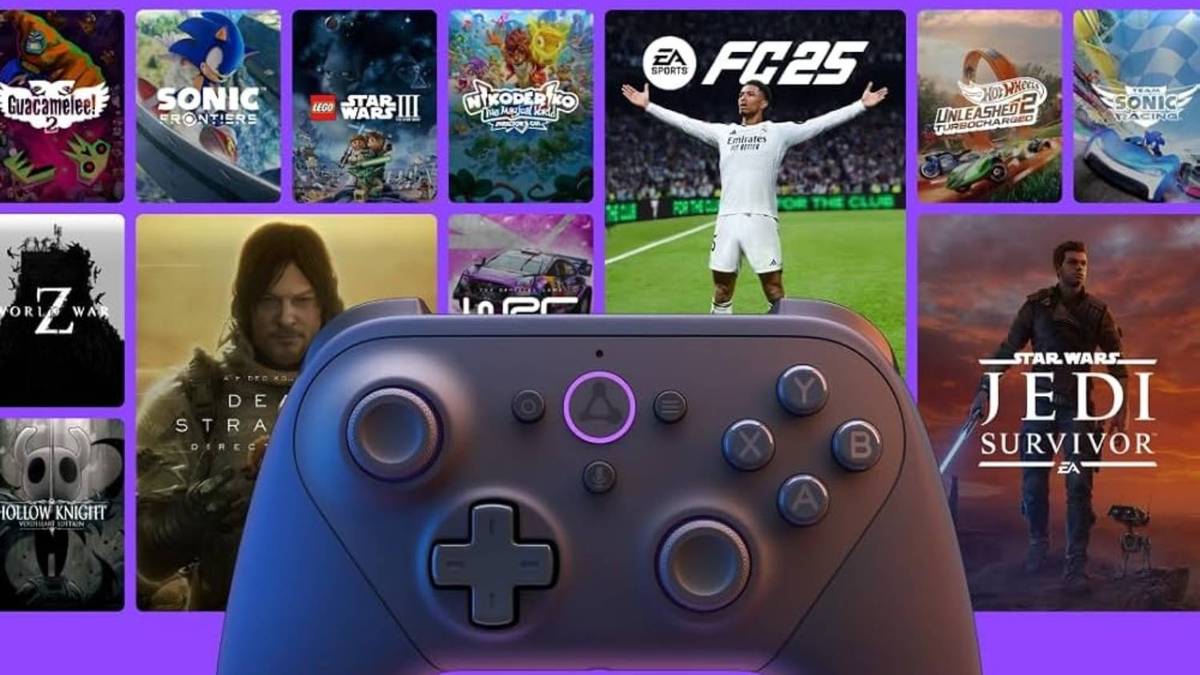
Instead, Amazon’s hope — like Netflix, mobile studios, and the Roblox machine — is built around a much larger potential audience that doesn’t own dedicated gaming hardware. Gattis points to the gap between the roughly 3 billion people who play games worldwide and the far smaller number who own gaming PCs or consoles. And because Luna is bundled into Prime, Gattis believes Amazon may already be sitting on an enormous gaming audience.
“You could argue that we’re the largest paid gaming subscription in the world,” Gattis said, noting that anyone with Prime Video as access to Luna. When Polygon pointed out that most people probably don’t realize they have access to it, Gattis immediately jumped in. “Nobody knows they have.”
If there’s one recent Amazon Games project that illustrates the company’s broader challenges, it’s King of Meat. The colorful co-op action game arrived in October 2025 with positive previews and a genuinely distinctive premise, but struggled to break through in an industry increasingly dominated by entrenched live-service giants and endlessly replayable platforms like Roblox. By February 2026, the game was dead.
Gattis, who emphasizes he inherited the project rather than greenlighted it, suggested the game may have simply launched into the wrong environment. New intellectual property faces an uphill battle when players are already invested in “forever games,” he argued, and King of Meat lacked the immediate audience that subscription platforms can provide. In retrospect, he believes the game might have found a stronger foothold had it launched directly into a large subscription service, where millions of players could have sampled it without an upfront purchase. (Case in point: It did not launch on Luna.) For Amazon, the game’s muted reception reinforced a lesson that now informs its broader strategy: discoverability and distribution can matter just as much as the game itself.
Amazon under Gattis may no longer want to be the next Xbox, but it’s not waving off major IP plays either. With Amazon now controlling the future of the James Bond franchise through MGM, Gattis sees gaming as a key part of the company’s broader entertainment ambitions. The company is also betting on franchises like Tomb Raider, where upcoming games and a television series can grow side-by-side as part of a larger entertainment ecosystem.

Lord of the Rings games still in works after canceled MMO, says Amazon
‘I looked at a prototype as something pretty interesting just a couple weeks ago’
That ecosystem thinking is what seems to excite Gattis most in the wake of all the bumps Amazon has faced in the gaming space. Rather than simply making games, he’s looking for ways to connect gaming with the rest of Amazon’s sprawling media footprint — from Prime Video and MGM franchises to live sports and Twitch. Gattis repeatedly returned to the idea that Amazon’s greatest untapped advantage isn’t any single game, but the company’s ability to link together entertainment experiences that have traditionally existed in separate silos.
The tools are already there, he said. They’re making the games. Then, hopefully, hundreds of millions of Prime subscribers who already pay for a gaming service notice when they come out.