







I’m not going to lie and say the Star Wars prequels are good. They’re objectively bad movies and some of the most baffling blockbusters ever made.
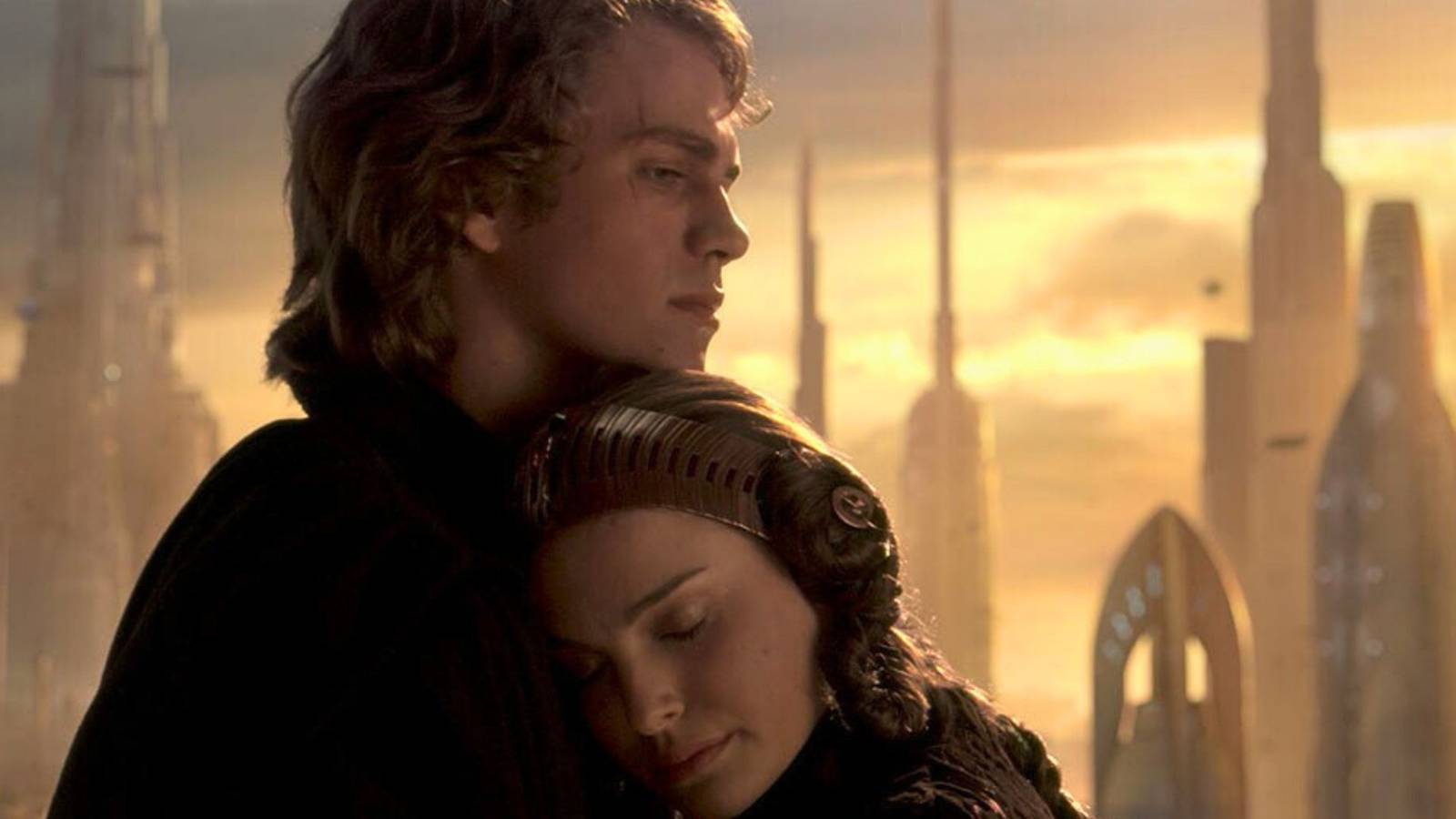
The prequels are best observed as relics of pop culture, but regardless of their quality, they mark an important moment for the franchise, serving as an entry point for an entire generation of fans (myself included). And while we can analyze the many elements that don’t work (Jar Jar Binks, the bad dialogue, the embrace of CGI and disregard of puppets), I am here to defend my favorite part of the trilogy: the romance between Anakin and Padmé, a plot line that’s often singled out as an example of George Lucas’ worst impulses.
Hayden Christensen and Natalie Portman’s performances as Anakin and Padmé have been raked over the coals of Mustafar for decades. Critics called the acting wooden and the dialogue painful, inspiring a wave of criticism that almost ruined their careers. “Everyone thought I was a horrible actress,” Portman told New York Magazine in 2014. “I was in the biggest-grossing movie of the decade, and no director wanted to work with me.”
The criticism is valid, but I still give Lucas credit for leaning fully into the melodrama of this dynamic, trailing the romance from the moment the characters meet until its bitter end, with Padmé’s death and Anakin’s embrace of the Dark Side.

Shining a spotlight on the prequel trilogy’s romantic elements also makes sense from a narrative perspective. Lucas found success with Han Solo and Princess Leia Organa’s peripheral romance in the original trilogy, so why not double down on it? Anakin and Padmé are the parents of Luke and Leia. If any characters needed extra attention in the prequels, it was the two of them.
Anakin and Padmé meet in A Phantom Menace, when he’s a little boy on the desert planet of Tatooine. They share a five-year age gap that has only grown more controversial with time but becomes less relevant once Christensen takes over the role in Attack of the Clones. The scenes between Portman and young Anakin (Jake Lloyd) might seem strange in hindsight, but her presence across the entire trilogy grounds their love story. She’s one of the few people that knew Anakin when he was a kid, before he was the chosen one.

Attack of the Clones contains the bulk of their romance. The film fully embraces many beloved romance tropes: age gap, forbidden love, the fact that he’s her bodyguard. It also features some infamous and painful line readings, among them Anakin’s sand monologue and an awkward first kiss, but it also has moments of quiet chemistry set against the greenery of Naboo (filmed in a series of stunning real-life castles and villas across Italy and Spain).
Anakin’s feelings for Padmé are obvious throughout the movie, and discussed at length between the two characters in case his pining stares weren’t enough to clue in the audience. By the final act, when Anakin and Padmé are about to die after being captured and forced to fight in an arena against monstrous beasts, Padmé’s admission of love is both moving and believable — a rare feat in Attack of the Clones. The lines are pure melodrama (“I’m not afraid to die. I’ve been dying a little each day since you came back into my life”) but are matched in spirit by John Williams’ gorgeous and romantic theme Across the Stars.
Anakin and Padmé’s relationship plays a pivotal role in Episode III: Revenge of the Sith, which is without a doubt the best entry of the trilogy. Anakin’s slow descent to the Dark side and his eventual transformation as Darth Vader is directly tied to Padmé’s death and ends up feeling inevitable. None of that would resonate without the groundwork laid by Attack of the Clones.
Your tolerance for melodrama may vary, but the sense of scale, and the boldness in which the prequels embrace this dynamic is worth defending, not just as the best part of the prequels, but as a vital piece that Star Wars seems to have abandoned. To this date, Anakin and Padmé are one of the few romantic couples in the Star Wars movies, a series that has grown more asexual under Disney’s ownership.
The Star Wars prequels showcase some of Lucas’s worst impulses, but their legacy lives on as an example of a director fully committed to his vision, for better or worse. With Anakin and Padmé, Lucas fully embraced the space opera, treating the romance at its center with the same grandeur and naivety in which he treated politics, economics, and The Force. It’s a lesson Lucasfilm’s new leader would be wise to remember while there’s still time to save a franchise that was once great.