


Picture Credit: Getty Images / Sony Pictures Classics
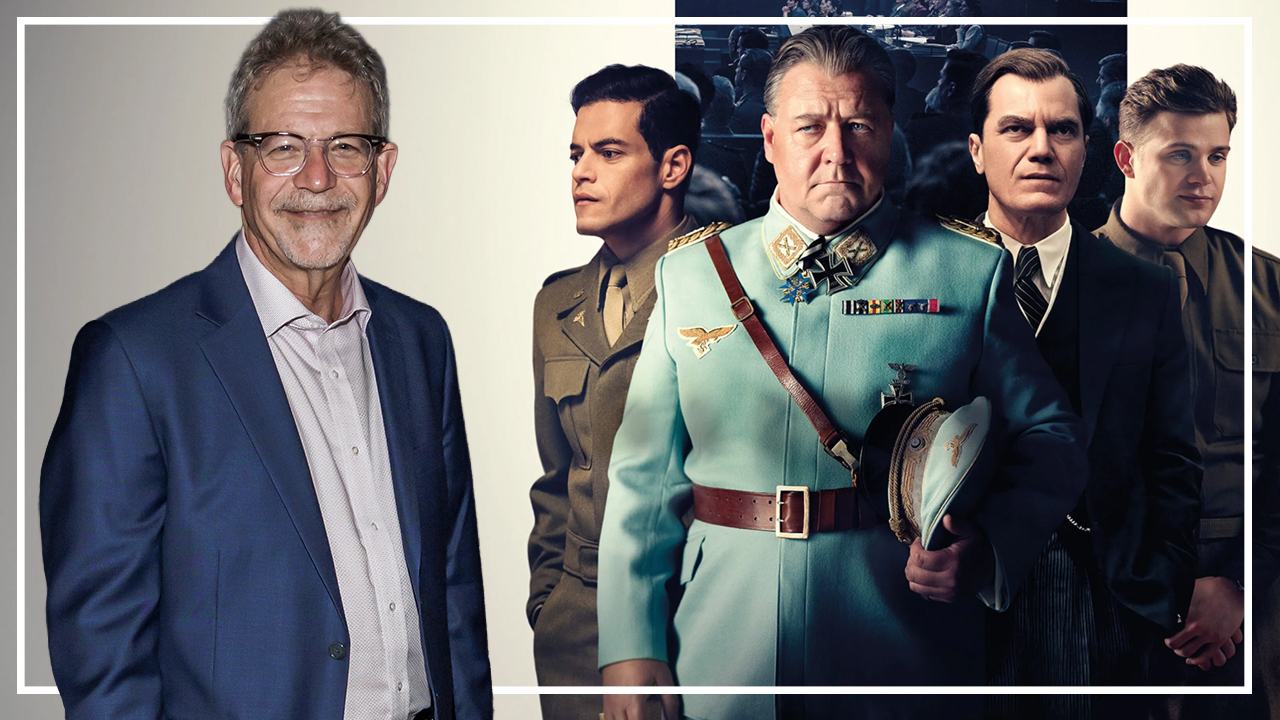
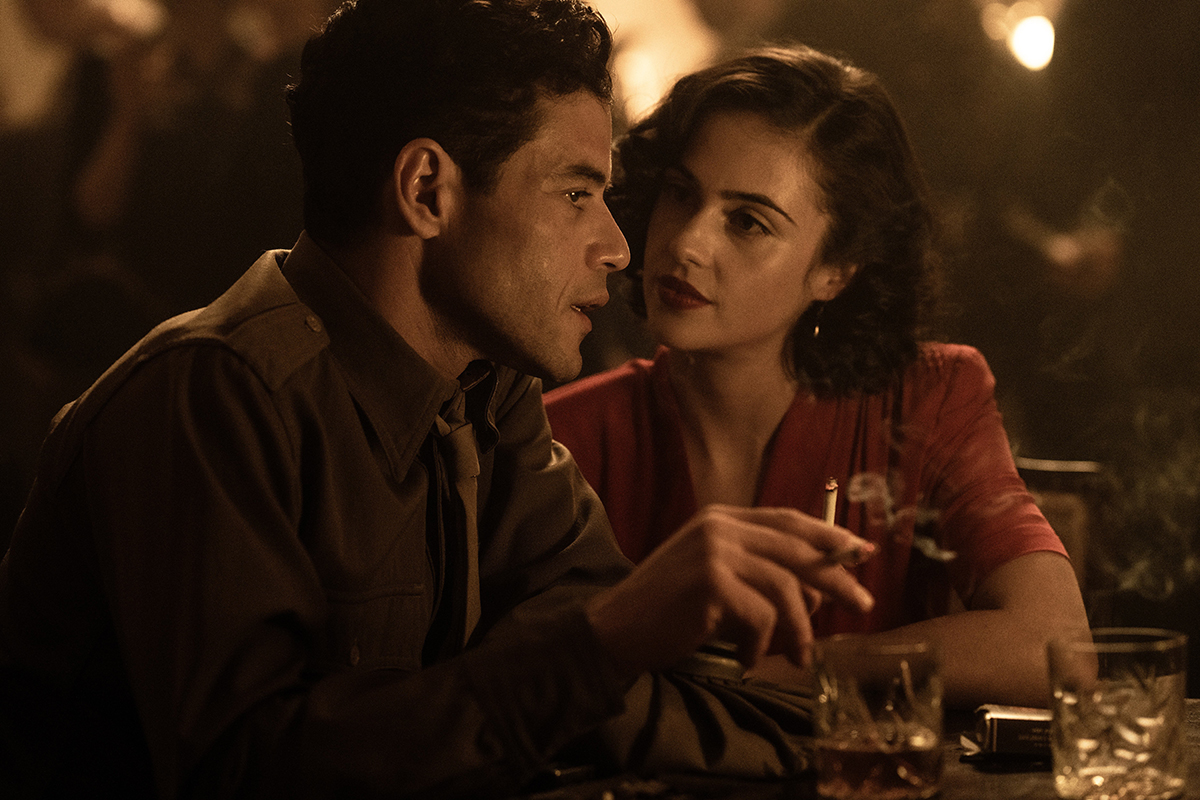
Jack El-Hai is the author behind “The Nazi and the Psychiatrist,” which was adapted by James Vanderbilt (Zodiac) into the fittingly visceral drama, Nuremberg. El-Hai’s book tells the story of the U.S. Army psychiatrist Douglas M. Kelley (played by Rami Malek in the film). Dr. Kelley is tasked with studying German war criminals, notably Hermann Wilhelm Göring (played by Russell Crowe).
El-Hai, who also authored “The Lobotomist” and the soon-to-be-released “The Case of the Autographed Corpse,” covered decades of Kelley’s life in his novel. With the film, Vanderbilt tells a more condensed story – a telling that El-Hai respects. “When people ask me how factual it is, I say it’s mostly factual, or it’s factual enough,” the author told What’s On Netflix. “I use lines like that because the inaccuracies, which are there for dramatic purposes and, I think, help make it the good movie that it is.”
After Nuremberg’s success on Netflix, we spoke with Mr. El-Hai about Douglas M. Kelley’s life, the Nuremberg trials, and questions he hopes audiences have after seeing the film.
You got to see Dr. Kelley’s personal library, right? What did you learn going through his books and writings?
All of this happened in the home of Dr. Kelley’s son, Doug. Doug had inherited much of his father’s things. In the library, there were many of these books written by the German defendants that Kelley had brought back to the States from Nuremberg. Many of them were signed. He had them sign their books in prison. It was really the only artifact from the war criminals that he actively pursued, although he did come home with others.
When I first met Doug, the son, I found out that he had 15 boxes of materials that his father had brought back. It included a lot of paper records, medical records of the defendants. He had each of them write out, by hand, an autobiography. Those were all in there, and memos between Kelley and the court and the prosecution. Then Kelley’s extensive notes on his interviews with the men and the results of the psychiatric testing he did using the Rorschach inkblot test.
Beyond all of that paper stuff, there were these really intriguing artifacts. There was a vial of little red pills, and it was labeled Hermann Göring’s paracodeine. There they were, decades later, still sitting in their bottle.
There are questions raised over Dr. Kelley’s professionalism and how close he gets to Hermann Göring in the film. Based on your research, how’d you gauge his level of professionalism?
It took me a long time to acquire the context for the situation he was put in. I now believe that he was probably the first military psychiatrist ever placed among suspected war criminals. Being in that new position, he didn’t have precedents to follow or rules to adhere to.
On one hand, he really was a doctor who viewed some of these men as his patients. Göring included, because he helped Göring overcome his addiction to that drug, paracodeine. He also helped Göring become more fit in advance of the trial. He helped some of the other defendants with other physical ailments. So, he had that doctor-patient relationship, but Kelley was also an officer in the U.S. Army. He had obligations to the military, and he had been brought there by the tribunal to serve a role.
And then later on in his time there, he built a relationship with the prosecution. The movie does show this. So that was another influence pulling at him, and how to juggle all of that. It wouldn’t be acceptable behavior now from a psychiatrist, but I tend to want to cut him some slack because no one had ever been through this before.
How did Kelley’s writings at the time of the trials compare to his reflections later on in life about his time in Nuremberg?
Kelley’s experience in Nuremberg turned him upside down professionally and personally. That’s only hinted at in the film with some of the text that rolls at the very end. But one thing he concluded from his time with the defendants was that his medical specialty, psychiatry, to which he was very devoted, couldn’t explain these men. His tests and interviews showed that they didn’t suffer from some shared psychiatric disorder or any psychiatric disorder. If psychiatry didn’t, what would? He spent the rest of his life in pursuit of the answer to that question.
Picture: Sony Pictures Classics
What were some of the answers he wrote in his book?
It’s called “22 Cells in Nuremberg,” and it was a flop. The public didn’t care for the message that he delivered in the book, which was a message that these men were not special in some way. They were not madmen. They were not monsters. They all fell within a normal range of personality. Given that, you can only conclude that there must be others like them, all around us. Kelley never meant to imply that everybody has this capability, but there are those in our society and every society who do.
Kelley’s life ended tragically. Between his return home and his death, how did the trial change him?
When he returned to the States, he saw our country with changed eyes. He looked to the Southern states, and he saw these demagogues ruling the political roost there, enforcing Jim Crow laws and legislating terrible restrictions on Black voters. These were things that were much like what he had seen and heard about in Germany. He began to feel that America had the potential to host a homegrown authoritarian movement.
In fact, he thought in the South it had already happened. Those messages were in his book. People then — it was a long, bloody war in which tens of millions of people died — no one wanted to hear that Nazis or fascists or authoritarians could rise again, and their defeat in World War II didn’t mean their permanent defeat everywhere. And so, the book sold poorly. Kelley felt unappreciated and very disappointed because of that, and he entered into a downward spiral during the 1950s, drinking a lot.
He had trouble in his marriage. As I learned from Doug, the son, he was a very difficult father to grow up with. Kelley became very depressed and ultimately took his own life in 1958.
One of the reasons you’re very proud of it is that it does deliver the core messages that really mattered to you when writing the book. Which messages were you pleased to see remain intact with the adaptation?
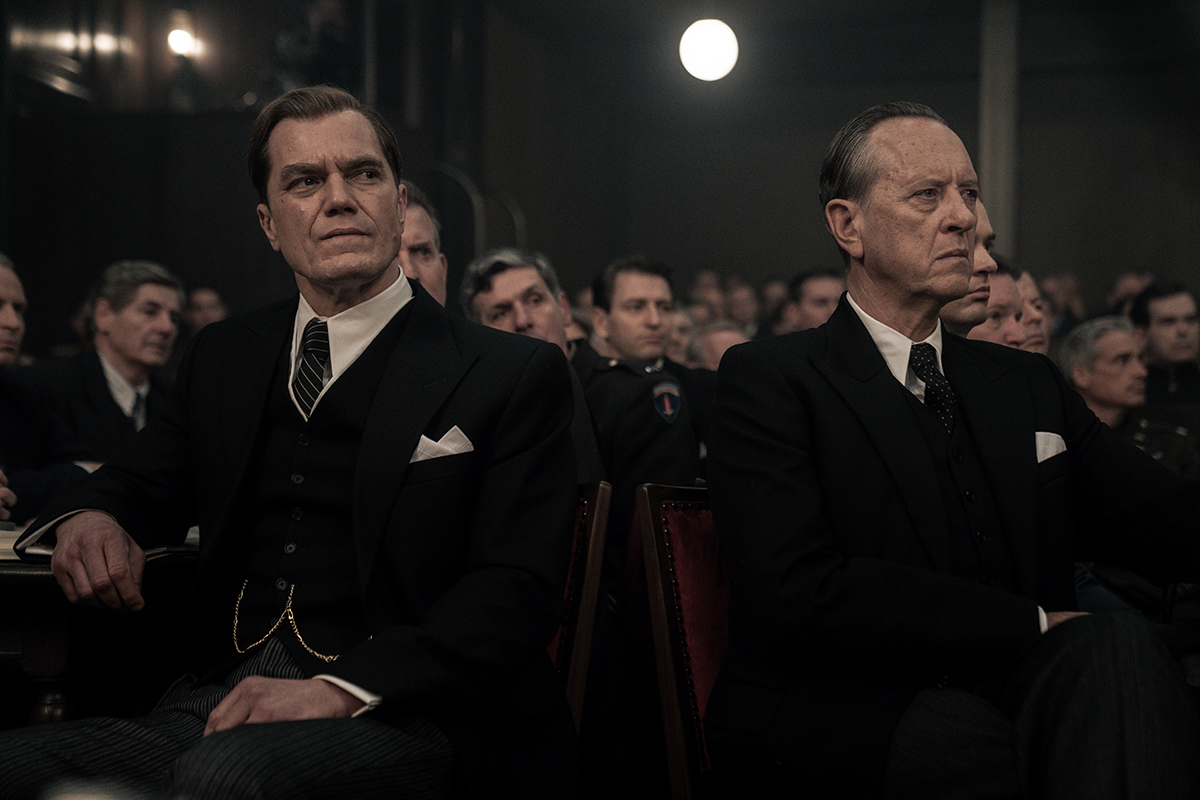
The two most important ones to me are that the movie shows how important this first of the 13 Nuremberg trials was as an international effort. The four largest Allies got together, and something like this had never been done before. They put together an international court to try these men for war crimes and on other charges. And it worked. I think that basically the first trial was a success.
It was flawed, no question, but it was fair. It gave the defendants a chance to put up a defense, and it was successful in the sense the Allies had hoped, which was not just to secure convictions but also to show the public what the mass of evidence was against these men. It’s 80 years later now. People still remember that trial as the trial that defined what Nazism was all about and what it did.
So to me, one lesson is these international efforts are important and they work. Tragically, they don’t happen so much anymore. Our country doesn’t take part in them. Other large countries don’t either. That’s terrible because if the International Criminal Court, which operates today, had widespread support from all of the powerful countries like ours, they would be able to do quite a bit more than they are now in holding leaders responsible for their actions.
And then the other lesson has to do with Kelley’s conclusions that authoritarianism wasn’t a German phenomenon or Italian or Japanese. It’s a human phenomenon, and we should expect to see it periodically. We need to be prepared for it.
Picture: Sony Pictures Classics
A beautiful scene in the movie is when Jackson explains to Kelley the importance of the trial. He wants a better future, which he explains at the destroyed Nuremberg Stadium. Through a modern lens, you can’t help but see parallels to his fears today. How do you see that scene, as well as Jackson’s motive, in today’s lens?
It’s so interesting you use the term modern perspective, but that modern perspective has changed since the book was published in 2013. When I published the book back then, and when I was thinking about what kind of resonance it would have for readers now, I was thinking in terms of far-right extremist groups being at the edge of political discourse — they really weren’t in it then — but now it’s very different. They’re more at the center of political discourse.
Those changes follow trends because politics follows trends; things go up and down. I think that the thoughts that Jackson expressed in that scene to Kelley — they’re idealistic. This is a time when the world needed idealistic thinking because before that there had been so much cynical, non-empathetic thinking happening.
The act of war is the opposite of empathy. You’re thinking of self-interest or national interests instead of the interests of humanity as a whole or even the humanity of your enemy. So, I like that scene and am glad it’s in there.
Are there any examples in the movie where you see, like, okay, well, that’s not factual, but it gets to the essence of the truth?
There’s a scene towards the beginning when Justice Jackson goes to the Vatican to talk with the Pope. That, I believe, is an invented scene, yet it’s a fitting scene because it suits Jackson in his motives for wanting to make this trial happen and build support for it.
It illustrates the situation of the Vatican and how much gray there was. These are not always black-and-white matters, whether someone supported the Nazi regime or did not support them. There were grays in there, and the Vatican fell within a gray area. I really like that the movie gets it out in that scene, even though it is not factual.
Picture: Sony Pictures Classics
I do want to highlight Eve Stewart’s work, her incredible production design. Which details, especially in the courtroom, struck you as accurate?
In the spring of 2024, when Nuremberg was still shooting in Hungary, I made a visit. James Vanderbilt very kindly invited me to come and spend some time on the set. By that time, they had shot all of the outdoor scenes in Budapest and were now in this gigantic soundstage just outside the city. I saw several of the sets, some that were being used for shooting and some not.
One in which the shooting was already done, but was just so impressive to walk through, was the Nuremberg courtroom. It looked smaller than I expected, but I know that it was built to scale. In actuality, it was not a huge courtroom.
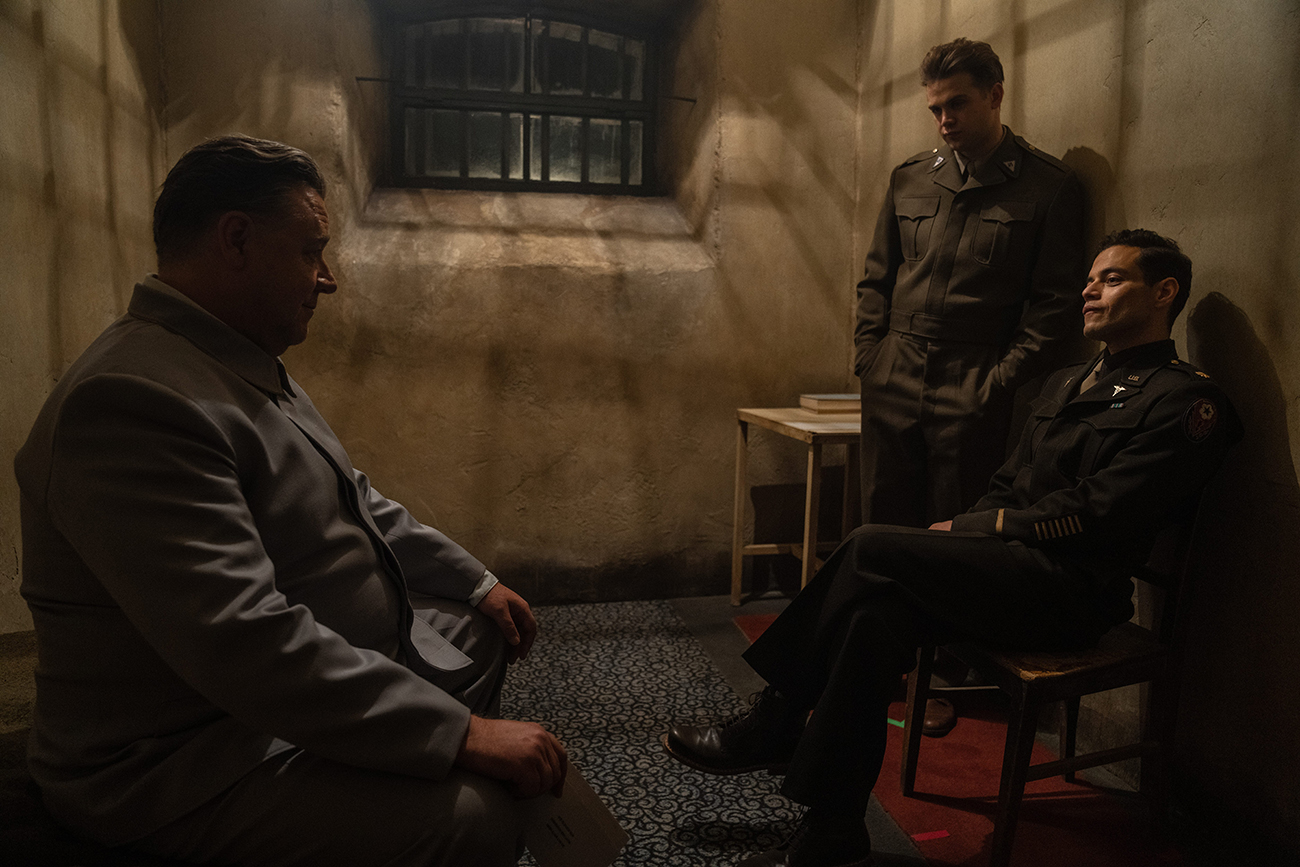
I saw the prison. One interesting thing about the prison cells is that they really were cells with four walls. They were not these cutaway kinds of sets, so that in the scenes when Rami Malek and Russell Crowe are together in Göring’s cell, they’re really cramped in there within four walls. Göring’s cell – it’s indistinguishable from what his real cell looked like. It was beautiful work.
For Göring, as much as he talks in the film, there is so much he doesn’t say. In your research, what did you find he wouldn’t discuss? What he wouldn’t reveal about his motives?
It was always important for me to remember that as Göring was talking with Kelley, Göring was developing his own defense. He knew that this trial was going to happen. He knew that it would probably end with him getting convicted and executed, but he still wanted to make a case. And the case was for Nazi Germany and the “good faith,” I put that within quotes, of the leaders.
Göring tried very hard to make a case that he and his colleagues were operating not out of hatred, not even out of antisemitism, but out of patriotism, nationalism, and loyalty to Hitler. Of course, that’s very dangerous too, but it didn’t sound that way to Göring’s ears. And so, there was a lot that Göring didn’t disclose about what his true feelings were about the Holocaust, which he surely knew about because he signed papers enabling it to happen.
And his relationship with some of the other men who were on trial, too, he was closed-mouthed about. We never really found out what he thought of Rudolf Hess, for instance. Did he like Hess? It’s hard to tell from what Kelley recorded and from what Göring said. Göring did agree to help Kelley figure out whether Hess was feigning amnesia or not, but the real nature of their relationship is still a mystery to me. There was much that Göring kept to himself, as did all the defendants.
The movie is doing well on Netflix. For anyone who watches Nuremberg, are there any questions you hope the film leaves them with?
Oh, big questions. Questions like, what makes people do evil? What do we think of people who do evil? What do we do when we see others doing evil? The dialogue, that long dialogue that Leo Woodall has towards the end of the movie about people letting it happen, I think that’s really important for people to think about.
I hope as time goes on, and as our country’s politics evolve, people will ask those kinds of questions. Most of us do not want a state like that in America. I suppose some people do, but most don’t. What can we do to prevent it? That’s another question I hope people will ask.