





Bangkok’s Chinatown is as old as the Thai capital itself.Tourism Authority of Thailand/Supplied
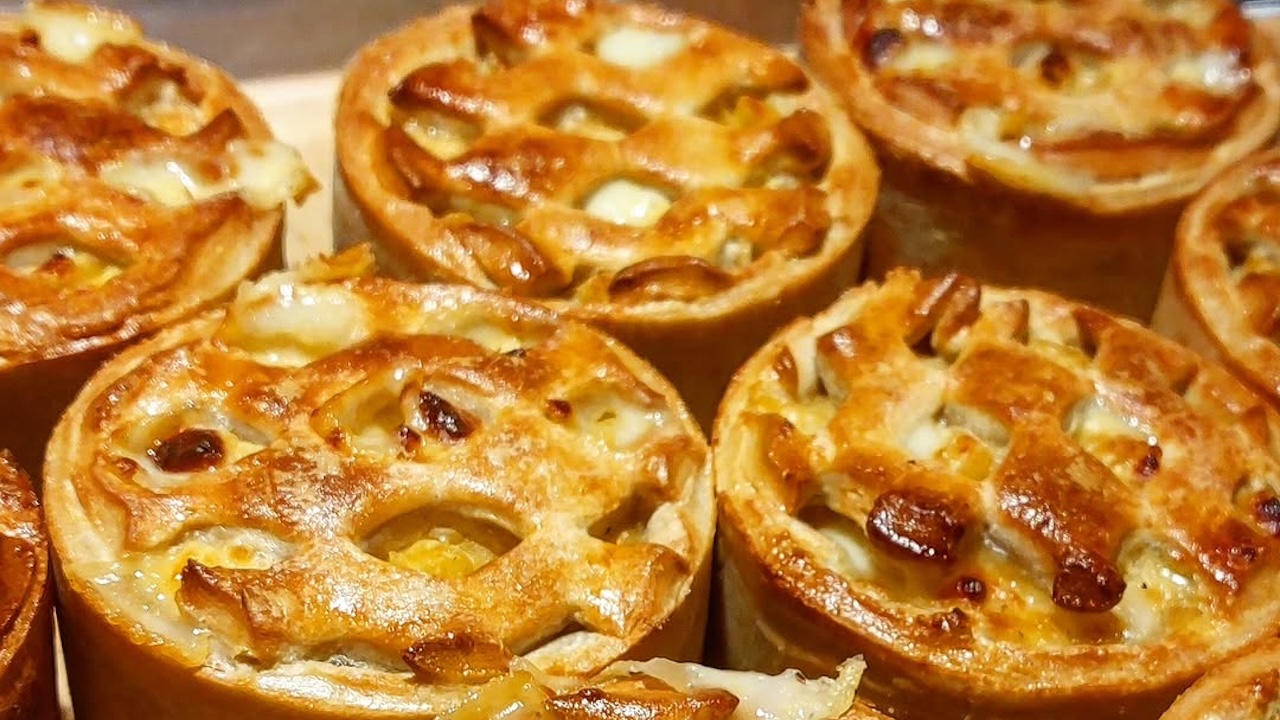
The tiny shopfront of Gu Long Bao in Bangkok’s Chinatown has seen a lot of history unfold over its century of operation, from the creation of Thailand as a nation to its rise as a cultural and tourism hotspot. The shop has a fan following for its pillowy buns, with fillings such as barbecued pork and black sesame. However, in recent times, queues have developed next to the shop, for photos with Steamed Buns, a vibrant mural depicting Gu Long Bao’s specialties. This isn’t a one-off; Chinatown is now known as much for its art as it is for its food.
Aman’s all-suite hotel is a five-star sanctuary amid Thailand’s bustling capital
Bangkok’s Chinatown is as old as the city itself. Chinese traders were well-established in Ayutthaya, the medieval capital of Thailand. However, Ayutthaya was destroyed in 1767 during a war with Burma, and the capital moved to Bangkok, by the Chao Phraya River. King Taksin rewarded Chinese traders with land on the river’s eastern bank for supporting him during the war, but they were evicted under his successor to build the Grand Palace on that land. They were dumped in the swampy mires of Sampheng, but by the late 19th century, their reach had grown, and the newly constructed Yaowarat Road became the heart of Chinatown.
Yaowarat Road was established in 1782 as a wholesale trading hub.Tourism Authority of Thailand/Supplied
I begin my exploration of Chinatown at Sampheng Market, at one end of Yaowarat Road. Established in 1782 as a wholesale trading hub, the market has evolved into a one-stop shopping destination. I pick my way through lanes lined with shops selling everything from knockoff Dior bags to herbal aphrodisiacs, shaking my head at ladies asking me to buy this phone case or that flip-flop. My favourite part of the market is the groceries section – sacks of dried beans and cockles, bags of spices and dried fruit, hanging pouches stuffed with fried snacks; no supermarket could come close to the assortment in these narrow alleys.
I head toward Song Wat Road, which stretches alongside the river. It was built by King Chulalongkorn, who ruled in the late 19th century and was known for governmental and social reforms. The road is studded with old Chinese shophouses decorated with stucco work and coloured glass, their faded facades a memory of the area’s prosperity. But where the old colours have faded away, a new shade has emerged. Chinatown has been adopted by street artists as an unofficial art gallery, with murals popping up in unexpected places. Finding them can be a treasure hunt of sorts, and that is what I intend to do with my afternoon.
Elephants, a mural by Belgian artist ROA on Song Wat Road.SAMAPORN UDOMRAT/Supplied
People take photos of the Steamed Buns mural.SAMAPORN UDOMRAT/Supplied
First, though, food. I pop into Urai Braised Goose, a Michelin Bib Gourmand eatery just next to Gu Long Bao. As their name says, they make one thing, and they make it well. Their braised goose is a tender juicy thing, stewed in soy sauce and five-spice, and accompanied by rice and a dipping sauce. The restaurant is small and stifling, but the food compensates for the ambience. The artwork on the shop’s outer wall – a line drawing of swimming geese – is food for a visitor’s social feed.
I pick up a couple of buns from Gu Long Bao and then start walking up Song Wat Road. I am looking for a mural that is an online fixture – Elephants by Belgian artist ROA, a painting of two Asian elephants cartwheeling, one atop another. I find it on a wall opposite a parking lot, and I have it all to myself, no scene-hogging Instagrammers around. Opposite it are two vibrant murals celebrating Thai-Belgian diplomatic relations by Belgian artist Jolene and Thai artist Waris, and one of a blue-haired girl promoting a Thai herbal remedy brand by Thai artist Jecks.
Bangkok’s Chinatown is now known as much for its art as it is for its food.Tourism Authority of Thailand/Supplied
I duck into Talad Noi, a former vehicle parts hub that, even today, has shops stuffed to the gills with scrap metal. People cluster around the “turtle car,” a rusted abandoned vehicle that has become a tourist magnet. Nobody knows how or why the car came to be there, but everybody wants a photo with it. Next to the car is 32 Bar X, a specialty chocolate shop in a shabby chic cubbyhole. Further down is So Heng Tai House, a Chinese merchant’s mansion opposite the pier that is a well-maintained sample of Thai-Chinese architecture with its curvy eaves and timber cloisters. Turning a corner, I come upon Talad Noi’s alley of art, which has murals of everything from the local cats to a Thai interpretation of Vincent van Gogh’s Starry Night.
I take a break at Mother Roaster, a café in a wooden shophouse accessed via a flight of creaky stairs. The café’s filter coffee is famous, and it serves a variety of Thai and imported single-origin coffees. I try a Chiang Mai coffee that is invigorating with its vibrant fruity notes.
Historic Yaowarat Road is the heart of Chinatown.Tourism Authority of Thailand/Supplied
I end my self-guided street art tour at Soi Charoen Krung 32, next to the Bangkok Post Office. The alley is the birthplace of Bangkok’s street art movement, and was the hub for Bangkok’s first street art festival in 2013. Its walls are a living canvas, with murals painted and then replaced by new ones; when I visit, it is a mélange of quirky cartoon characters and surreal portraits.
In the evening, I’m back in Chinatown for dinner at Potong, a Michelin-starred restaurant from Pichaya Soontornyanakij, popularly known as Chef Pam, who was awarded World’s Best Female Chef in 2025 as part of the World’s 50 Best Restaurants awards. Chef Pam converted her family’s 120-year-old Chinese herbal pharmacy building into a multistorey restaurant and bar, with a tasting menu celebrating Thai-Chinese cuisine. Her aged duck is memorable, with crispy skin and juicy meat, while her deconstructed pad Thai stuffs all the flavours of the popular dish into a single shrimp and noodle. The meal is reflective of Bangkok’s Chinatown – blending old and new, with surprises lurking around every corner.