You mention the way we consume information—you began working on this film long before AI became the issue it is now, but I can’t help but see a parallel between a world that’s outlawed dreaming and our world now, where creativity is being eaten by algorithms and AI.
What’s going on in terms of AI technology will actually be the subject of my next film. For Resurrection, there were certain things going on as I was writing this film, even though they’re not as immediate as we currently experience them, including AI technology, streaming platforms, and new media—these are the things that I think, altogether, really make our daily life very fragmented. You consume these things in a fragmented period of time, and then therefore you, as a person, have been made into fragments.
Film is a good way to experience your life, unlike all these different types of technology. It takes a kind of holistic completion to deal with information. Film is something that you need to consume in a very internalized way, where you need to have a dialogue with yourself from within. Because of this, the standpoint of this film is very, very clear that it is counter to the current trend of everything being fragmented.
Because of that, it is also an answer to this idea of how we can then reclaim and resurrect this sense of autonomy of who we are as human beings. That is the reason I make the films I make. Film is very important to me, because it’s where you can still have space to think about yourself as a human being as you’re watching a film. This sense of autonomy, what it means to be human. Because of these new technologies, I do think that there will be a new wave of this existential crisis that we experience as a whole across humanity. And then, I think that it is inevitable that that will be the subject of my films, including this one: How do we deal with this crisis?
I don’t know if you’re sick of answering this, but it’s unavoidable. The “oner” has become a staple of your work. You’ve said that you weren’t planning on doing one in Resurrection, and yet, there it is. How did you make the leap from “I’m not doing this again” to creating one of the most astonishing sequences in recent memory?
Don’t be afraid that I might be sick of this question, because we talk about it all the time [with my] creative teams. Whenever we eat and drink together, when we’re drunk, that’s all we talk about—the oner! [Laughs]
The reason why it might seem like I don’t want to talk about the oners is because I don’t want people to think of me as using these long takes as this kind of acrobatic feat, as some kind of competition. Like “I get to have the longest one.” Because that goes against this idea I have about what it means to use long takes for artistic reasons, not as something to show off. When I was first thinking about this film, I didn’t want to use the long take because people expected me to.
The reason why I changed my mind and included it is because I realized that that was the best way, as a film language, to depict the story of the last day of that particular century into a new century. Just taking the kind of maneuvers, using one long take, to capture this particular storyline and plotline. We also thought a lot about what we’d done in the previous two films. Because of the experiences we’d had, we have an even more evolved understanding, which allowed us to create even more evolved strategies to make the oners different from the previous two.
If you look at the previous two films, you have the oner that happens only after about 50 percent of the stories have already been laid out, and then you have that oner at the end to connect all the dots of what I already planted in the script, of the other storylines and plotlines. This time around, because the way that we understand oners is more mature, we wanted it to happen as an independent chapter without setting it up halfway through. It made it even more difficult, but it also worked well with this particular film.
You start with the point of view of the vampire, right? The vampire has been observing these two young protagonists across time, and then, suddenly, the window shatters, and you change perspective. We found a different way to make this oner work within that frame.
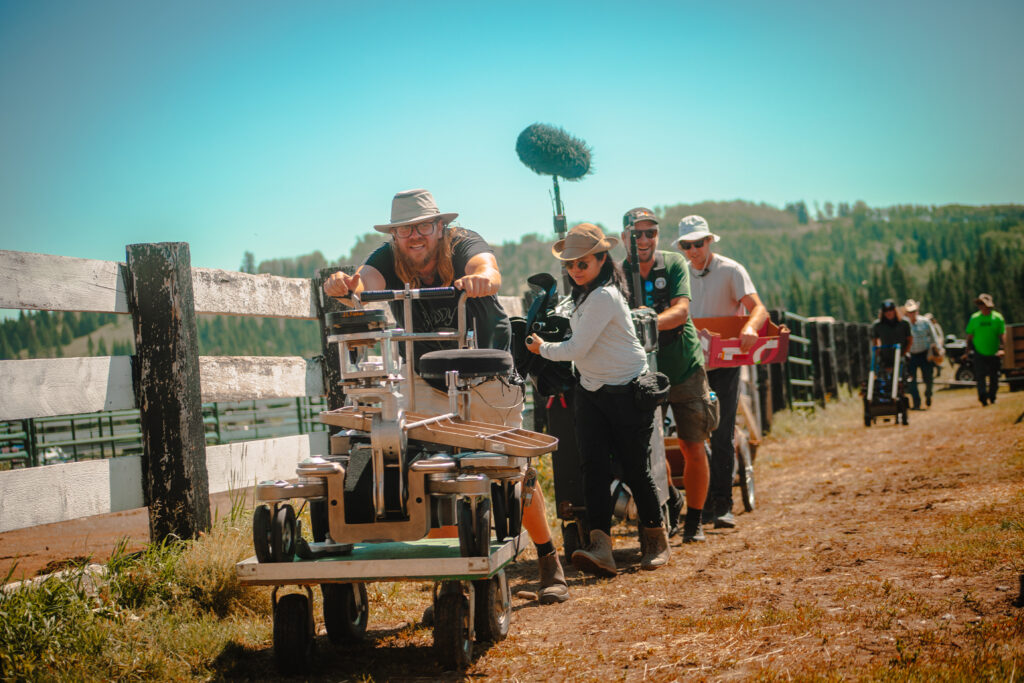
One regret I had making Long Day’s Journey into Night with that particular oner is of the resources we had at the time. Equipment-wise, budget-wise, we didn’t really have the GoPros that we could record behind the scenes, and how we made that happen. Therefore, now trying to recall what exactly happened for Long Day’s Journey into Night with the oner, sometimes we didn’t really have the footage to support that. At the same time, I do think that also shows you that we don’t really think about this as a technical feat that we need to do. It’s just the best way to tell the story.