




![13th Sep: Marvel Anime: Iron Man (2010), 12 Episodes [TV-PG] (6/10)](https://occ-0-487-92.1.nflxso.net/dnm/api/v6/0Qzqdxw-HG1AiOKLWWPsFOUDA2E/AAAABbcGRv7srZRQtF6ypjdVxyZyXLSkYBn43-diTNHy7-9Xr3GceGdD_14UbGwWcSzTVRnKqgb9Zgv0x4pLWCRKU8xaDKz1bQYwJkeD.jpg?r=a42 "13th Sep: Marvel Anime: Iron Man (2010), 12 Episodes [TV-PG] (6/10)")


Earlier this year, the indie horror phenomenon Obsession pulled off the impossible: it made more money on its second weekend in theaters than it did in its first. This month, that happened again with another horror film, Buddy, which earned $5.3 million during the weekend of August 28, and then raked in another $5.7 million over Labor Day weekend. While that’s nowhere near Obsession’s blockbuster numbers, it’s a big win for a horror flick with a mere $3 million budget.
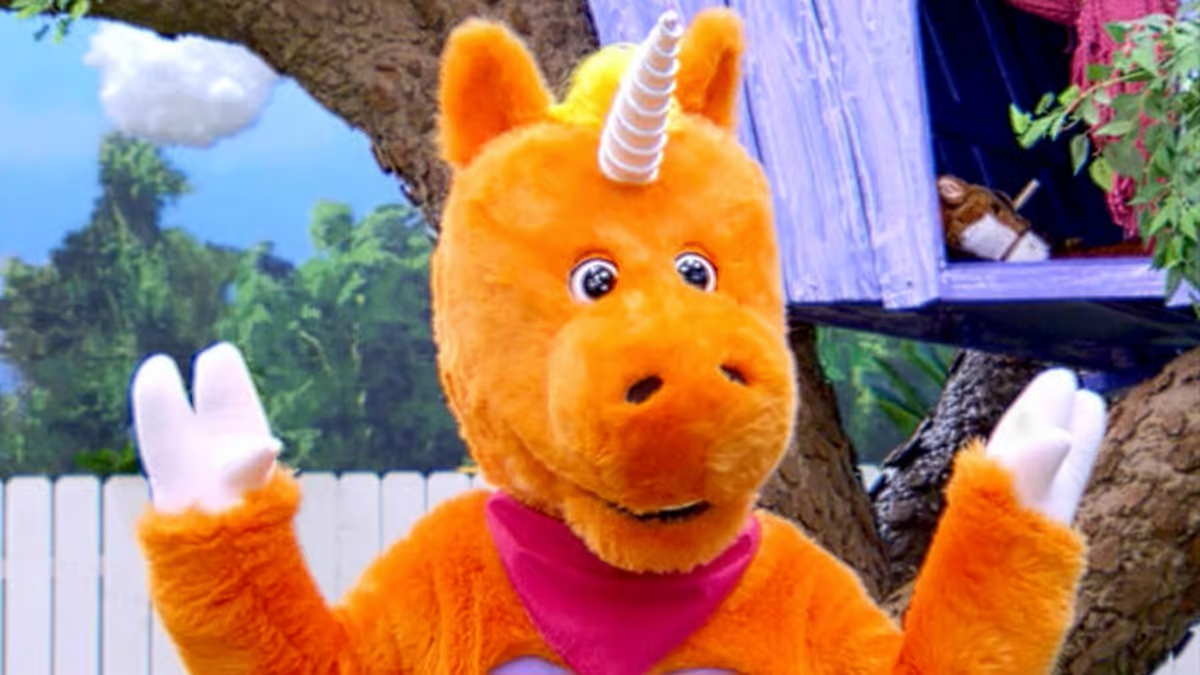
Buddy is about a group of kids featured in a Barney & Friends-like children’s show. They sing songs and learn lessons from Buddy, an adorable orange unicorn (voiced by Keegan-Michael Key). In time, though, they begin to notice something strange about Buddy, like how he forces kids to sing and dance, even when they don’t want to. When some of the young cast members go missing, the other kids begin to grow suspicious of Buddy, and they discover that he’s a vicious killer.
Buddy’s premise is fantastic, and its best asset is Buddy himself, who looks, feels, and sounds like a real kiddie-show mascot from the 1990s. However, while the critical acclaim for the film may put me in the minority, I don’t really think it lives up to its ingenious idea. With an adorable, fluffy, killer unicorn at its center, I expected Buddy to be both funny and scary, but it only ever elicited a few chuckles from me, and it was far more gory than scary. I don’t mind gore, but it’s not a substitute for terror or creepiness.
Honestly, the experience of watching Buddy was so disappointing to me that it had me yearning for a far more satisfying takedown of Barney the dinosaur, the 2002 comedy, Death to Smoochy.
Directed by Danny DeVito, Death to Smoochy is about the corrupt (and I assume fictionalized) world of children’s programming. It begins with a long-running kiddie show host named Rainbow Randolph (Robin Williams) getting arrested for accepting a bribe from some parents to feature their kid on his show. The bribe turns out to be an FBI sting operation, and Rainbow Randolph’s career comes crashing down. As a replacement, the network hires singer/songwriter Sheldon Mopes (Edward Norton), who dresses up like a big purple rhinoceros named Smoochy. (DeVito plays his corrupt talent agent.) Smoochy becomes a phenomenon, while Randolph continues to spiral. Soon, an emotionally unstable Randolph decides the only way back to the top is to kill Smoochy.
Like DeVito’s earlier films Throw Momma from the Train and The War of the Roses, Death to Smoochy is a pitch-black comedy with a very morbid, twisted sense of humor. To put it mildly, Death to Smoochy is not for everyone, which DeVito found out the hard way back in 2002 when it made just $8 million off its $50 million budget. In the years since, though, Death to Smoochy has found a devoted cult audience who swear it’s some of DeVito’s, Norton’s, and Williams’ best work.
Robin Williams and Edward Norton at their very best


On top of its sharply-written, fast-moving script full of funny jokes, Death to Smoochy is packed with talented people. The cast includes Catherine Keener, Harvey Fierstein, Jon Stewart, Danny Woodburn, Michael Rispoli, Vincent Siavelli, and Pam Ferris — and if you don’t know all of those names, you’ll certainly know their faces. These characters make up a really fun, eclectic supporting cast, but Death to Smoochy’s best stuff all ties into its two leads, both of whom pull off incredibly funny performances unlike anything else in their careers.
In pure comedies like Aladdin and Mrs. Doubtfire, Williams plays big, broad comedy, while in psychological thrillers like One Hour Photo and Insomnia, he portrays deeply disturbed, dangerous men. But besides Death to Smoochy, he never played both those things in the same character.
In the beginning of the movie, Rainbow Randolph is a greedy, cynical man who cares nothing for the children. His only concern is how he’s going to keep the cash coming in. Then, when he loses it all, he begins to lash out, often violently, and especially at Smoochy. Throughout the movie, he crafts a series of crackpot plans to ruin the rhino, like sneaking penis-shaped cookies into an on-camera segment with the kids. He also tricks Smoochy into performing for a Nazi rally, which briefly hurts Smoochy’s career and spawns the hilarious moment where a bunch of American Nazis shout “Heil Smoochy!”
Yet, as Rainbow Randolph gets worse, he becomes paradoxically more sympathetic. You actually want him to take Smoochy down, even though Randolph is clearly in the wrong. I don’t think it’s correct to say “you’ve never seen Robin Williams like this before,” because you have, just not all at once, which makes for something laugh-out-loud funny.


Then there’s Edward Norton as Sheldon Mopes. Norton had only recently become a big star with Fight Club a few years earlier, so why he chose to go for a broad comedy where he plays a cheesy, wide-eyed innocent so soon afterwards is anyone’s guess. Thankfully, he did, and Norton completely transforms into a really unique character, especially when compared to his darker work.
Sheldon Mopes, aka Smoochy, is the genuine article — he’s like Mr. Rogers dressed as Barney. Mopes is kind, charitable, a bit naive, and he cares not a whiff about all the money he’s now earning — he only cares about the good it can do. As Stewart’s network executive puts it in the movie, Mopes is “a bottle of pancake syrup with legs,” except Mopes might object to that comparison due to the sugar content, as he also really cares about nutrition. Mopes is a totally honest cornball, which is why it’s so weird that you end up rooting against him in the movie.
DeVito’s dark, delicate touch


Along with Williams and Norton, the man who deserves the most credit for this twisted tale is director DeVito. In several of his films, like Matilda and the other aforementioned titles, DeVito has shown a perplexing, yet shockingly coherent, blend of both dark comedy and charming sweetness. Rainbow Randolph is a despicable character, yet he’s incredibly fun to watch when he dances and sings in his glittery, rainbow-colored jacket. Mopes is a completely sincere character, yet some of his songs have sneakily dark lyrics, like, “My Stepdad’s Not Mean (He’s Just Adjusting),” which he sings to a group of children who sing along with Smoochy. And, despite Death to Smoochy being a dark movie with lots of killing and dirty jokes, it ends with a bright, sunny conclusion that probably is unearned, yet somehow feels perfect in its childlike innocence. Somehow, DeVito knows how to marry these disparate elements into a fantastically funny film — even if they’re the kind of thing that doesn’t always catch on while it’s still in theaters.
In that regard, Buddy has got Death to Smoochy beat, (even if you don’t account for 20+ years of inflation). But according to me — a guy who saw Death to Smoochy in theaters back in 2002 and loved it — and the devoted Smoochy fans who have found the movie in the years since, no orange unicorn can ever come along and dethrone our favorite fuchsia rhinoceros.
Buddy is currently in theaters. Death to Smoochy is streaming for free on Hoopla and the Roku Channel.