









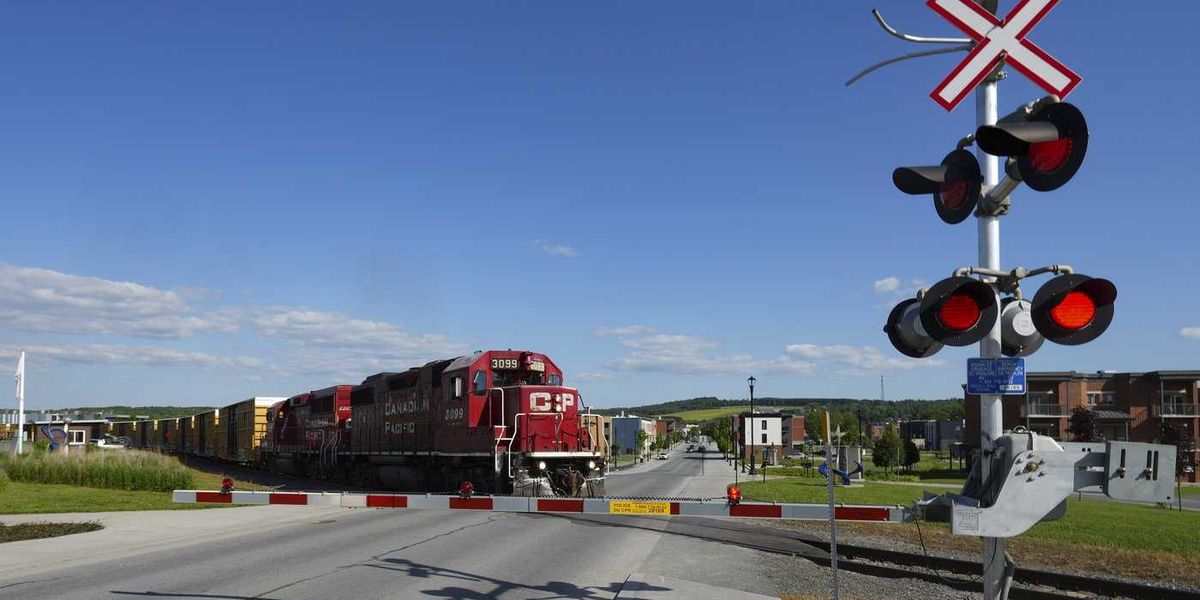
The Canadian Transportation Agency has approved the construction of a bypass to divert trains around downtown Lac-Mégantic, Que., 13 years after a runaway train derailed and killed 47 people when it smashed into the heart of downtown.
The agency approval removes a hurdle that had delayed construction of the 12.5 kilometre bypass that was announced by the federal and Quebec governments in 2018.
“The CTA concluded that the location of the bypass is reasonable and that the project will continue to serve the regional and national economy,” the agency wrote in a news release Thursday.
Federal Transport Minister Steven MacKinnon called the authorization a major step forward for Lac-Mégantic and its neighbouring communities.
“This decision brings us closer to the start of construction on a long-awaited project that will help improve the community’s safety and quality of life,” he said in a statement.
The train had been parked in nearby Nantes on July 6, 2013 when its brakes failed, sending it barrelling down a slope.
The resulting explosion and fire destroyed much of the downtown core, forced about 2,000 people to flee their homes and spilled some six million litres of crude oil into the environment.
Proponents of the bypass have said it’s a necessary step to help residents heal from the tragedy, and would keep trains laden with dangerous material away from the town’s population centre.
However, residents who oppose the plan have expressed concern over potential environmental impacts, including on wetlands and water supply, as well as land expropriations. They also questioned the cost and raised objections over the chosen route.
The neighbouring municipalities of Nantes and Frontenac also opposed the bypass.
The CTA said it considered the location of the proposed bypass, rail operation and service requirements and the concerns of local and Indigenous communities. The agency said it will issue reasons for its decision in August.
Transport Canada said in its release that the federal government was “committed to maintaining ongoing dialogue with citizens and partners” and would strive to address their concerns.
This report by The Canadian Press was first published July 16, 2026.
By Morgan Lowrie | Copyright 2026, The Canadian Press. All rights reserved.