

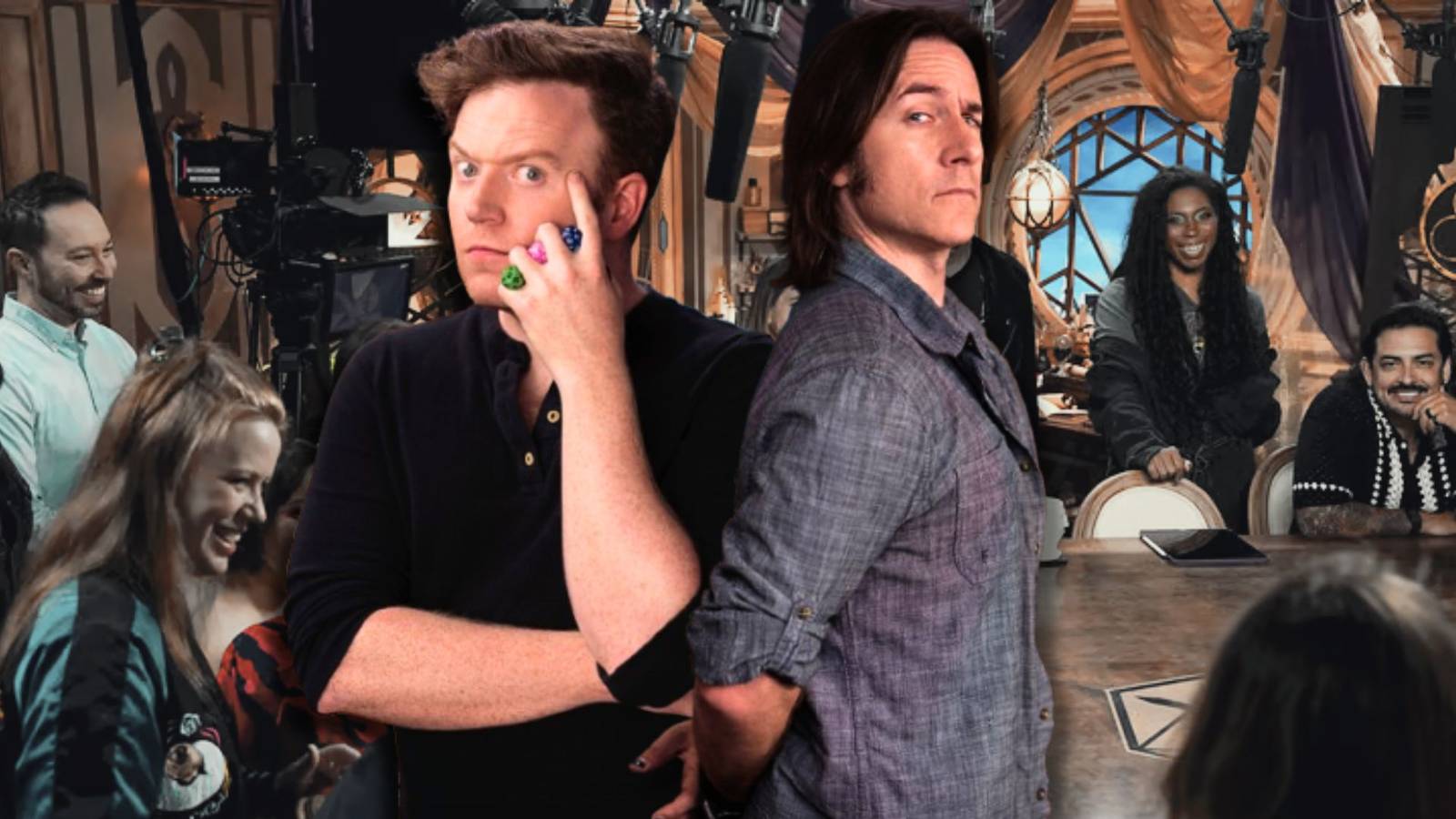



When Critical Role announced that Campaign 4 would feature a West Marches format, fans were understandably excited. The idea of a rotating cast of players felt fresh for the show, but after a few episodes, the plot-heavy nature of Campaign 4 made it feel quite different from the sandbox narrative playstyle of West Marches. However, 17 episodes in, I finally understand Critical Role’s choice and how the show is leaning into what makes the West Marches format so special.
West Marches refers to a style of Dungeons & Dragons campaigns created by Ben Robbins, a game designer who also created Microscope and Kingdom. The format was both a stylistic choice and an answer to the bane of most game masters: player availability. Because every session was scheduled based on when players from a large group could play, it allowed the world of that campaign to flourish and develop through choices that different players would make. For example, one week, a group could decide to rescue a goblin village. The week after, another could be dealing with the consequences of that choice if they interacted with the same goblins.
Players interacting with the world — by leaving information in shared locations or interacting outside the game — allowed the sandbox to grow organically, creating “history and interconnected details.” Robbins went on to share how “tidbits found in one place could shed light elsewhere. Instead of just being an interesting detail, these clues lead to concrete discoveries.”
With 13 players involved in Campaign 4 of Critical Role, Dungeon Master Brennan Lee Mulligan was always going to have to find a way to make this huge cast manageable. After the four-episode overture, the players were split into three tables: Soldiers, Seekers, and Schemers. Early on, it seemed that having rotating players would be the only similarity between Campaign 4 and typical West Marches games. Instead, after enough episodes, we’re starting to see how the choices made by different groups affect others.
We first noticed this in episode 14, “A Bridge Too Far,” featuring the Seekers, which was influenced by the outcome of episode 3, “The Snipping of Shears,” where future Soldiers Wicander Halovar (Sam Riegel) and Tyranny (Whitney Moore) rescued Teor Pridesire (Travis Willingham) from Halovar’s demonic tailors. In episode 14, the Seekers are ambushed by the Halovar family’s demonic aspirants and Tyranny’s sisters, Agony, Enmity, and Cruelty. At first, it wasn’t clear how the sisters had ended up in the druidic encampment of Schongarten until Mulligan pointed out in episode 14’s Cooldown the inner workings going on behind the scenes due to the decisions the Soldiers’ table had made. With the Soldiers deciding to head into the woods in episode 5, Mulligan made a roll to see if the sisters could track them. With that roll, a decision was made that had the demons heading off in another direction entirely due to their lack of accurate information.
This level of interconnected detail reappears in the latest episode, “The Place of Wings”, where the party learns more about the Halovars and how the Tachonis are using their fellow noble houses as guinea pigs for their experiments. The Halovars’ celestial ancestry was previously established in Campaign 4’s overture and through Wicander and his family’s innate abilities. Even the filament the Candescent Creed transports from place to place is no longer a mystery, having been clarified to be celestial blood used to enhance the user’s magical capabilities. However, in-game, the Seekers aren’t aware of the Halovar secrets, nor are the Seekers’ discoveries about the Tachonis family’s plan to build their own celestial known by the Soldiers’ and Schemers’ tables.

The best part about the unveiling of these details in the West Marches format is that, particularly in the world of Aramán, magic doesn’t work quite like it does in Critical Role’s previously established world, Exandria. In previous campaigns, characters were able to send direct messages to people across the world with spells like Sending, making it nearly impossible for NPCs or other players to be lacking in information. That isn’t the case here, which means knowledge must be passed down the old-fashioned way: through actually speaking to one another, or through sending written correspondence.
This disconnect between the cast adds tension not only for the players at each table but also for the audience watching. For example, we know that the Schemer Halandil Fang (Liam O’Brien) has a mole working in House Einfasen — and there’s a real possibility that said mole has been found and killed — but the Seekers and Soldiers table has no clue about that. Instead of being frustrating, this lack of communication has so far only made me appreciate Critical Role’s decision to lean into the strengths of the West Marches playstyle, and all the more curious about whether it will still be a strength as the campaign continues.
Ultimately, each table can influence the others, both positively and negatively, down the road. This unique dynamic between the three tables isn’t exactly how West Marches was originally envisioned, sure, but it works well within the framework Critical Role has established for Campaign 4.