



The TIFF51 Experience: Day Eleven | Trusting My Gut, Leaving Room for Surprise
By Ross
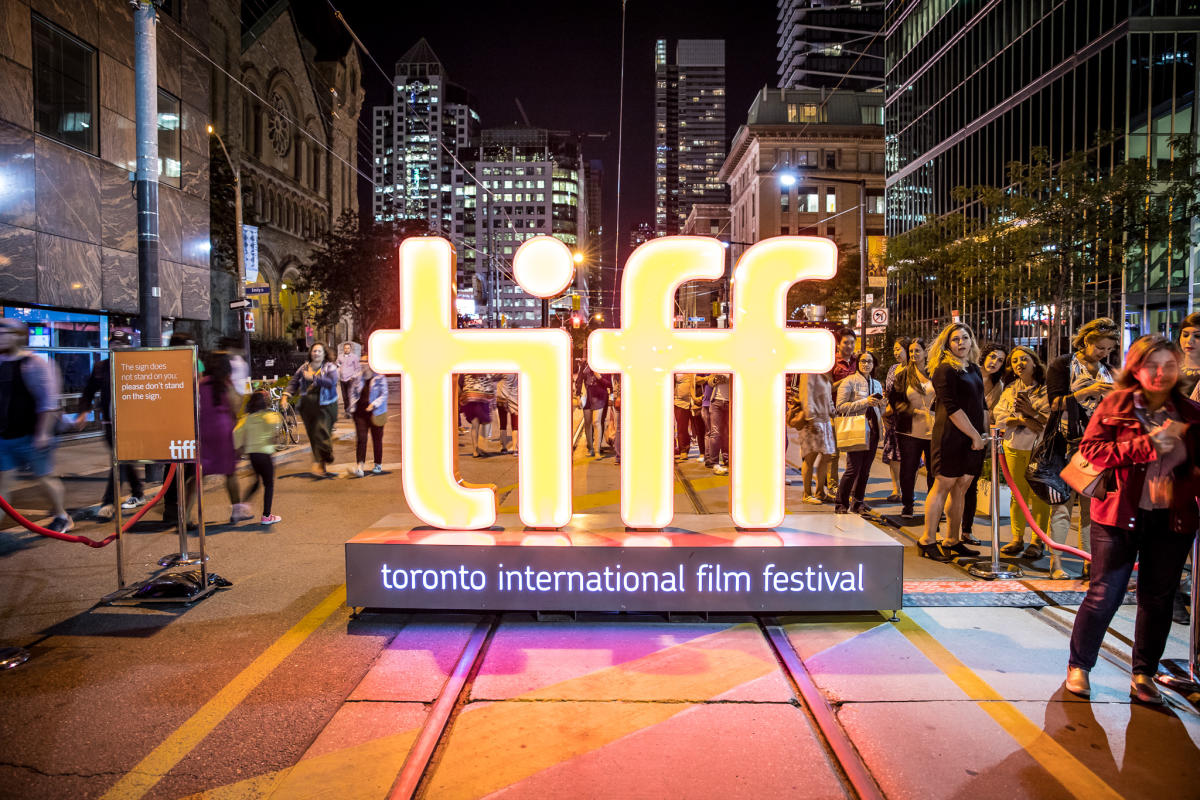
“And that’s a wrap,” as they liked to say in that cheeky thank-you video to the TIFF volunteers who really do make this festival special. Their happy-to-be-here ‘good mornings’ as we race to get in line for an early morning press screening at the TIFF Lighthouse or the Scotiabank Cinema are genuinely uplifting, and so appreciated. But as I walked into my final day of TIFF, I had no idea just how much these last three films were going to shift the way I was feeling about the festival. What I thought would simply be a final day turned into a surprising little gift, one that left me ever-so-thankful for what I experienced on this last day and for everything I had experienced over the previous eleven.
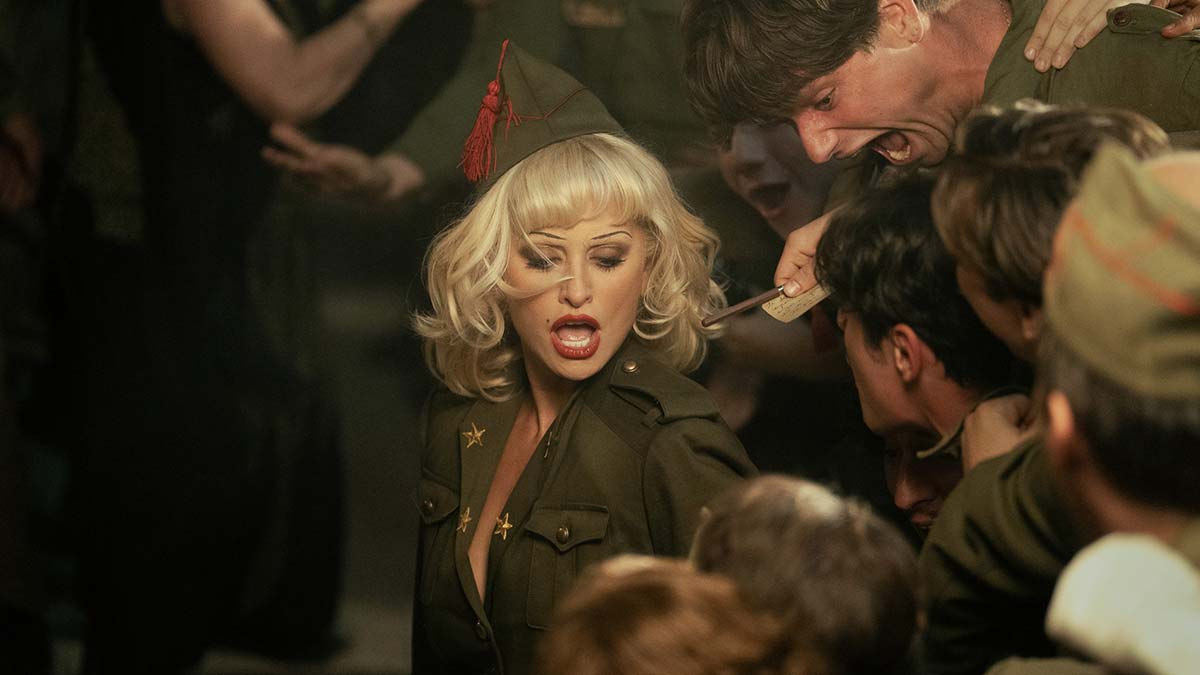
The first of those films, “Wild Horse Nine“, was exceptional, with superb acting, magnetic writing and direction, and the chance to experience a history and a locale I was very glad to have encountered on screen. I was so glad I managed to fit this one in. Then came “Ancestors“, a film that found its way onto my schedule, mainly because of word-of-mouth, with the consensus around me making it clear that I needed to see it to complete my very unofficial LGBTQ+ bingo card at TIFF. Boy, was I happy to wiggle that one into my calendar. It was a powerfully moving film about 1980s England, following an Irishman heavy with internalized conflict and pain as he begins to access something resembling love for another inside himself, something he didn’t know could even be reached. When Tiny goes missing, Beau spends the remainder of the film searching not only for his lost and damaged young friend, but in a way, for himself, and for the part of him that had forgotten how to care about another person. Love, loss, and legacy are right there in the description, but the film lets grief, guilt, and shame seep slowly into the same space as something that looks a lot like care and deep affection.
Wild Horse Nine
Martin McDonagh – CANADIAN PREMIERE – United States of America, Chile | 2026 | 118m | English

Two CIA agents (John Malkovich and Sam Rockwell) are sent on a mission to Easter Island, where one faces an existential crisis over his past actions, in Martin McDonagh’s latest dark comedy.
In his newest, highly anticipated black comedy, Oscar-winning writer-director Martin McDonagh (Three Billboards Outside Ebbing, Missouri, TIFF ’17; The Banshees of Inisherin, TIFF ’22) trades the remote Irish island and small-town Missouri of his last two films for the tropical shores of Easter Island. Set in the early 1970s, just before the coup in Chile that overthrew Salvador Allende, “Wild Horse Nine” follows a pair of eccentric CIA agents with a history of meddling in global events.
Like any excellent buddy film, contrasting personalities are key. Chris (John Malkovich, TIFF ’25’s Sacrifice) is an aging, eccentric officer in charge of mentoring Lee (Oscar winner Sam Rockwell, TIFF ‘17’s Three Billboards Outside Ebbing, Missouri), the brash, foul-mouthed protégé who just wants to enjoy the exquisite scenery. Conspiracies abound, paranoia ensues, and their trust in one another is pushed to the limits by their handler MJ (Steve Buscemi, also at this year’s Festival in The Only Living Pickpocket in New York).
Along the way, the duo cross paths with two rebellious young women and the encounter spurs the ailing Chris to look back on his actions as a spy, unsettling Lee and threatening to derail the assignment. What was supposed to be a typical case of foreign intervention begins to spiral out of control.
With the cast rounded out by Tom Waits (TIFF ’12’s Seven Psychopaths) as Chris’ brother and Parker Posey (TIFF ’14’s Ned Rifle) as Marge, Lee’s wife, “Wild Horse Nine” is a darkly funny story with McDonagh’s signature incisive dialogue slyly commenting on the contemporary political climate. – ROBYN CITIZEN

Ancestors
David Turpin – WORLD PREMIERE – Ireland, United Kingdom | 2026 | 106m | English

A haunting journey set in 1980s London, David Turpin’s mesmerizing debut transforms one young man’s search for a missing friend into an unforgettable story of love, loss, and gay legacy.
David Turpin’s (writer of The Lodgers, TIFF ’17) debut feature is a mesmerizing journey through a dreamlike 1980s London. Evoking the tactile beauty of old photographs, Turpin — who also wrote the screenplay — conjures a city at a time that forever altered the lives of gay men.

An Irishman abroad at a time when homosexuality was still illegal in his homeland, Beau (Éanna Hardwicke) spends his days working in a neighbourhood café and his nights with his loyal confidante, Shell (Jessica Reynolds). When the enigmatic Tiny (Jack Wolfe) enters Beau’s life, an unlikely bond forms — until Tiny suddenly disappears. Beau embarks on a search that reveals not simply what has been lost, but the unseen threads of love, friendship, and care that bind one generation to the next. Along the way, visions of the enigmatic Gloria (Christina Hendricks) draw him ever deeper into a world where memory and longing become impossible to separate, while the lived experience of the unforgettable Maurice (gay screen icon Rupert Everett, My Policeman, TIFF ’22) embodies the resilience of a generation.
Turpin has crafted a rare film. Heartbreaking without ever surrendering to despair, “Ancestors” is less a chronicle of the AIDS crisis than a contemplation of the haunting legacy it left behind. He lovingly recreates a distinctly gay world, from late-night cruising to the rituals of chosen family to the playful cadences of Polari (a secret slang used to communicate discreetly). It is a deeply felt tribute from a younger gay generation to those who were there, honouring not only those lost, but those who loved, cared for, and carried each other forward. – JASON RYLE
—
I almost wish “Ancestors” had been the film to end my festival. But I did see one more, and even though “The Beloved” didn’t engage me emotionally in quite the same way, it is a beautifully realized meditation on family and relationships, with Javier Bardem and Victoria Luengo delivering performances that connected them to each other in the most captivating way, and I could feel the complicated history between them in every scene. With Bardem playing a temperamental father and filmmaker making a movie with his daughter as his leading character, the film becomes an unexpected celebration of the art of filmmaking itself. And maybe that was exactly what I needed from the final film of TIFF, something that sent me back out into the world thinking about the complicated relationships between artists, their work, and the people they bring into that work.
The Beloved – El ser querido
Rodrigo Sorogoyen – NORTH AMERICAN PREMIERE – Spain | 2026 | 135m | Spanish, English, French

Starring Oscar winner Javier Bardem and Victoria Luengo (TIFF ’24’s The Room Next Door), the latest from Rodrigo Sorogoyen (TIFF ’18’s The Realm) chronicles an unnerving collaboration between a charismatic, manipulative director and the actor daughter he hasn’t seen in 13 years.
Featuring arrestingly complex performances from Oscar winner Javier Bardem (TIFF ’07’s No Country For Old Men) and Victoria Luengo (Pedro Almodóvar’s The Room Next Door, TIFF ’24), the latest from Oscar-nominated director Rodrigo Sorogoyen (The Beasts, TIFF ’18’s The Realm) is at once an intriguing depiction of the filmmaking process and an unflinching examination of what happens when dysfunctional family dynamics fuse with artistic hubris.
In a Madrid restaurant, Esteban (Bardem, also at this year’s Festival in Bunker), a charismatic, world-renowned director, has lunch with Emilia (Luengo), a young actor — and his long-estranged daughter. Esteban offers Emilia a role in his next film, a Sahara-set historical drama about the Sahrawi uprising against their Spanish colonizers. Esteban and Emilia have not seen each other in 13 years, and their reunion is tense: when Emilia tries to remind her father of their difficult past, he tells her she remembers it all wrong. Nevertheless, Emilia takes the role, and soon father and daughter are on location, where, surrounded by cast and crew, a kind of emotional showdown unfolds, one rife with cruelty, manipulation, and the reopening of old wounds.
The film, written by Sorogoyen and frequent collaborator Isabel Peña, will inevitably draw comparisons to TIFF ’25’s Sentimental Value. Though it also shares piercing psychological insights and artful filmmaking, “The Beloved” is a darker portrait of creative control — and it is more brutal.
As in No Country For Old Men, Bardem delivers an unforgettable performance. Luengo matches her co-star with a turn of immense intelligence, mystery, and depth. – ANITA LEE

So that’s a wrap for me at TIFF, but I learned a lot about myself, my stamina and my abilities over these eleven days. I learned that anything more than three films a day is probably too much. I learned that morning press screenings are like catnip to me, while late evening public screenings should probably be left for someone else. I learned that by 9:30pm I should be in bed, resting my eyes and my mind, not sitting down in a theatre, especially one as enormous as Roy Thomson Hall. But the lesson I want to carry with me is a little different. I need to listen to my gut when I know what I want to see, while still leaving some space for the last-minute ticket, the word-of-mouth recommendation, or the surprise film that wasn’t even visible on my movie radar. After eleven days, I think that may be one of the best ways to leave a film festival: knowing yourself a little better, while still being willing to be surprised.