





I don’t think I’ll ever forget the experience of playing Fez for the first time. It was 2012 and I was still fairly fresh out of college, having moved to New York City in 2011. Since I didn’t have much disposable income at the time, it was the rare period of my life where I was completely out of touch with gaming for a few years. I didn’t own a modern console or a handheld. Thankfully, one of my roommates had an Xbox 360, which gave me a chance to keep up with blockbusters like Borderlands 2 and Assassin’s Creed 3. One day, he called me into the living room to check out a weird little game called Fez he’d found on Xbox Live Arcade.
It completely blew my mind. It was my first real exposure to the rapidly-growing independent game scene of the era, and it felt like a revelation because of it. The perspective-shifting game was unlike anything I had ever played. It was an impossible magic trick that impressed me more than any big-budget game chasing flashy realism at the time. Looking back on it, I’m comfortable saying that it built the framework for my taste in games and changed how I thought about gaming as a medium. I just wanted more.
Two years later, I just as vividly remember watching the game’s creator, Phil Fish, publicly crash out on social media and cancel Fez 2. It was a bummer at the time, but one I’ve come to accept was the right move in my maturity. The world never needed Fez 2; the games that Fez went on to inspire are as meaningful as any sequel would have been.
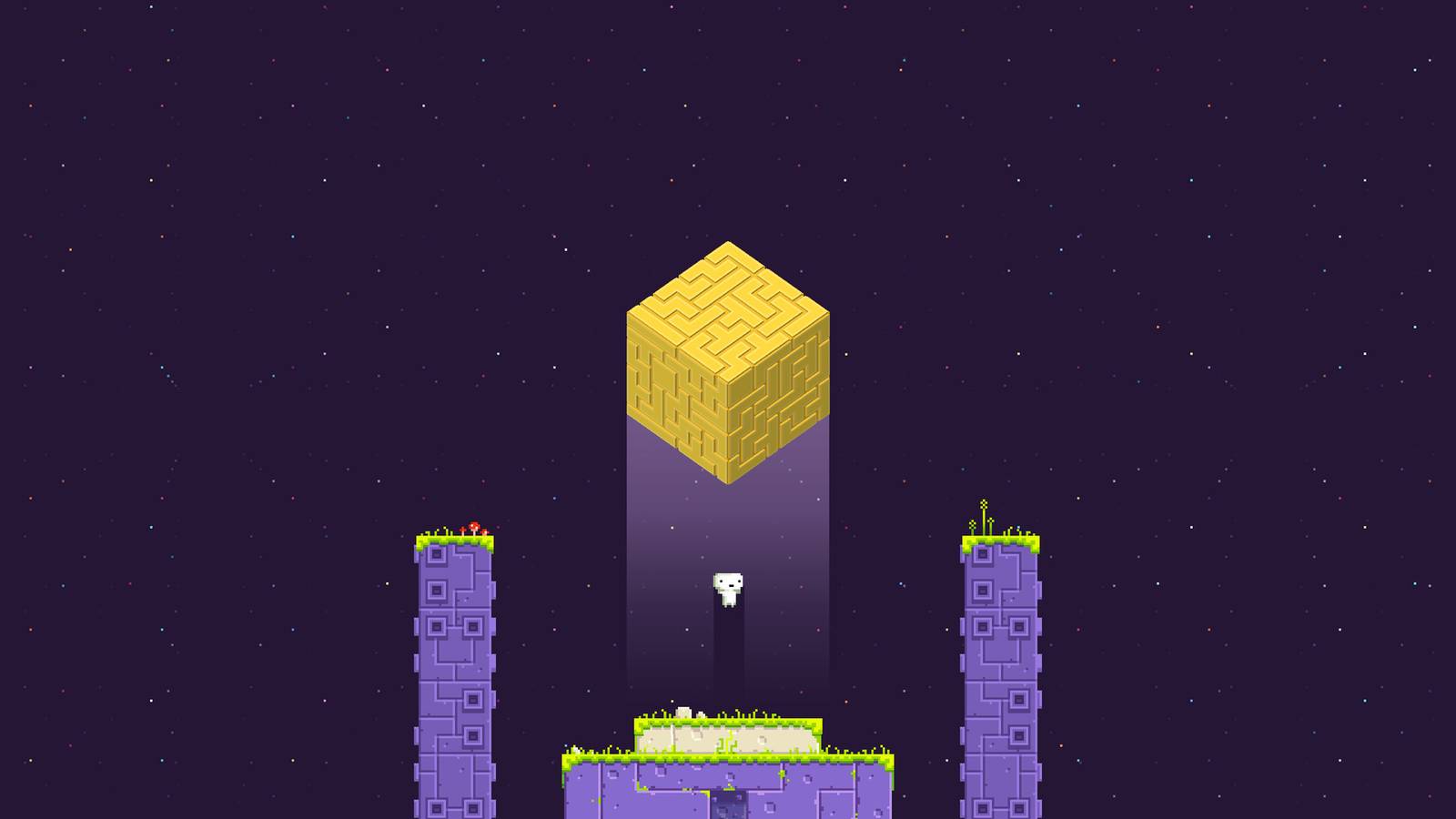
Released in 2012, Fez was a very unusual puzzle game by Fish’s studio Polytron. In static screenshots, it looked like a fairly normal indie platformer. Players controlled a little white mascot wearing a fez who hopped around pixelated environments. The twist? The 2D levels were secretly 3D and could be rotated to reveal unexpected paths hidden in the environment.
It may not sound all that special by today’s standards, but it was mind-melting in 2012’s indie gold rush. The way Fez toyed with perspective to turn a platformer into a puzzle game pushed past the realm of novelty into invention. It challenged the rigid rules of genre to show just how much remained uncharted in gaming at the time. The shift in gameplay perspective held symbolic significance, pushing developers to twist their own approach to games apart and think of more creative ways to approach them. For a time, it was one of the great games about games and felt destined to be remembered as a foundational classic.
Fez’s rise and fall happened at lightspeed. The game got significant attention in 2012 thanks in part to Indie Game: The Movie, a documentary that chronicled the development of Fez, Braid, and Super Meat Boy. Fish became a minor celebrity overnight right as Twitter was really establishing itself as the world’s most important social media platform. Naturally, it wasn’t long until Fez 2 was announced in June 2013. One month later, it was canceled.
“Fez 2 is cancelled. I am done,” Fish famously tweeted. “I take the money and I run. This is as much as I can stomach. This isn’t the result of any one thing, but the end of a long, bloody campaign. You win.”
While the gaming industry has had no shortage of public drama like that over the past 15 years, that moment still feels particularly strange. Maybe it was just because we weren’t used to seeing industry implosions happen in plain view yet. Or maybe it was because Fez felt like the start of an empire in 2012. It was one of the leading games of the indie charge, and one that felt primed to turn into the modern Mario alongside Super Meat Boy. To lose Fez 2 just as quickly as it was announced was like seeing history erase itself in real time. It felt like we were losing something important, even if we never saw anything more than a logo.

Even if that chaos dampened Fez’s cultural impact, its influence could not be scrubbed away. In the 14 years since the game’s release, we’ve seen a steady trickle of indies riffing on the same perspective play that made Fez so exciting. Antichamber created a world full of seemingly impossible illusions. The Pedestrian transformed road signs into platforming gauntlets. Viewfinder allowed players to turn photos into reversible 3D environments on the fly. The upcoming Screenbound, which impressed me at GDC, takes Fez to the next level by having players move through a 2D and 3D game at the same time.
Fez isn’t the kind of game that gets quickly shouted out as inspiring other games. We’re not as quick to pinpoint its clear influences today as we are, say, Disco Elysium or Return of the Obra Dinn. But Fez is a special breed of influential. Sometimes a game pulls off something so groundbreaking that its one-of-a-kind magic trick becomes a core piece of the medium’s language. We don’t think of perspective-shifting as a Fez innovation anymore; it’s as fundamental as jumping.

Sometimes I think it’s better that Fez never got its sequel. All eyes would have been on Polytron as the world anticipated another breakthrough. (In a 2023 interview with My Perfect Console, Fish explained that the pressure of making a sequel was one of the reasons he shut down Fez 2.) If the studio didn’t deliver that, Fez might have been written off as a one-time gimmick. The absence of a sequel left a door open. Developers have spent 14 years staking their own claim on that untapped potential. You don’t need Fez 2 when games like Cassette Boy are still so eager to follow Polytron’s lead.
Maybe the mark of a true gaming masterpiece is something that doesn’t need a sequel to keep reshaping the medium from a distance.