





Game of Thrones’ epic scope was always part of the show’s appeal. The ambitious story, sprawling across kingdoms, continents, and the cast of dozens of primary characters made HBO’s George R.R. Martin adaptation feel monumental and consequential, especially as the story narrowed down to a single massive war that would define the fate of the entire world.
But that scope — and its further extension in the prequel series House of the Dragon, which jumps back about 200 years in the Game of Thrones timeline — could also be exhausting. The sheer scale of the story didn’t always leave enough time for individual fan-favorite characters, or for arcs to play out at the length audiences might have liked, especially in the series’ notoriously rushed final season. The franchise has been in flux ever since that finale, with multiple new spinoffs announced and subsequently canceled, mutating into new forms, or just quietly disappearing into development hell.
Aside from House of the Dragon, the one new Game of Thrones show that’s actually made it to air, the six-episode opening season of the largely self-contained prequel A Knight of the Seven Kingdoms feels like the best possible path forward for the franchise, in many different ways. It’s a close adaptation of an existing Martin story, rather than another project by other writers trying to nail his tricky tone. It’s a much smaller-scale story, too, mostly taking place in a single location over the course of a few days. It reduces the stakes, with a conflict that matters a great deal to a few people, but without earth-shattering consequences. And it zooms in on human connection and character work, without losing sight of the power games and war for humanity and justice that’s always defined Martin’s writing.
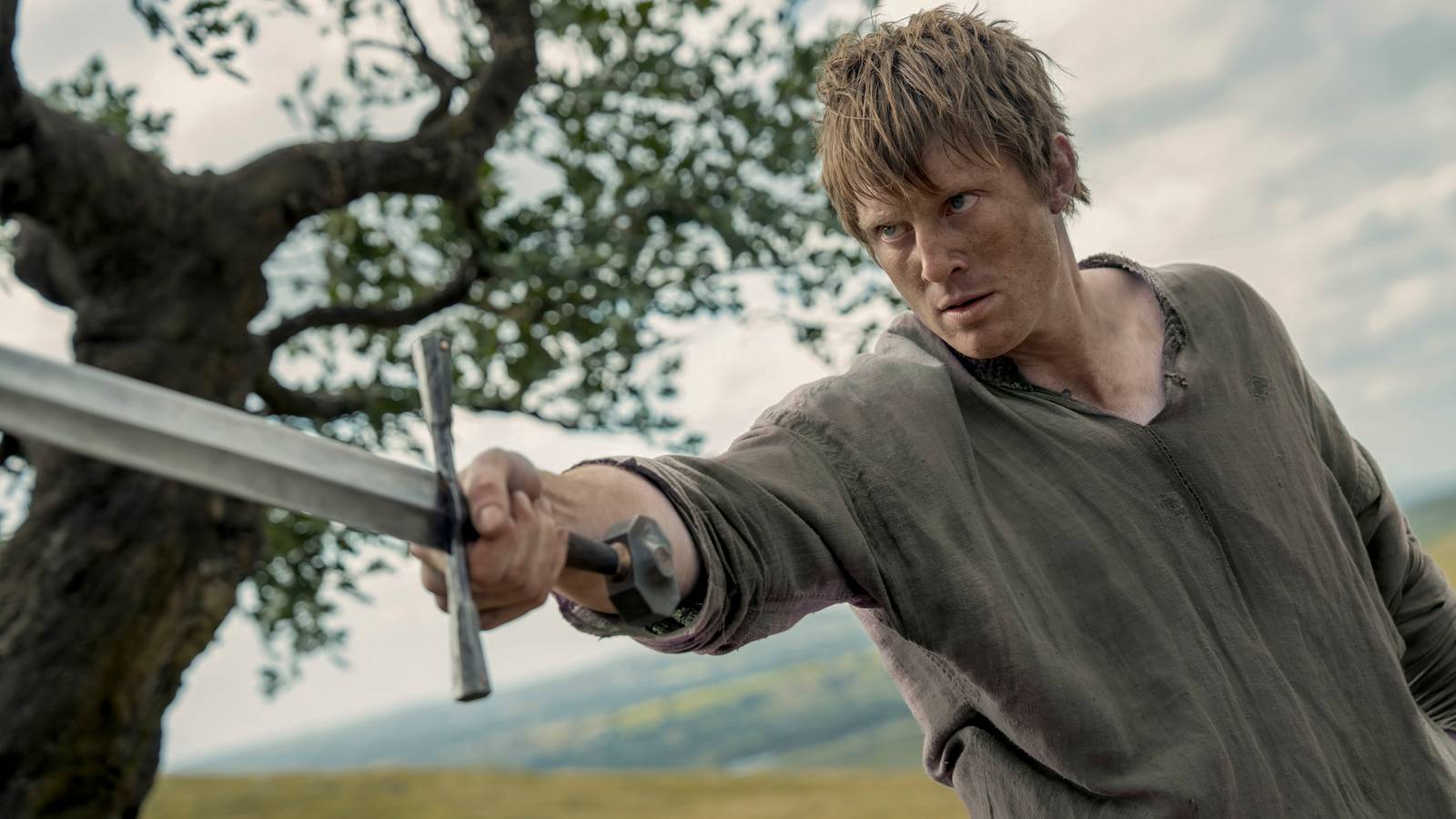
A Knight of the Seven Kingdoms is a complete adaptation of Martin’s 1998 novella The Hedge Knight, written for Robert Silverberg’s Legends anthology, a project built around some of the biggest names in fantasy writing new stories set in their best-known worlds. (A new Wheel of Time story from Robert Jordan, a new Dark Tower story from Stephen King, and so forth.) The Hedge Knight takes place about a century before Game of Thrones, and follows a former squire, Dunk (Peter Claffey), as he attempts to enter a jousting tournament shortly after the death of the aging, mildly disreputable knight who trained him. Along the way, he meets Egg (Dexter Sol Ansell), an ethereal but brassy young boy who wants to be his squire, and the two of them get into deep trouble.
Part of the appeal of A Knight of the Seven Kingdoms is how cleanly and clearly it translates the grim realities of Game of Thrones’ grimy, lived-in proto-medieval setting into a pared-down, make-or-break story about a single event that will decide Dunk’s place in the world. As a knight, Dunk has some claim to honor and respect that puts him above the average peasant — but as a hedge knight, he has no guaranteed place in a castle or a lord’s retinue, and owns virtually nothing except his former master’s sword, armor, and horses.
If Dunk loses in the tourney, he loses those stakes and becomes an ordinary man in an unforgiving world. But if he doesn’t take a chance on using his fighting skills to earn recognition and prizes, he’ll remain a nameless wanderer who can barely feed himself, let alone Egg. As with previous Game of Thrones stories, Dunk’s poverty and desperation contrasts with the privileged positions of wealthy lordlings who take knighthood and wealth for granted.
That’s particularly true for the knights with house names that longtime Game of Thrones fans will recognize, like Targaryen and Baratheon. Most of the characters here are big, iconic personalities with instant impact, especially hard-partying gadabout Ser Lyonel “The Laughing Storm” Baratheon (Daniel Ings) and obvious predatory villain Prince Aerion “Brightflame” Targaryen (Finn Bennett). As an outsider in the world of power and prestige they occupy, Dunk bounces off these men helplessly, a victim of his own naïveté, inexperience, wavering confidence, and self-proclaimed limited intellect.
But in spite of his flaws, Dunk as a protagonist is another major win for A Knight of the Seven Kingdoms. As an outsider stepping up for the first time into a world of glittering knighthood, he’s the perfect route into a new setting for the series, and one of the most immediately appealing characters the franchise has mustered. His self-effacing humility, his inherent decency, his hard-won scraps of pride, and his sterling sense of knightly honor are all elements that were missing throughout a lot of Game of Thrones, mostly surfacing in flashes in complicated characters who rarely had opportunity to be as straightforward as Dunk. (Jon Snow probably comes closest — and was often just as lost and baffled amid the schemes of the smarter, more savage people around him.) Dunk’s awkward semi-mentorship, semi-friendship, semi-adoptive-parent relationship with Egg is similarly an instant focal point for a franchise that often finds its best moments in the unlikely connections between unlikely people.

Showrunner and writer Ira Parker gives the series a kind of rough comedy that Game of Thrones could rarely afford, whether he has Dunk gritting out a bout of nervous diarrhea, Egg singing an in-world equivalent of teasing-the-naughty-word novelty songs like “Polka Dot Undies,” or a particularly nasty bureaucrat teasing Dunk with threats of a terrible torture that seems all too plausible in Westeros’ established world, solely to see the dismayed look on Dunk’s face. The humor is generally crude and focused on body functions or petty cruelties, but it still lightens the mood in a story that is, like so much of Game of Thrones’ narratives, about the question of where kindness, decency, and humanity can find root in such a rough, raw world, among so many people who actively revel in cruelty, or simply think other people don’t matter.
Game of Thrones fans who keep up with the series specifically for the epic elements — dragons, dark magic, kingdom-spanning conflicts, and army-on-army clashes — may not find enough in A Knight of the Seven Kingdoms to hook them in. The franchise’s notoriously lurid sexual elements are also nearly absent here, as are the sometimes exhausting explorations of systematic misogyny, torture of women, and rape that stretch throughout the previous two series. There are very few speaking roles for women in Seven Kingdoms: This season is almost entirely about men, particularly men with widely varying ideas about the uses of power, the responsibilities or lack thereof that come with it, and what can be sacrificed to gain more of it.
But the removal of those elements in favor of a more ground-level story makes Knight of the Seven Kingdoms a fresh take on the franchise, honoring much of the world-building that makes it memorable, while forging a more accessible path. The slightly lighter tone, the close focus on a single character’s relatively modest ambitions and entirely personal struggles, and the excellent character work and scene-setting all make this an easy starting point for Game of Thrones newbies and a refreshing palate-cleanser for existing fans.

This opening season builds to a satisfying, self-contained conclusion, while leaving the door wide open for further seasons, likely starting by adapting Martin’s other Dunk and Egg novellas. (Season 2 has already been green-lit. All three novellas are collected in the book A Knight of the Seven Kingdoms.) This series feels more like a sidebar for Game of Thrones than a bold new direction, but everything that makes it distinctive feels like something HBO should embrace, as the studio tries to figure out the future of a series that’s already explored its biggest conflicts, and can stand to take the time to explore smaller, more personal, more human ones.
A Knight of the Seven Kingdoms debuts on HBO Max on Jan. 18, with new episodes on Sundays through Feb. 22.