





Ontario is getting a massive new trail that will eventually stretch 100 kilometres through the GTA and surrounding region, connecting the Hills of the Headwaters in Orangeville all the way to Lake Ontario in Port Credit.
The Credit Valley Trail is being developed as a continuous pathway through the watershed, with the goal of creating new recreational spaces while also restoring the region’s natural habitats.
The once-in-a-lifetime project is also being designed to reflect Indigenous history, knowledge, and culture in the Credit River valley, home to the Mississaugas of the Credit First Nation and a gathering place for many Indigenous Peoples. Each site will invite trail users to “pause, reflect, and connect — with the land, with culture, and with the voices that continue to shape this valley,” according to the Credit Valley Conservation (CVC).
Once complete, the trail is planned to include seven Indigenous Placemaking Sites, developed with guidance from Anishinaabe Elders and Knowledge Keepers. The latest site to receive funding is the Giigoonh (Fish) Doodem Indigenous Placemaking Site at Charles Sauriol Conservation Area in Caledon.
Last week, 407 ETR announced $1.5 million in funding for the CVC and the Credit Valley Conservation Foundation (CVCF) to support the development of the site, which is expected to begin construction next year.
Located along the banks of the Missinnihe (Credit River), the site will feature an interpretive trail celebrating Fish clan families while sharing Anishinaabe knowledge systems, traditions, and cultural teachings.

The first Indigenous Placemaking Site along the trail, the Ajijaak (Crane) Doodem, opened at Island Lake Conservation Area in Orangeville in June 2024.
“The Credit Valley Trail is one of the most ambitious conservation and community-building initiatives in our watershed. This investment demonstrates what is possible when organizations come together around a shared purpose,” said Terri LeRoux, chief administrative officer at CVC.
“The Credit Valley Trail will connect communities physically, culturally, and ecologically, creating experiences that inspire stewardship, belonging, and a deeper appreciation for the landscapes we share. Together, we are building a legacy that will benefit people and nature for generations.”
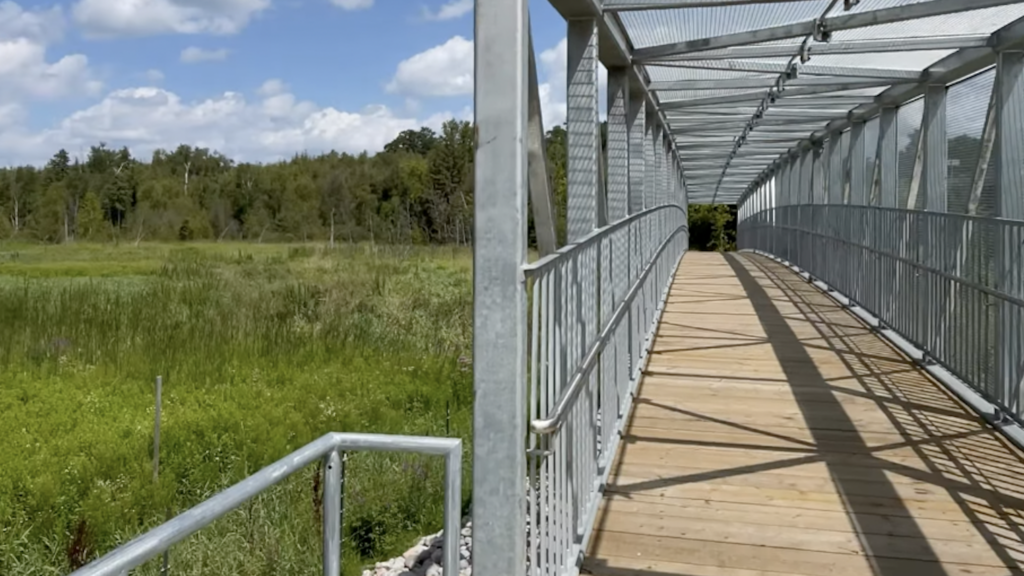
Last month, the project marked a major milestone when the CVC officially opened a new 40-metre pedestrian bridge on its Tranmer property, part of the Upper Credit Conservation Area.
Located north of the Dufferin County Road 109 bridge, the structure is one of the first major infrastructure achievements for the Credit Valley Trail, and brings the region even closer to having a continuous, 100-kilometre route.
So far, the CVC says 43 kilometres of the trail are already connected, with 57 kilometres remaining. The CVCF has supported the trail’s development since 2020 through a 10-year fundraising campaign with a $10 million goal, reaching 65 per cent of its target thus far through corporate and community support.
Looking ahead, the 407 ETR has commissioned Indigenous artist Phillip Cote to create a mural that transforms the Mississauga Road bridge on Highway 407 ETR into a “powerful visual expression of Indigenous knowledge, identity, and connection to the land.”
The mural will draw on the history and teachings of the Mississaugas of the Credit First Nation and is scheduled for completion in October.
Recent posts:
Snow way! Ontario could get its first taste of winter early this year
Heavy metal band Slipknot announces stadium tour dates with two Canadian stops