

![26th Aug: The Airport Chaplain (2026), 8 Episodes [TV-MA] (6/10)](https://occ-0-1081-1001.1.nflxso.net/dnm/api/v6/0Qzqdxw-HG1AiOKLWWPsFOUDA2E/AAAABc6ewBfgamhehsYC0MihDluZBANzRb5Bin0SVjmZQj27vygXPulyo7WBiKpfWFpY9qVE2BUGQlm0ND-XQygW5bfaehWRWTREvhpzSGv6IFcTRHPATFaj5yZ0Uo6jBJtSY1Gk3lqp_WGfC-S8J6Ssa45VLqvWZY7-99yE9oGzAxLGhA.jpg?r=261 "26th Aug: The Airport Chaplain (2026), 8 Episodes [TV-MA] (6/10)")








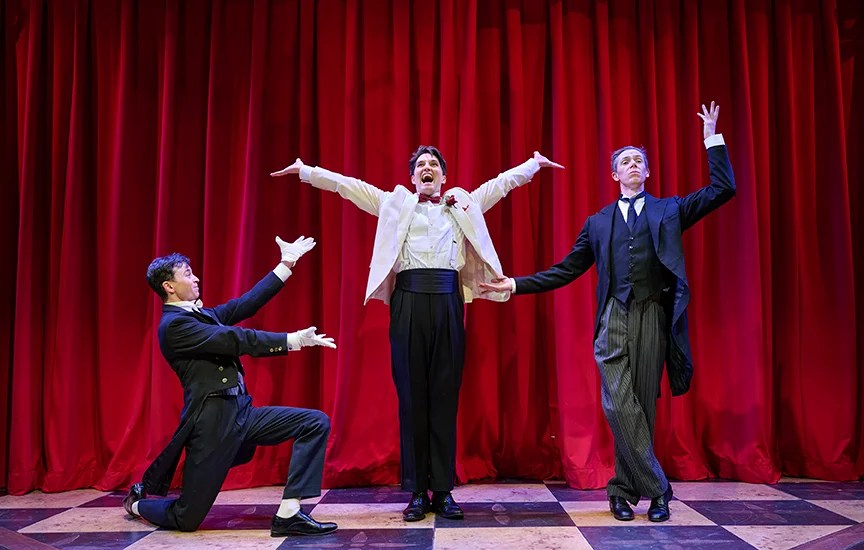
The Shaw Festival Review: Damien Atkins, Jeff Irving, and Travis Seetoo turn theatrical mayhem into comic gold
By Ross
A musical flourish accompanies the parting of the red curtains, and a man stands, just to the right of the spotlight. He seems caught off guard, as he thought we were starting a wee bit later. Bertie Wooster is clearly flustered, apologizing with disarming sincerity. Yet armed with confidence, charm, and absolutely no theatrical experience whatsoever, he has decided to stage one of his recent adventures for us himself. How hard could it be, he suggests.
As it turns out, exceedingly.
Thankfully, Bertie Wooster has Jeeves at his beck and call. And in that deceptively simple premise, the inspired engine behind Robert and David Goodale’s Olivier Award-winning adaptation of P.G. Wodehouse’s The Code of the Woosters comes to life. Receiving its Canadian premiere at the Shaw Festival under Brendan McMurtry-Howlett‘s sparkling direction, Jeeves & Wooster in Perfect Nonsense is not only a deliriously funny British farce overflowing with physical comedy, theatrical trickery, and delicious wordplay, it is also a joyful celebration of the collaborative magic that allows live theatre to appear effortless, even when absolute chaos is unfolding before our eyes and behind some scenic flats.
Jeff Irving gifts us with the perfectly engaging and slightly too confident Bertie Wooster, who remains blissfully convinced that everything is proceeding according to plan. Irving (ShawFest’s Anything Goes) never pushes Bertie toward caricature; instead, he finds a wonderfully childlike enthusiasm beneath the upper-class conviction. Bertie constantly congratulates himself on how brilliantly everything is going while the audience watches the entire production narrowly avoid collapse around him. Every proud smile arrives with impeccable timing, completely unaware that disaster has only been narrowly avoided yet again. And not by him.

Naturally, disaster never fully arrives because Damien Atkins’ Jeeves quietly prevents it. Atkins (Factory’s Here Lies Henry) gives one of the most satisfying comic performances of the Shaw season. His Jeeves possesses that famously dry composure Wodehouse readers adore, answering nearly every crisis with an impeccably measured “Indeed, sir,” while somehow anticipating Bertie’s needs long before Bertie has thought of them himself. Watching Bertie repeatedly ask, “How are you doing that, Jeeves?” becomes one of the evening’s great running jokes because we know exactly how. Jeeves isn’t simply reading Bertie’s mind; he is gently steering the entire production without ever allowing his employer to notice.
The brilliance of the adaptation lies in that delicious theatrical metaphor. Jeeves quietly cues the scenery, solves costume problems, adjusts lighting, produces props, recruits assistance, and keeps the story moving with invisible precision. Like the finest stage manager or backstage crew, he performs miracles that no one is ever supposed to notice. Bertie believes he is telling the story. Everyone else understands who is truly making the evening possible.
Helping orchestrate that miracle is Travis Seetoo’s astonishingly versatile Seppings. What initially appears to be a dutiful butler quickly becomes an Olympic display of comic athleticism as Seetoo (ShawFest’s Murder-on-the-Lake) races through an astonishing parade of wildly different characters. Aunt Dahlia storms gloriously onto the stage one moment, only to be followed by the intimidating Roderick Spode, a delightfully absurd police constable, an antique dealer, and perhaps the funniest (and most brilliantly handled) dog the Shaw Festival has hosted in years. Seetoo’s fearless physical comedy never feels frantic simply for its own sake. Every transformation rolls in with absolute precision, and his commitment to each ridiculous character somehow makes every impossible situation feel perfectly logical.

One sequence in particular had the audience roaring. A simple automobile journey becomes a miniature masterclass in theatrical invention, with Seppings supplying an entire radio-style soundscape while an ingenious stage vehicle rattles toward an unforgettable railway crossing. It is one of those sequences that only live theatre can deliver, combining timing, imagination, craftsmanship, and complete commitment into something genuinely magical.
That spirit extends throughout director McMurtry-Howlett’s production. Assisted by Matt Alfano‘s superb movement direction, the pacing never loses control despite the increasingly tangled web of mistaken identities, blackmail schemes, missing notebooks, sentimental engagements, silver cow creamers, and one endlessly troublesome country house weekend. The plot ties itself into impossible knots, yet the production keeps every strand visible enough for audiences to delight in watching them unravel.
The theatrical world itself participates fully in the comedy. The endlessly adaptable scenery, designed by Sim Suzer (Crow’s Comfort Food), constantly reinvents itself, allowing locations to appear almost by sleight of hand while colourful props seem ready for whatever fresh complication Bertie accidentally creates next. The production wears its mechanics proudly, inviting us to enjoy not simply the illusion but the delightful ingenuity behind it. Lighting by Kaileigh Krysztofiak (StratFest’s Hedda Gabler) and sound by Olivia Wheeler (Soulpepper’s The Comeuppance) become Jeeves’ invisible accomplices, arriving exactly when Bertie never realizes he needs them, reinforcing the delicious fiction that Bertie’s amateur production somehow continues functioning against all reasonable expectation.

The comedy itself grows richer with every passing scene because these performers understand that absolute conviction makes every absurdity even funnier. Nobody ever plays the joke. Every outrageous entrance, impossible costume change, frantic rescue, and escalating misunderstanding is treated with complete seriousness. That unwavering commitment allows the increasingly ridiculous situations to blossom naturally into enormous laughs.
Perhaps that is why Jeeves & Wooster in Perfect Nonsense feels so wonderfully satisfying. Beneath all the mistaken identities, spinning scenery, and theatrical pandemonium sits a surprisingly affectionate portrait of partnership. Bertie may forever believe he is steering the ship, but it is Jeeves’ quiet intelligence, generosity, and unwavering devotion that carry everyone safely home. Good theatre often works exactly the same way. We applaud the performers standing in the spotlight, while unseen hands solve countless problems before anyone even realizes they exist. This joyous production turns that invisible collaboration into its greatest joke, and its warmest truth. It leaves the Court House Theatre overflowing with laughter and a renewed appreciation for the remarkable people who somehow make impossible things look wonderfully easy.


