







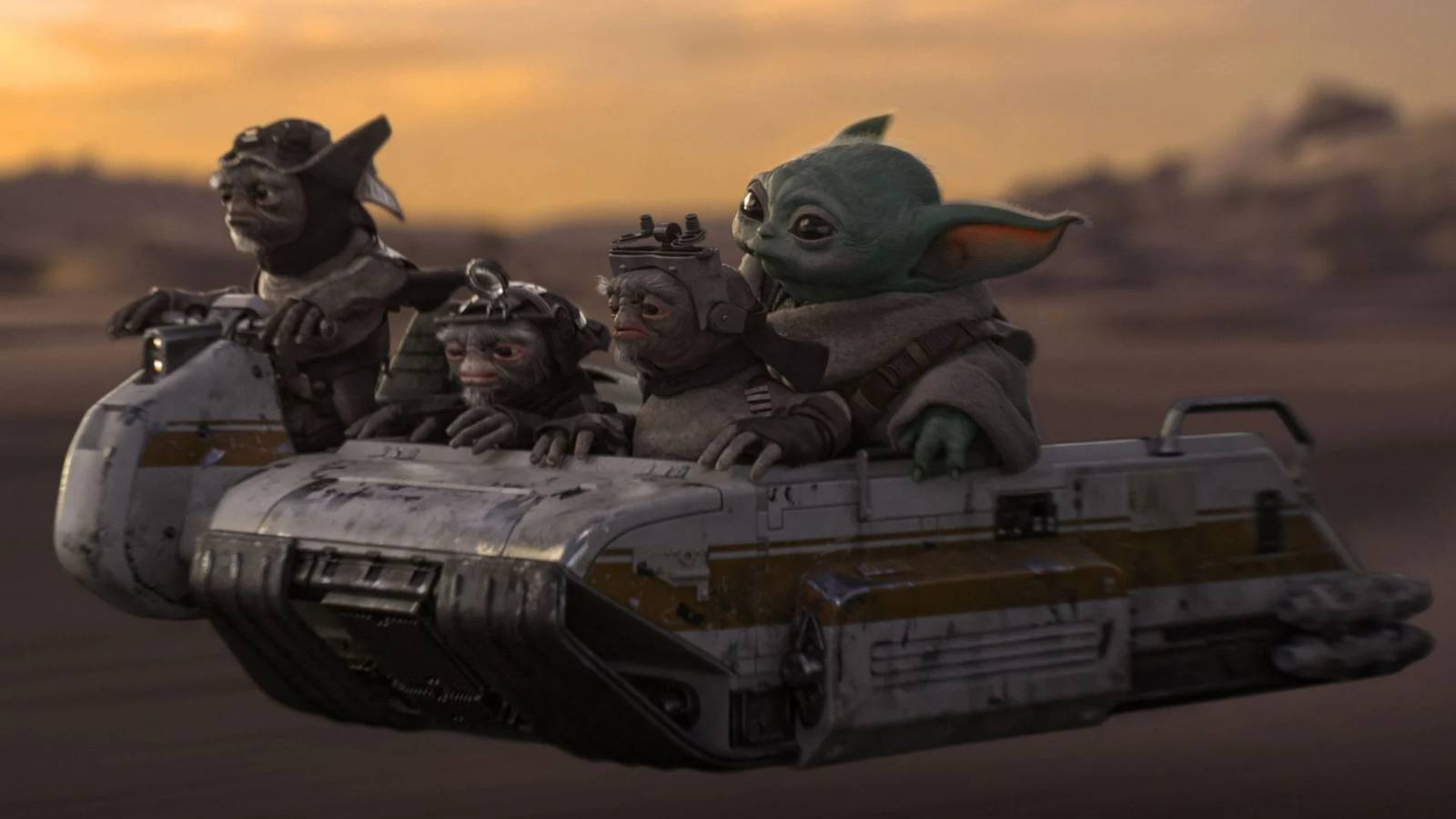
After nearly seven years, Star Wars is back in theaters with The Mandalorian and Grogu, launching its two most prized new characters onto the big screen. More serialized adventure than operatic space fantasy, Jon Favreau’s latest Star Wars outing trades mythic grandeur for aerial dogfights, towering creatures, IMAX-sized spectacle, and a satisfying ending.
But if you’re reading this article, you’re here to learn more about the ending of The Mandalorian and Grogu and what it means for the future of Star Wars. So let’s dive in.
[Ed. note: Spoilers for the ending of The Mandalorian and Grogu ahead.]
The Mandalorian and Grogu ending explained
Expanding on the scale of his Disney Plus series The Mandalorian, Favreau leans heavily into blockbuster spectacle, sending Din Djarin and Grogu on a planet-hopping adventure through the galaxy in pursuit of a shady Imperial Remnant warlord. Along the way, the pair cross paths with familiar figures from the animated Clone Wars series, including Jabba’s son Rotta the Hutt and the samurai-inspired assassin Embo, and are accompanied by Rebels star Zeb Orrelios.
The climax of The Mandalorian and Grogu reinforces the evolving dynamic between its two main characters. After Mando is captured by the Hutts for refusing to bring Rotta back to them, he’s forced to fight a massive water dragonsnake in the pitts below their fortress. He barely escapes the bout alive, but gets bitten and poisoned, leaving Grogu entirely on his own. The moment shifts the once-protected child to an active protector, serving up 20 minutes of silent screen time with some of the film’s most emotional beats, subtly pushing Grogu closer to becoming a true Mandalorian in his own right.
Although nailbiting, it’s doubtful anyone believed Mando would die in this film, and Favreau plays it safe anyway. After miraculously being cured by Grogu, Din Djarin goes on his all-too-familiar rampage through the Hutts’ droid-filled fortress on Nal Hutta, which culminates in a spectacular New Republic starfighter raid led by Sigourney Weaver’s Colonel Ward. It’s a spectacle that’s best experienced on an IMAX screen.
Surprisingly, the film’s ending contains very little connective tissue with the wider “Mandoverse” storyline established in Disney+ series like Ahsoka and Skeleton Crew. Set around 12 ABY — roughly following the events of Ahsoka season 1 — The Mandalorian and Grogu seems perfectly positioned to push the New Republic era forward, especially with the second season of Ahsoka landing in early 2027. Instead, the film largely operates as a standalone adventure.
What the ending of The Mandalorian and Grogu says about Star Wars
The Mandoverse encompasses the New Republic era and focuses on the 30 years between the original and sequel trilogies. It’s a prime place where Filoni and Favreau have been building the Star Wars lore by blending Legends stories, like Heir to the Empire, into the canon. Unfortunately, The Mandalorian and Grogu doesn’t have a post-credit scene and there aren’t many building blocks to help deduce what Favreau and Filoni are cooking for the future of Star Wars — aside from the fact that Rotta is now working with the New Republic.
That relative restraint may ultimately reflect the uncertain state of Disney’s theatrical plans for Star Wars. As reported by The Hollywood Reporter in January, Filoni’s Mandoverse crossover film and Favreau’s fourth season of The Mandalorian are currently in carbonite. With Filoni now overseeing the broader creative direction of Star Wars, it’s entirely possible his New Republic movie will still happen, but perhaps in a different (hopefully more expansive) way. We’ll just have to wait and see.
See The Mandalorian and Grogu in theaters now
