








The Acton Off-Broadway Theatre Review: Bughouse at Vineyard Theatre
By Acton
Henry Darger was an artist by animal instinct, hoarding photographs, newspaper clippings, scraps from coloring books, and comic strips in his nest of an apartment and working them into epic watercolor paintings depicting childlike characters in extreme situations. Although fantastically productive (along with 350 paintings, he wrote an accompanying 15,000-page novel, an 8,500-page sequel, and a 5,000-page biography), to any onlooker, Darger was nothing more than a simpleminded janitor. He never showed his work to anyone, and although he left many words explaining himself, the frenzied and maudlin extremes found in his paintings of warrior girls (naked, with penises, committing and suffering war crimes against armies of grown men in Civil War uniforms) beg for a few follow-up questions. As Bughouse (director Martha Clarke, script by Beth Henley, from Darger’s writings) concludes, answers remain tantalizingly out of reach.
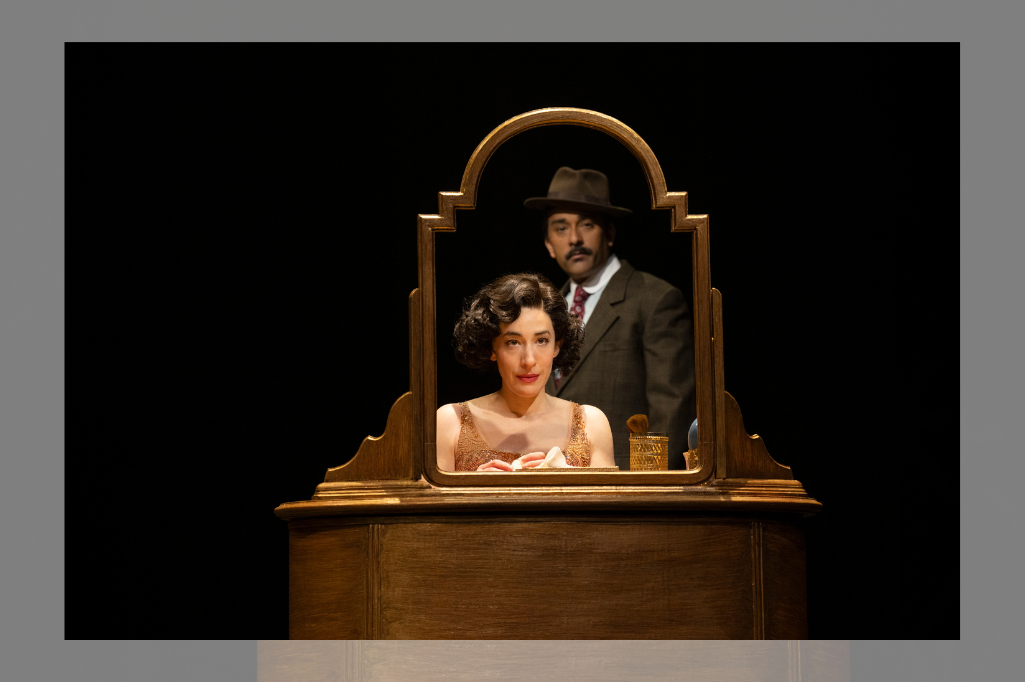
Bughouse greets us with Darger’s wondrously cluttered apartment (production design Neil Patel), stacked with art supplies, reference materials, and plain old junk, all directed toward the creation of his life’s work. As a reflection of Darger’s mind, the set is detailed and realistic, and rightly looks like it’s never seen a guest. John Kelly (Cupid’s Dido, Queen of Carthage) plays Darger as an impish and crotchety outsider, largely drawing on Darger’s own self-aggrandizing autobiography. Kelly is a captivating storyteller, inviting us to fill in the blanks where Darger trails off to avoid confronting uncomfortable episodes in his life. But in its reliance on Darger’s own words, Bughouse limits its scope to what he chose to reveal at a surface level, rather than exploring the obvious personal demons on display in his art.

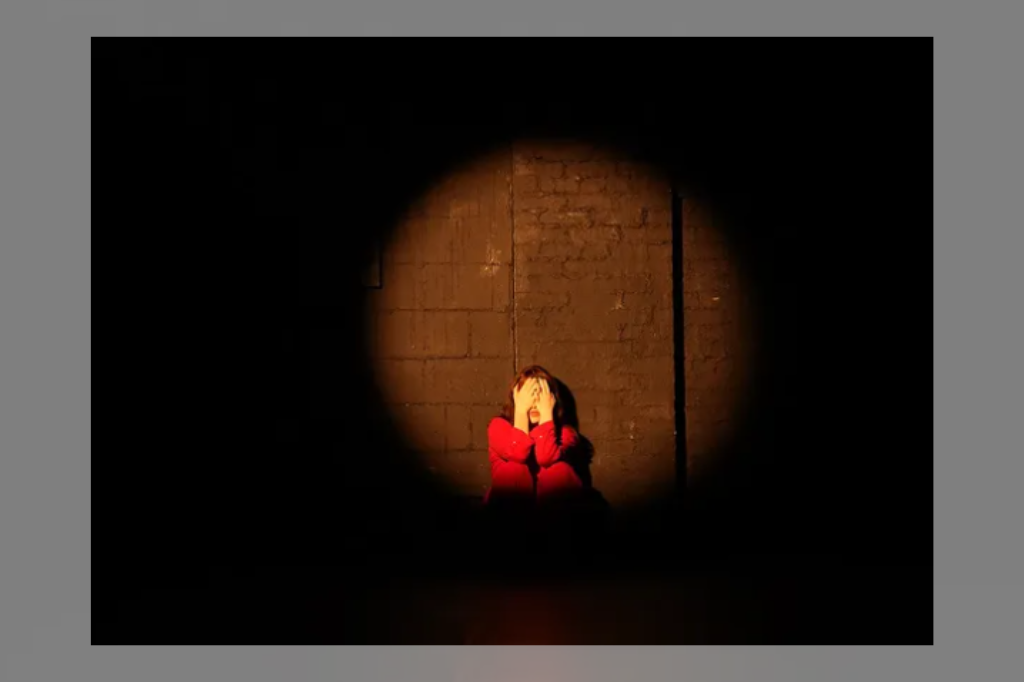
That art is represented here in a way that might leave you wondering why Darger is such a big deal. Animated excerpts from his paintings flit behind two narrow apartment windows (animation Ruth Lingford, projection design John Narun). It’s technically well done, but we miss the breadth of Darger’s grandiose compositions, which could reach eleven feet in width. His doodle of a cartoon bird is perhaps cute in isolation, but we don’t get the sheer weirdness of finding this dopey drawing within scenes of spiritual ecstasy and grotesque violence. Later, some of Darger’s more alarming images are projected over his cluttered apartment set, resulting in a crazed visual cacophony.
For those of us who already love Henry Darger’s work, Bughouse adds a handful of fascinating biographical details to his notoriously elusive life story. Its roughly one-hour runtime is a gift from heaven above. But by mainly limiting itself to Darger’s own words, it never quite becomes its own thing outside the confines of the artist’s wild imagination.