


![6th Mar: A Man Called Ove (2015), 1hr 55m [PG-13] – Streaming Again (6.85/10)](https://occ-0-1508-92.1.nflxso.net/dnm/api/v6/Qs00mKCpRvrkl3HZAN5KwEL1kpE/AAAABdRKge63IAoRT966saa9Z0pocvb6DbFES2QLvMPMAnu7iCKpyF9jwJBY3uAcMmbL106BTDhoLe89OQEMWJuazwTicXnupz0L48Cy.jpg?r=bac "6th Mar: A Man Called Ove (2015), 1hr 55m [PG-13] – Streaming Again (6.85/10)")



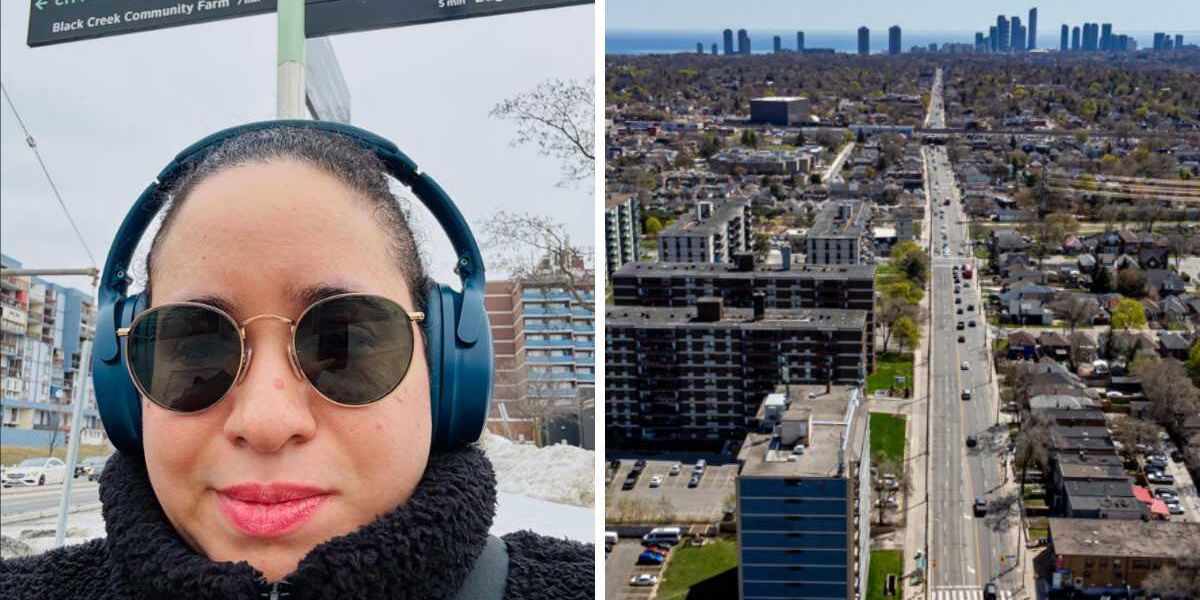
If you live in Toronto, you probably know about my neighbourhood. As someone who actually calls it home, though, I’m privvy to the constant change it’s undergoing, and what that means for my community.
Jane and Finch is not what you think. Notorious for all the wrong reasons, it is, at its heart, a community that cares.
Having lived in the area for over 10 years, I’m sensitive to the subtle changes slowly creeping in at the edges. While change is inevitable in a city like Toronto, some of the culture and sparkle that make the neighbourhood great are under threat of disappearing.
The past
I moved to Jane and Finch when I was 16. It wasn’t ideal, and it wasn’t a part of the plan. For my mother, it was heartbreaking. She had lived at Keele and Wilson before I was born, and the idea of moving was daunting. It was frustrating. It was scary. Coming from a single-parent household, she found it a tough decision to make. But with options swiftly being taken from her, the choice was taken out of her hands.
The reputation of Jane and Finch was always shrouded in lore, from word-of-mouth and biased news reports meant to frighten the community.
“You should avoid that area,” and “Oh, it’s so violent,” were common phrases when it came to the neighbourhood.
But growing up with family friends who lived there, I never really saw that. Granted, my exposure to Jane and Finch came in small bursts. Birthday parties, babysitting, sleepovers, and so on. I never got a true look until 2004 when we were forced to move. A roof was a roof, and we weren’t going to turn up our noses at it.
We migrated from Keele and Wilson, an area that had slowly undergone its own facelift, which caused rent prices to skyrocket.
The first year was an adjustment period. We’d constantly hear on the news of shootings, stabbings, and everything else in between. Our new building was right next to a plaza that housed a bar/club. It was rough.
I remember mum vowing that we weren’t going to stay. At max, a year or two, and we’d be out. But life has a funny way of turning plans on their head. As we continued to plug along in our lives, the surrounding area slowly began to change. Truthfully, at a glacial pace.
The present
Toronto streets.
Dana Reboe | Narcity
Thankfully, as the years continued, we were able to find some staples in the neighbourhood that kept things lively. The community center serves the area, offering sports, crafts, and workshops.
The Black Creek Pioneer farm — run by volunteers — has a farmers’ market, and the John Booth Arena offers skating and hockey. The neighbourhood has so much to give, but is consistently overlooked: until now.
As Toronto’s population continues to boom, the city’s lower-income and working-class residents are constantly under threat of being pushed further out into the suburbs. Sandwiched between Vaughan and the downtown core, Jane and Finch is in a prime position for easy access to wherever you need to go.
Much like when I was growing up in the Keele and Wilson, I started to see the tell-tale signs of gentrification: condos. It’s no secret that Toronto is building condos faster than it can find occupants. But one of the first licks of worry I felt was seeing condos going up from the vantage point of my morning walk. They started to go up quickly and aggressively, changing the skyline looking North. I quelled the worry, though, since it didn’t really touch Jane and Finch. I was far removed from Vaughan.
Months later, I noticed that a whole development of townhouses had been demolished. It was at an intersection just after Jane and Finch, on Jane going south.
One day it was there, the next it was completely gone. Wiped from existence. This felt like a particularly hard blow. I remember thinking, what had happened to the families that lived there? Paid out, no doubt, but gone nonetheless. Now, it’s nothing more than a field, sitting open and empty.
Across the street, another condo is being built, bright and shiny amongst more lived-in buildings, another clear reminder that things are changing rapidly. It isn’t dramatic to say that the neighbourhood’s landscape is being chipped away, losing the spark and culture that make it special.
The future
With the installation of Line 6 (Finch LRT), there’s growing concern among the community about what this means.
There’s nothing wrong with advancements. In fact, it’s encouraged. But as someone who has lived this and has seen firsthand what gentrification can do to a neighbourhood, it;s all an excuse to drive up the cost of living in an area that, for so long, was a solace for people living on low incomes.
Soon enough, the question will be: where will these people be made to go? Instead of continuing to build condos with no personality, the city should invest in keeping Toronto’s many cultures alive, rather than eradicating them.
Living in this area for 20-plus years has taught me a lot. One of the lessons I learned early on was not to judge a book by its cover. It’s cheesy, but it’s true.
Jane and Finch has so much to offer. It’s rich in community and culture. Even its ‘dead’ malls – Yorkgate and Jane and Finch Mall offer classes and services, markets, a sense of coming together among the Afro-Caribbean communities that you can’t quite find in other places in the city.
These spots have become more than a place to shop; they’re community hubs. To see it beginning to disappear, to make room for more condos, slowly pushing people out – you have to wonder whether this was the plan all along.
I’ve seen this song before. I’ve lived it, and it’s terrifying. With innovation and expansion come the inevitable rise in prices and the disappearance of culture, since the people who bring the culture simply cannot afford to live in the areas succumbing to change.
When I look at what Jane and Finch has become over the last 20 years in comparison to what it once was, I don’t recognize it.
While I do acknowledge that change is good and inevitable in a community, I find myself asking: at what cost?
The opinions expressed in this article are the author’s own and do not necessarily reflect the views of Narcity Media.