

![3rd Apr: Gangs of Galicia (2026), 2 Seasons [TV-MA] – New Episodes (6.2/10)](https://occ-0-953-999.1.nflxso.net/dnm/api/v6/0Qzqdxw-HG1AiOKLWWPsFOUDA2E/AAAABS9E1gSqfnCEvmK0pUIvVGK48O7IlcIKE5HMioAylmvYkN1_BlSd53EnC3Sc9adkr0zQZ2SMaE_o0sX8e0epok0hlYiltbnD4Dfg1mkKek-PLyprcl664-YI6qcnxAIFyWJs1hWiGakqZ7gjpbqsGNCxi31cwOAlXWDyFiuZ.jpg?r=529 "3rd Apr: Gangs of Galicia (2026), 2 Seasons [TV-MA] – New Episodes (6.2/10)")

![3rd Apr: Bloodhounds (2026), 2 Seasons [TV-MA] – New Episodes (7.05/10)](https://occ-0-953-999.1.nflxso.net/dnm/api/v6/0Qzqdxw-HG1AiOKLWWPsFOUDA2E/AAAABbC4c_LAwZKm-vEyySUBiZyUlmK4PIsVYFAdjsLo8uuYILxXYRpXPUCTgemPI55QwTi24xZtYqHmQUUhyUJv43U0gAxOH29AcCoKyPGd6xRipMO0ZGr7m6Co5EHkYUZ_ou2r70yb916JHiwdDhb7sMFohkGBgth5FVtRD8KY.jpg?r=a5c "3rd Apr: Bloodhounds (2026), 2 Seasons [TV-MA] – New Episodes (7.05/10)")





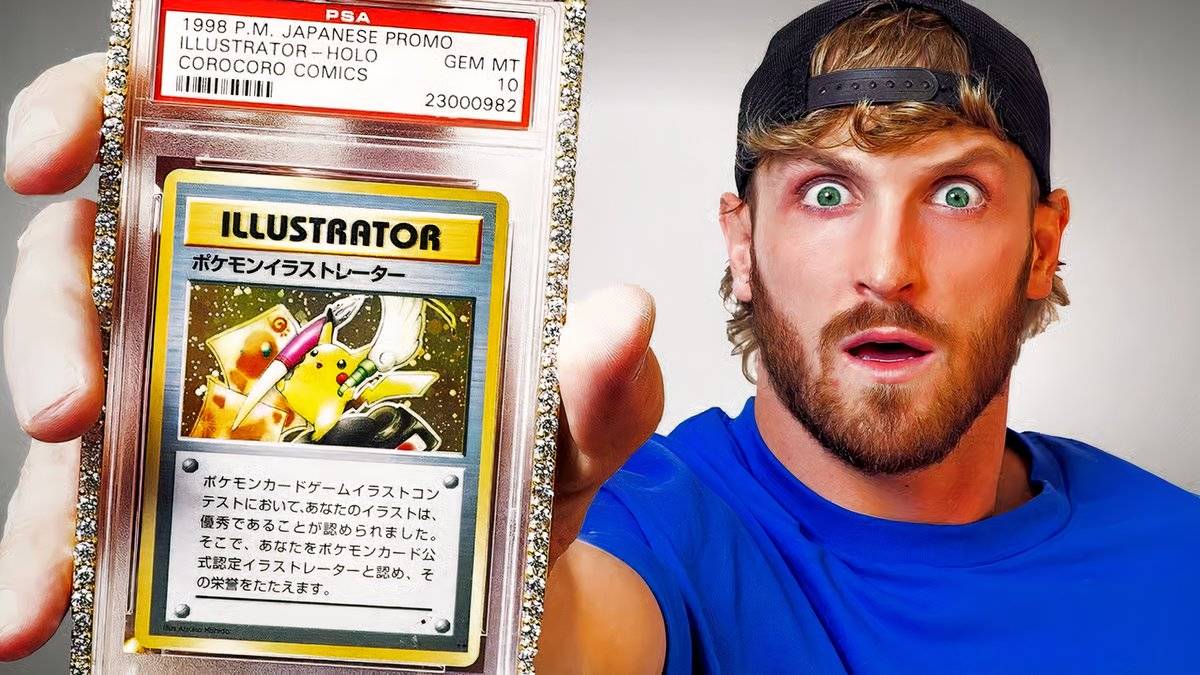
Logan Paul just sold the most expensive trading card ever. When the Goldin auction closed Feb. 16 at a staggering $16.49 million, the PSA 10 Pokémon Pikachu Illustrator card officially became one of the most valuable pieces of cardboard in history. But the celebration didn’t last long.
Within hours, social media filled with renewed accusations. Some questioned whether the card truly deserved its PSA 10 grade, while others resurfaced the collectible’s prior ties to the now-defunct Liquid Marketplace platform, which is currently facing fraud allegations from Canadian regulators. Paul addressed these claims in a Feb. 16 post on X. When reached for comment, Logan’s team redirected Polygon toward that post. Here’s what’s documented, what’s disputed, and what remains unresolved about the situation.
Is Logan Paul’s Pikachu Pokémon card really a PSA 10?
Some critics online are circulating the claim that Paul’s card is not a PSA 10, or that he had a PSA 8 or 9 re-graded to a 10 somehow. In April 2022, PokeBeach claimed that the “card has gone through multiple owners over the years and was graded as a PSA 9 several times due to a small chip in the corner.” Far more recently, other content creators have made similar claims, referencing the chip and how the card is off-center.
When Logan Paul bought this particular Pokémon card in July 2021 for $5.275 million, it set a Guinness World Record for the most expensive private sale of a Pokémon card ever. Part of the confusion about its grading, however, stems from the sequence of events outlined by Guinness in an official post. Paul originally purchased a PSA Grade 9 version of the card from prominent collector Matt Allen in June 2021 for $1.275 million. About a month later, he traded that card plus $4 million to another collector to acquire the PSA 10.“PSA” refers to the Professional Sports Authenticator, the world’s largest third-party authentication and grading company for trading cards and other memorabilia. While it was founded in 1991 to authenticate sports trading cards in response to a growing counterfeit market, the PSA began grading Pokémon card in 1999 — not long after the trading card game launched.
Every card graded by the PSA gets assigned a unique certification number. For Logan’s PSA 10, officially “1998 Pokémon Japanese promo Pikachu – holo illustrator,” that’s #23000982. The organization’s database also includes photos. In this case, there are no chips in the card that just sold for $16.49 million and no evidence that it was ever re-graded. In other words, whoever owned the card before selling it to Paul in Dubai kept it in mint condition and had it graded by the PSA only once.
Logan Paul’s Liquid Marketplace controversy

Other allegations have emerged related to the card’s troubled history with Liquid Marketplace. Upon its launch in April 2022, Paul described Liquid as his “next company” that provides a “platform where collectors can buy and sell fractions of rare collectibles via tokens on the blockchain.” As reported by Time in 2023, following an initial wave of enthusiasm attributed to Paul promoting the platform on social media, users eventually expressed frustration as activity on Liquid Marketplace slowed and Paul’s engagement with the platform waned. As investors flooded the platform early on, that drove prices up. Then, as Paul stopped promoting it, overall interest and market prices cooled considerably.
In July 2022, Liquid Marketplace listed the PSA 10 Pikachu card for fractional ownership, noting that the majority 51% ownership was up for sale, up to a total of $2.55 million through the platform. Then, Liquid shared in early August that it had sold out. “The LMP community controls the future of the card and will take part in all decisions made as to whether it will be taken out of the
[collectors] vault for events or to be auctioned off,” an X post reads. As YouTuber Kavos described in a video published Jan. 5, 2026, since launch, many Liquid Marketplace users were unable to access their funds or withdraw their money. Paul then appeared in a December 2025 episode of Netflix’s King of Collectibles: The Goldin Touch (season 3, episode 2) where he secured a $2.5 million advance to sell the card with Goldin Auctions.

The very next day, Paul clarified on X that in May 2024, he had repurchased all shares of the card by paying a “substantial buyout” and had “recently learned” that many users have been unable to withdraw money from their accounts. On Feb. 11, 2026, he shared that unclaimed funds related to the buyout had been released. However, Paul also told cllct in December 2025 that his buyout of Liquid Marketplace’s interest in the card was for $250,000. Paul then further clarified after the auction’s end on X that “ultimately only 5.4% of the card was sold for about $270k in the Summer of 2022 to fractional owners associated with [Liquid Marketplace].” He claimed that while many of the owners were able to withdraw funds after, some were not. Then, after the site went offline, Logan said he paid to get it back up and running so users could withdraw funds.
Behind the scenes, Liquid is in the midst of an ongoing legal dispute. “The company and some of its principals faced regulatory scrutiny — a process in which I have had no involvement or insight, as it does not relate to me,” Paul also wrote in the December post.
In June 2024, the Ontario Securities Commission filed an enforcement application against Liquid Marketplace and several of its principals, alleging “multi-layered fraud in the crypto asset sector,” tied to the platform’s crypto-based fractional ownership tokens. Regulators allege the platform distributed “unregistered securities,” meaning it sold investment-like tokens without formally registering them under securities law or qualifying for an exemption. The filing also claimed the company misled investors about what their tokens actually represented, raising questions around ownership rights and insurance.
An amended version of the allegations, filed in February 2025, dropped the earlier “multi-layered” phrasing but kept the core claims intact. Regulators continue to allege that Liquid Marketplace sold tokens that did not grant the ownership rights users were led to believe they did. The case remains ongoing before Ontario’s Capital Markets Tribunal, with additional hearings scheduled for June 2026.
Paul is not named as a respondent in the proceeding. In his December statement, he said he had “no involvement or insight” into the regulatory process and that it “does not relate to” him personally. Yet at the time of the company’s launch, Paul spearheaded the platform as its lead spokesperson. Now, he’s just sold a piece of cardboard for more than three times what he paid for it almost five years ago — while many of those who partially owned the card for a brief stint seemingly continue to struggle at reclaiming their shares.