
![Toronto to Willemstad, Curacao – $462 CAD roundtrip including taxes [Nonstop Flights], Canadian Deals](https://www.ydeals.com/images/ydeals_logo_300x300.jpg "Toronto to Willemstad, Curacao – $462 CAD roundtrip including taxes [Nonstop Flights], Canadian Deals")




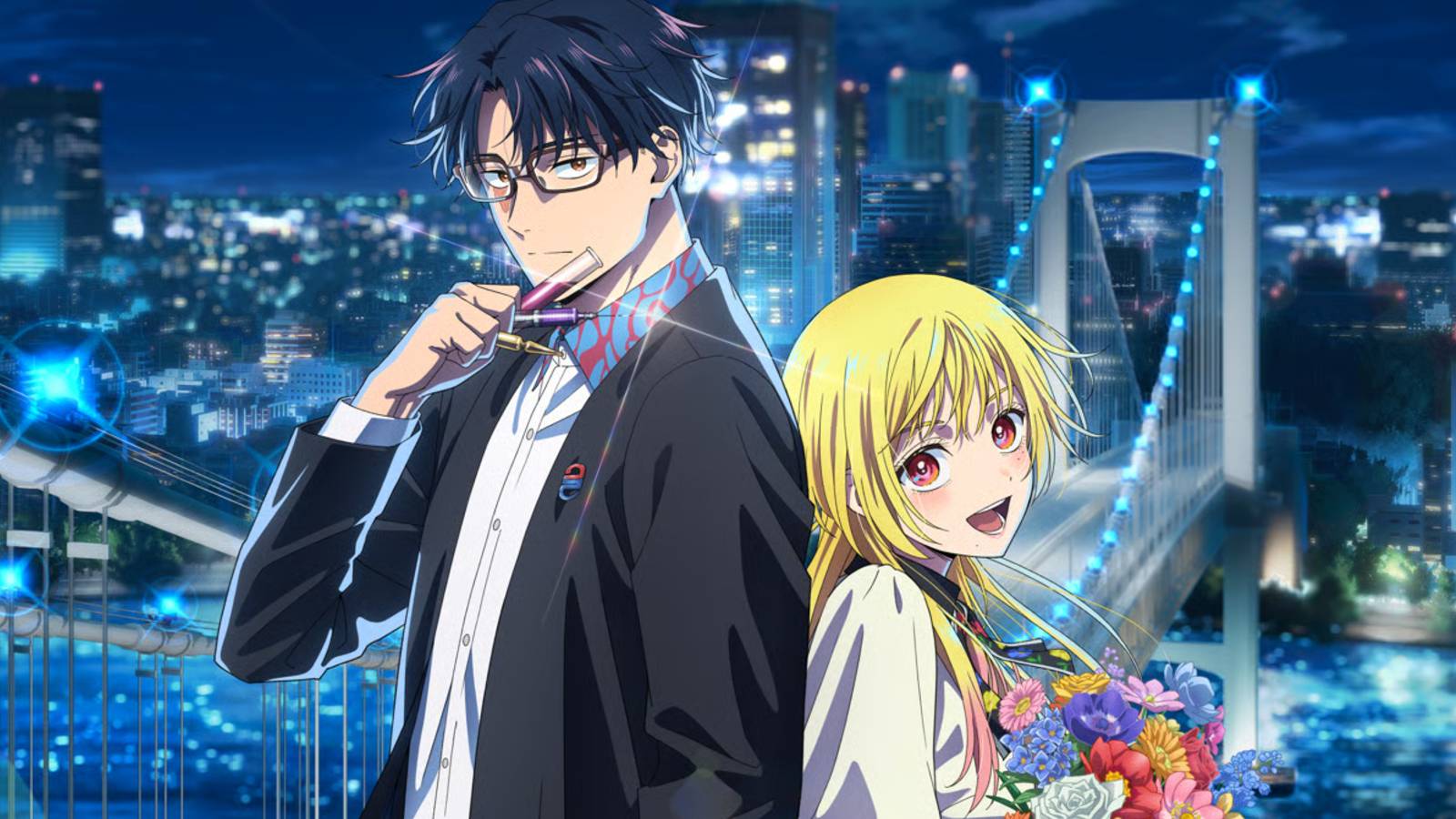
At every turn of the seasons, a score of anime, both new and returning, battle to conquer viewers’ attention on the popular anime streaming platform Crunchyroll. This spring, among some isekai heavy hitters and the return of Fullmetal Alchemist’s creator, you may have missed one of the best new anime. Based on the manga written by Joumyaku and illustrated by Mizuki Yoda, serialized in Shueisha’s Shōnen Jump Plus app and website, Marriagetoxin debuted in April and has been gaining fans with every new episode, ranking high in weekly popularity polls.
Marriagetoxin follows Hikaru Gero’s journey to find the perfect marriage partner. Gero is the Poison Master, the heir of a clan of assassins that sits at the top of the world of “specialists,” contract killers who have perfected their arts for centuries. However, due to his cruel and isolated upbringing, Gero is also socially awkward and struggles to interact with the opposite sex. When his grandmother and head of the Poison Clan threatens to force Gero’s sister into a marriage of convenience, he accepts his duty of finding a partner, asking his latest assassination target, the cross-dressing swindler Mei Kinosaki, to marry him. Kinosaki declines, offering instead to “train” Gero as his marriage advisor, helping him find the perfect partner.
As a fan of the Marriagetoxin manga, I was excited about the anime. Studio Bones proves once again unmatched in bringing manga to life on the screen. The studio behind Fullmetal Alchemist and My Hero Academia has an’ uncanny capacity to preserve the visual style of the source material while enhancing its most striking elements to new heights, which is on full display through the work of director Motonobu Hori, whose impressive credits include working on Spirited Away and directing Carol & Tuesday (created by Shinichiro Watanabe), Super Crooks, and Bones’ underrated original sci-fi anime Metallic Rouge.
Polygon had the opportunity to interview Hori about Marriagetoxin via email, and his answers show a deep understanding of the strength and originality of the source material, and of how to best bring it to the attention of a larger audience. It’s an art form with decades of history, but creators like Hori keep innovating it while facing the challenges that every manga presents with its distinctive style. And Marriagetoxin surely feels “distinctive,” with its blend of over-the-top action, romance, and humor.
“My very first impression upon reading it was that it’s an absolutely wild and chaotic work,” Hori said. “In the so-called ‘Jump-style’ manga of Weekly Shonen Jump and Shonen Jump Plus, there’s a strong tendency for the signature techniques shown in action scenes to be packed with drama and backstory, often leading into flashbacks tied to those very techniques. It takes the form of combat, but I see it as essentially being a form of communication.”
Hori’s interpretation touches the core of shonen storytelling. Sure, the battles are exciting and the flashy moves leave an easy impression, but it’s the emotional subtext that pushes this type of manga and anime beyond its boundaries. Marriagetoxin goes one step further. “With this series, both the romance and the battle scenes function as communication,” Hori said. “It wasn’t so much a difficulty, but it was an element I made sure to treat with care throughout the production.”
Marriagetoxin’s peculiarities go beyond its blend of genres. Gero is an unusual protagonist for a Jump manga due to his age, position in life, and pursuits. The manga feels aimed at a different target audience compared to the standard Jump content. “Marriagetoxin packs in elements from all sorts of past Jump manga and makes that its theme,” Hori said. “I was also especially intrigued by the fact that the protagonist is an adult man — and a contract killer at that — who is out looking for a marriage partner.”


Surely, relating to an adult character looking for marriage should be harder for Jump’s target audience of adolescent boys. But things are changing in the industry, and Hori is well aware of that. “People who read Weekly Shonen Jump, up until around middle school, genuinely believe they could actually fire off a ‘Kamehameha.’ I certainly did,” the director said. “But this isn’t that kind of manga — I felt it was aimed at ‘adults’ who already understand that they can’t shoot a Kamehameha. Rather than featuring the shonen-manga staple of characters having dreams for the future, I felt it was a work for readers who enjoy manga as manga — as a pastime. A manga you can enjoy at a step removed; a manga of the Reiwa era (The name of the current era in the Japanese calendar, which began in 2019).”
Hori’s last work before Marriagetoxin was the original anime Metallic Rouge, a rare sight as most series nowadays are based on manga or light novels. I have to imagine that a director enjoys the amount of creative freedom that an original work allows, but Hori explained that this isn’t exactly the case.
“Metallic Rouge is an original work, but its core ideas and overall story owe much to Yutaka Izubuchi, who is credited as Chief Supervisor, who handled the script and design, so in practical terms, the degree of creative freedom I had in my role as director wasn’t all that different from Marriagetoxin,” Hori said. “On Marriagetoxin, the script meetings were attended every time by Joumyaku, Mizuki Yoda, the editor in charge, and other Shueisha staff, and we made fine-tuned adjustments each time. I never felt any major differences of opinion during those meetings, and I think things went extremely smoothly. Beyond that, the events that unfold in the original Marriagetoxin manga are so wildly over-the-top that, rather than feeling our creative freedom is being restricted on the anime staff’s side, I actually feel we’re being asked to expand the scope of our creativity even further.”
That creativity is on full display in Marriagetoxin. The story comes to life through an inspired use of the color palette that at times seems to bleed on the screen, adding expression and energy to the most important scenes. Still, through that visual flair, the characters remain the heart of Marriagetoxin. It all goes back to the protagonist, who is ultimately the deciding factor behind the success of an anime. “Gero really is the most appealing character,” Hori said. “He’s a very contemporary kind of character, yet he’s designed in a way that makes him easy to empathize with. It really shows the skill of the original creators.”
Indeed, shortly after its debut, the manga was praised by both Koyoharu Gotouge (Demon Slayer) and Gege Akutami (Jujutsu Kaisen). Beyond its fun, light-hearted coating, Marriagetoxin shines for its healthy depiction of dating and for a progressive approach to genre and sexuality that is rare to find in a Jump manga.
That balance between recognizable tropes and innovation is the heart of Marriagetoxin. “Gero falls into the familiar ‘invincible but flawed’ archetype, but the balance is a little different,” Hori said. “He’s invincible, yes, but he’s not the type who simply powers through with brute strength — his identity as a ‘Poison Master’ is woven firmly into his character. In climactic moments, he’ll sometimes solve things in an almost cheat-code-like way. In other words, he’s orthodox, but ever so slightly off-kilter. Everything about him is just a bit askew, and I think that’s exactly where his appeal as a character lies.”
Marriagetoxin is currently streaming on Crunchyroll. New episodes release on Tuesdays.