








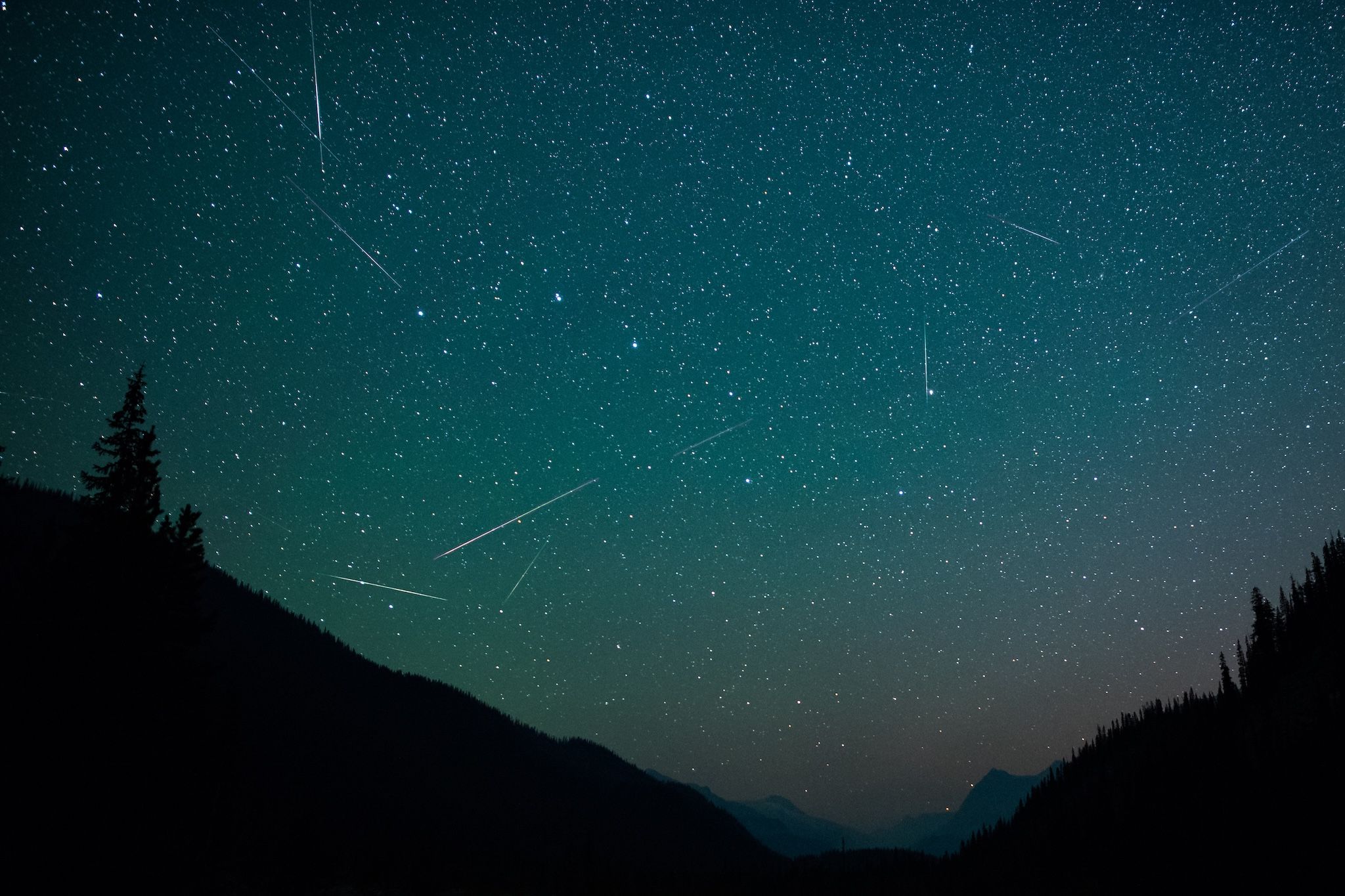
Canada, look up! Though you may think your city streets are bright, there’s a lot of luminous action happening in our night skies, especially this year. From meteor showers to eclipses and planet viewing, there will be lots of moments throughout the year when you can enjoy some starry skies in Canada. We’ve compiled a list of must-see space events, so if you’re looking for peaceful moments over the next few months, plan a trip to your local dark sky preserves or travel up north, where light pollution is at a minimum.
It’s always worth seeing all the magic space has to offer.
Celestial events coming in 2026
Jupiter at opposition
This is when Jupiter will be at its brightest and most visible for the whole year, according to The Planetary Society.
When: Jan. 10, 2026
Total Lunar Eclipse
Western Canada will be able to see this eclipse!
When: March 3, 2026
Lyrids Shower
This fantastic event has been observed for 2,700 years and is usually a spring favourite. It’s best viewed in the Northern Hemisphere as the sun sets, according to NASA.
It’s one of the oldest known meteor showers.
When: Apr. 22-23, 2026
Eta Aquarids Shower
The Eta Aquarids meteor shower is known for its speed, according to NASA.
“The Northern Hemisphere has an hourly rate of only about 10 meteors. This is due to the viewing location of the radiant from different latitudes,” they add. “In the Northern Hemisphere, Eta Aquarid meteors can more often be seen as ‘Earthgrazers.’ Earthgrazers are long meteors that appear to skim the surface of the Earth at the horizon.”
When: May 6-7, 2026
Delta Aquarids Shower
Now these are some tricky ones. According to NASA, these faint meteors are difficult to spot, especially if the Moon is visible. Your best chance to see the Southern Delta Aquariids is when the moon isn’t at its brightest and when meteor rates rise during the shower’s peak near the end of July.
When: July 28-29, 2026
Perseids Shower
The Canadian Space Agency (CSA) describes it as “the best meteor shower of the year,” which can be seen over the Northern hemisphere.
During its peak, usually in the darkest hours after midnight, up to 50 to 80 meteors per hour can streak across the sky, according to the CSA. Pro tip: You’ll see the most meteors between moonset and dawn.
When: Aug. 12-13, 2026
Draconids Shower
Did you know that the Draconid meteor shower comes from debris trailing the comet 21P Giacobini-Zinner, burning up in Earth’s atmosphere?
“These meteors originate from nearby the head of the constellation Draco the dragon in the northern sky and the shower can produce up to 10 meteors per hour,” shares NASA.
When: Oct. 7, 2026
Orionids Shower
Here’s another stunner! The Orionids are considered to be one of the most beautiful showers of the year, per NASA.
When: Oct. 21-22, 2026
Taurids Shower
The Taurids meteor showers are composed of two: Northern Taurids and Southern Taurids. According to NASA, these showers occur every year from September to November.
These showers, which are seen as fireballs in the sky, are created when the Earth passes through a wide stream of debris left by Comet Encke.(opens in new tab),
When: Nov. 4-5, 2026
Leonids Shower
They’re active throughout the month of November and, according to NASA, are considered to be a major shower.
Though they’re composed of “dusty bits of debris left behind by comet Tempel-Tuttle as it orbits the Sun,” they are truly bright and colourful meteors.
And not only that, they’re pretty fast too – with travelling speeds of 71 km per second, which makes them one of the fastest meteors that occur.
The Leonids shower can have meteor rates as low as about 15 meteors per hour. But about every 33 years, we may experience a Leonid storm that’s so big, it can “peak with hundreds to thousands of meteors seen per hour depending on the location of the observer.”
When: Nov. 17-18, 2026
Geminids Shower
According to NASA, the Geminid meteor shower peaks during mid-December each year. It is considered “to be one of the best and most reliable annual meteor showers.”
When: Dec. 13-14, 2026
Ursids Shower
Though you may be busy with holiday festivities, don’t miss out on the Ursid meteor shower. It’s the least observed of the major annual showers due to its timing and because December nights are cold and often cloudy.
When: Dec. 21-22, 2026
Happy viewing, Canada!
Recent Posts:
The tallest tree in Ontario is located in this small town
Here’s why this Ontario town is known as the “Ice Fishing Capital of Canada”