![30th Sep: The Naked Gun (2025), 1hr 25m [PG-13] (6.15/10)](https://occ-0-7328-1001.1.nflxso.net/dnm/api/v6/0Qzqdxw-HG1AiOKLWWPsFOUDA2E/AAAABW5sXI6Ii_BeXH09ixe9sqWp5MyaXXivY4jvu9zUjIKnKyrZZiwnDQzCfY6eGsjJf0H1MU9v3DwcZmB-EH04CTj9ROKyBATqUSLIDl2qp2zwUu7Fq-QZsfHdL6JzZhTmeWEgASqXp7-sF1-zXvCq7SOo5KhU296wE8FbPUTb-kqodw.jpg?r=c3a "30th Sep: The Naked Gun (2025), 1hr 25m [PG-13] (6.15/10)")

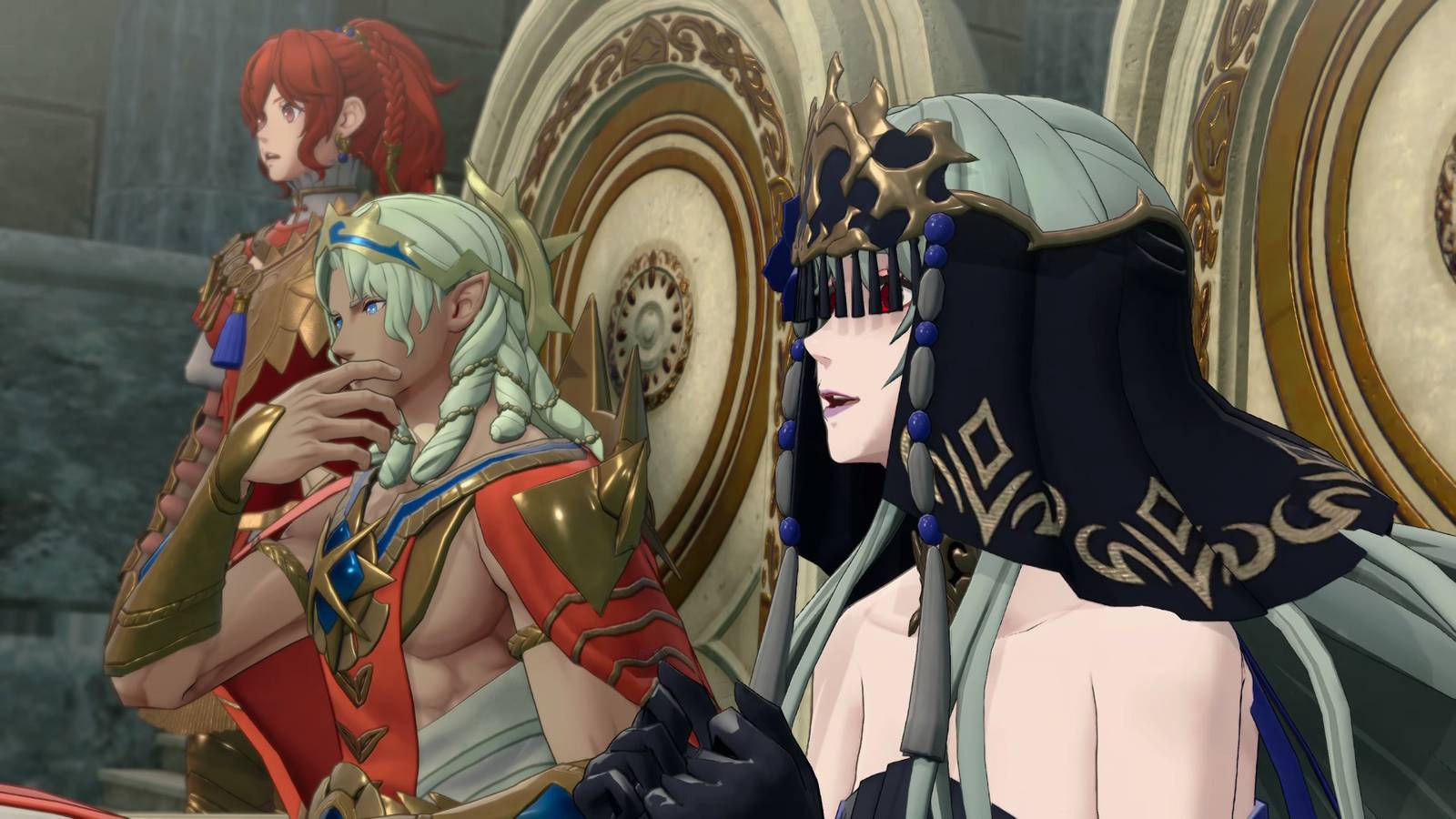




When you think about Nintendo, the first thing that comes to mind likely isn’t adroit political commentary. It’s not something the company frequently, or really ever, engages in. Even Monolith Soft’s famously big-picture Xenoblade gamestend toward philosophy more than politics. Up to this point, developer Intelligent Systems has limited the political messaging in its Fire Emblem series to messages such as “don’t get in bed with dragons” (literally and metaphorically) and “when the king starts laughing maniacally, stop giving him power.”
That last line is an eternal truth, but Fire Emblem: Fortune’s Weave, the latest game in the series, released Sept. 17 for Switch 2, takes it very seriously. The entire game is a commentary on nationalism and the dangers of failing to confront the truths of the past, no matter how horrific they may be.
Spoilers ahead for Act 2 and beyond of Fire Emblem: Fortune’s Weave.
Dagda’s story is the same as that of any empire throughout history. Centuries of warfare and conquest expanded its borders, giving rise to a fervent belief in the divinity of that conquest. When the nation’s ruler is a god and the offspring of the world’s ultimate deity, common folk can be pretty easily convinced. Dagda justifies his latest war in Part 2 by reminding his court (the ones he hasn’t killed, anyway) that Sothis, his mother and the progenitor god, tasked him with bringing the continent under his control.
There’s something of the Mandate of Heaven in his conviction, the ancient Chinese belief that emperors ruled with divine backing and risked losing that if they misbehaved. But after spending Part 1 learning about the empire’s glorious history via the Heroic Games, it’s hard not to be reminded of Manifest Destiny, a “doctrine” US presidents espoused in the 19th century that justified the nation’s westward expansion. God, the belief went, ordained this future for the nation, so everyone who disagreed or got in the way was marked for death.
Which, as we learn, is what happened to the other tribes and nations on the continent. The empire’s history is a list, centuries long, of subjugating smaller nations and erasing their identities, with the exception of its first war against Brigid, which Dagda lost. The emperor installs one of his kin as a ruler or regional deity in the conquered lands, and with time, the people come to think of themselves as loyal Dagdans. They revere their emperor. They’re devoted to the gods, and the gods, in turn, have their best interests at heart.
Over the course of Fortune’s Weave we learn that Dagda feared the People of the White Egg, or saw them as expendable resources, or both. They posed no threat to him. Yet he executed 100,000 of them, hunted down their descendants, and confined the rest to a barren corner of the continent. The parallels with how the federal and state governments treated indigenous Americans are striking, though there are others throughout history: the Japanese and the Ainu, the Chinese and the Mongols, Israel and Palestine.
But like with real-world genocide and oppression, the people of Dagda remember these events only as paeans to their empire’s glorious history, whitewashed atrocities repackaged as entertainment. The People of the White Egg became the stuff of fairytales, though they remained real enough that anyone dressed all in white was at risk of being arrested. The official version of events is one for which Dagdans feel pride and a sense of unity. In Leda’s route, when Anatolia joins as a guest, Sha Lan expresses surprise and sadness over the accepted version of her people’s story — nobody understands the full truth. She’s right to feel sad. That ignorance and blind faith led to the empire’s undoing.
Following Dagda’s genocide against the People of the White Egg, he turned his attention to the children of Damascar. These were descendants of People of the White Egg, and he intended to murder them as well. Yu Phas, daughter of Balor and wife of Dagda’s son Solel, intervened and rescued as many people as she could. Dagda murdered her as punishment.


The nature of a god keeps them separate from humanity. What concerns a mortal, who walks the earth for a mere 80 years, barely registers in the consciousness of a being who lives for millennia. Dagda’s wife Jurah and some of his children later say that they were appalled at his actions in the Damascar incident, but no one took action until his cruelty affected them directly. Solel took up his axe and struck his father down after Yu Phas’ death. This was the “slumber” Dagda entered into 500 years before Fortune’s Weave takes place.
It’s hard not to see similarities between our own ultra-wealthy elite and everyone else. From their privileged perch, the economy is fine even though you can’t afford groceries, and AI is wonderful because it makes them so much money. As soon as their own comfort and status come under threat, though, something must be done.
Solel perpetuates his father’s lies after assuming his role as Divine Sovereign. He’s the epitome of a politician desperate to maintain the status quo, no matter the cost. He allows the denigration of his deceased wife Yu Phas as an unholy goddess of death. Defying his father’s will, he gives the Children of Damascar the land that would become Saramis, but it’s a shrewd move. They’re a buffer between Dagda and its vicious southern neighbors. He allows the Order of Mithras, a shady cult his father founded and one that facilitates his eventual madness, to operate unchecked. And he unquestioningly accepts corrupt testimony that justifies Arago’s brutal, politically advantageous massacre in Cydonia. Why would he not? The deaths of Cydonian people have no bearing on his life. Besides, looking further into the matter would only upset things and require change.

And so we arrive at the start of the Heroic Games. No one, not even the gods, stops to consider the cruelty inherent in them. It’s Squid Game, but with a divine stamp of approval. Force people to fight for your amusement and promise them something if they win, something you could easily give them at any point. For instance, Solel promises Leda he’ll reinvestigate the Cydonian Massacre that devastated her hometown if she wins the games, as though it hadn’t even occurred to him to care otherwise. The temples tell Dagda’s citizens these games are for the empire’s glory. Martial prowess and the rousing recreations of the nation’s past in the arena would bring honor to them all and awaken Dagda from his slumber at last. They believe it’s a good thing. How could it not be? Just look at how wonderful Dagda, the nation, was in the past and how good everyone had it.
Despite knowing the harm his father caused and how dangerous it could be to awaken him, Solel does nothing to stop this charade. He and the rest of his family give Dagda, a murderer, a genocidal maniac, a ruthless tyrant, a second chance. Perhaps they assumed a 500-year-long-nap will have calmed the cranky old man, or maybe they had come to believe the lies they’ve told the nation for centuries. Their good intentions prove misguided. When he assumes power once more, he immediately wages a new war, against Saramis this time. He kills those who question his authority, executes Solel, attacks his children, and eventually murders everyone in Dagsion. Surprise: The terrible ruler was just as bad the second time as he was the first.
Get Polygon’s Wishlister newsletter
A weekly cheat sheet to what you’ll eventually love to play. No buying, no
commitment — just saving for later.
Sign up free
Free. Unsubscribe anytime.
I don’t know when Intelligent Systems started writing Fortune’s Weave, but playing it in 2026, it’s hard not to compare Dagda to Donald Trump. Surprise: the politician whose legacy included failure and atrocity reassumes power and commits even worse acts. And he used warped stories, misguided memories of a past that didn’t exist, and fear of “the other” to convince people he had their best interests at heart. Of course, the parallels extend beyond the United States. Japan continues its flirtations with right-wing nationalists, and Germany’s far-right AfD group made extensive gains in that country’s most recent elections. Both movements are predicated on fear of outsiders and a determination to ignore past truths.
And in all these cases and others, the recurring theme is surprise — surprise that the past is repeating itself, surprise that people didn’t seem to know better, surprise that those in power did nothing to stop this from happening. It’s why I believe the fan theories circulating on social media about Eshmel’s identity, namely, that they’re Solel reincarnated. Not because Eshmel is in the Trident class or that his spear looks a lot like the Divine Sovereign’s. Because in the prologue while you’re creating your character, Fortuna remarks on karma and the chance for the soul inhabiting Eshmel to seek redemption now. If it is Solel, he certainly needs redemption.

![30th Sep: Ohh My Dog (2026), 2hr 26m [TV-14] (6/10)](https://occ-0-75-1007.1.nflxso.net/dnm/api/v6/0Qzqdxw-HG1AiOKLWWPsFOUDA2E/AAAABVw8Ls1gDaiYi_35HFlo8j9LYMLOLOben8BtP91oHhe89P3bIrBOKFkUHUdBes484XV4b3qBzLVVXxDVrc9feSIhoUqr-HDZi43aISMBbHpCnAcJ3eJcg583cK6nPBhOxXHa0XwENfsCrcBrV07DeFKiC8sjF_ncRqfiwtIrdeiZng.jpg?r=838 "30th Sep: Ohh My Dog (2026), 2hr 26m [TV-14] (6/10)")