




In the past few years, Metal Gear Solid and Death Stranding creator Hideo Kojima has gained renown beyond his “video game auteur” status for his frequent recommendations of movies and TV shows, shared on his social media channels. I have become a bit skeptical of Kojima’s cultural guru status, especially after his recent controversial non-stance over the Kurdish issue (you can read more about it here). Still, it’s hard to disagree with his latest glowing anime review: Nippon Sengoku: The Three Nations of the Crimson Sun is truly an amazing show.
Luckily, I didn’t have to wait for Kojima to tell me about it. A Japanese friend already recommended the original manga, written and illustrated by Matsuki Ikka and published by Shogakukan. The anime, produced by Studio Kafka (The Ancient Magus’ Bride) and licensed by Prime Video, takes the already excellent source material and elevates it through bold visual choices that complement and enrich Matsuki’s refined artistic approach.
[Ed. note: Spoilers for Nippon Sangoku episodes 1-2.]
Nippon Sangoku is set in an apocalyptic near future, at the end of the Reiwa era (which started in 2019). Japanese society has collapsed as a result of economic crisis, declining birthrate, a pandemic brought by refugees from a nuclear war, and natural disasters. Finally, the people revolt against their corrupt government, causing the country to fracture into three separate states: Yamato, Buo, and Seii. Civilization and technology regressed to the early Meiji era (1868–1912), with the three states waging war against each other.
In the midst of all this upheaval, Aoteru Misumi lives a quiet life as an agricultural officer married to Saki Higashimachi, the daughter of the local librarian. The first episode quickly establishes that the two truly love each other, despite their opposite personalities: Saki is fiery and quick to act against injustice, while Aoteru is contemplative, well-learned, and lacking in courage.
Aoteru has read all the books in the library and knows everything about the history of Japan before its collapse, and feels admiration for that great civilization. Saki believes he can change the country through his knowledge and skill with words, encouraging him to enlist in the Yamato border army led by Ryumon Mitsuhide, but Aoteru’s priority is to live a comfortable life with his wife. This dream is shattered when the cruel leader of the Yamato government, Taira Denki, visits their village and brutally kills Saki after she opposes and shames a corrupt tax officer. At this point, Nippon Sangoku shows its true colors as one of the most subversive series on the market.
Aoteru wakes up to find Saki’s head in a box, and Taira and his men mocking him. At this point, the manga/anime playbook dictates the protagonist flies into a blind rage to massacre the evildoers, or is defeated and, after surviving by miracle, trains relentlessly to exact their revenge. Instead, Aoteru does something truly sickening: he bows his head to Taira. Realizing that killing the men now (or being killed by them) wouldn’t solve anything, Aoteru instead uses his rhetoric to make sure Taira kills the tax officer responsible for his misery. He then wows to fulfill his late wife’s wish and unify the country through his knowledge, bringing an end to Taira’s corrupt rule and re-establishing peace. His first step is to travel to Osaka and take the grueling exam to become an officer in Mitsuhide’s army, as Saki hoped.
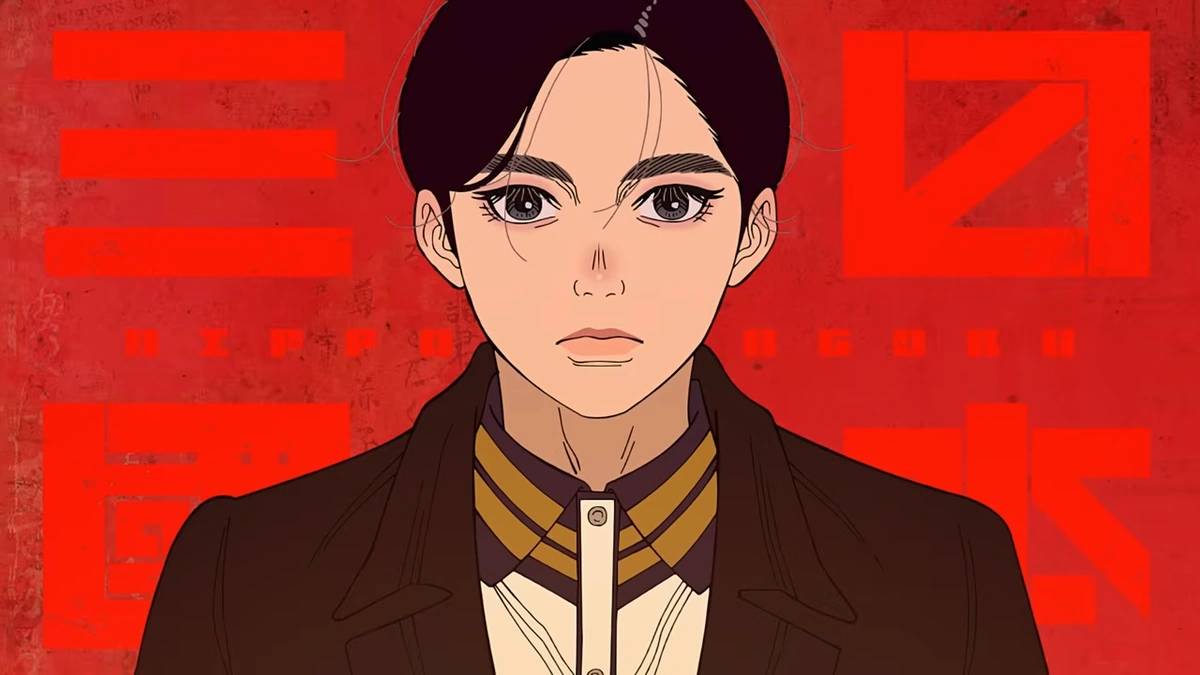
Nippon Sangoku proves anime can be exciting even if the protagonist fights with words, not swords (but full disclosure, there’s also plenty of sword-related violence in the story). The first two episodes truly shook me with this innovative approach to storytelling and the boldness of subverting the basic tenets of the medium. However, the impression wouldn’t be half as strong if it weren’t for Studio Kafka’s inspired visual approach. Nippon Sangoku often looks and feels like a black-and-white movie (or a manga). Colors are used sparsely but always to maximum effect; for example, to emphasize Aoteru’s horror in waking up to find the bright red blood trail leading to her wife’s decapitated body.

Moreover, the studio shows great understanding of Matsuki’s style, especially in the characters’ design, inspired by the aesthetics of the Meiji and Taisho (1912–1926) eras. Aoteru and the other characters look like they walked out of an early 20th-century Japanese ad, with their delicate, round faces and flushed cheeks. In those eras, Western artistic styles started flooding into Japan, influencing popular art in particular. Nippon Sangoku uses that style to convey the sense of dystopian nostalgia that permeates the story, and Studio Kafka takes that inspiration to new heights, using colors to do what the black-and-white manga could only suggest. For a young animation studio, founded in 2020 as a Twin Engine subsidiary, it’s an impressive achievement. (Kafka was also responsible for my favorite short in the Tatsuki Fujimoto 17-26 collection, “Woke-Up-as-a-Girl Syndrome.”)
Prime Video is not great at advertising its anime content, so I’m happy that Kojima’s appreciation will help Nippon Sangoku gain attention and recognition from a larger audience. In the midst of the usual barrage of isekai and rom-com anime, Nippon Sangoku delivers a mature story with striking visuals that’s not afraid of playing with the foundations of the medium.