






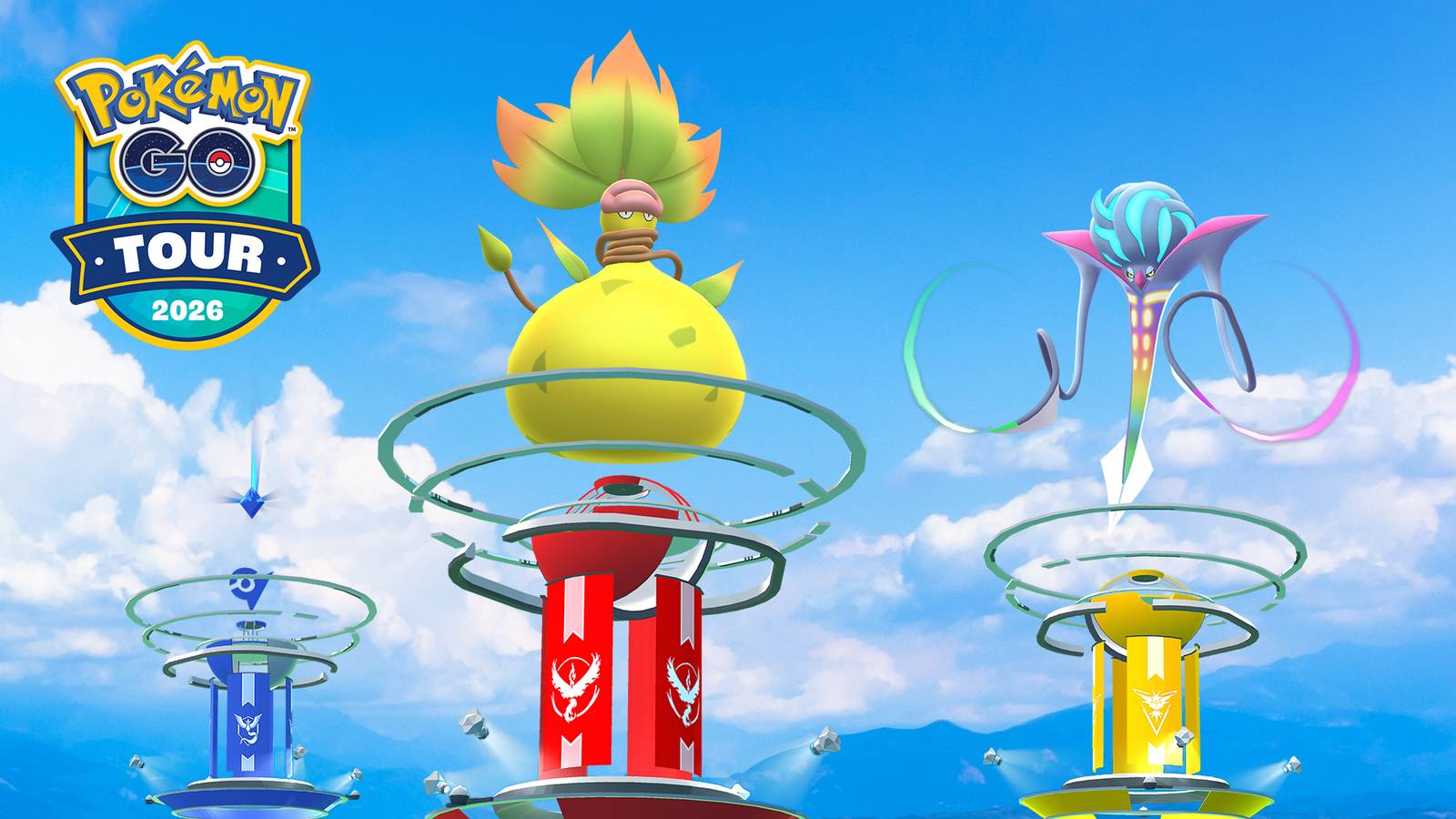
A new type of raid, the Super Mega Raid, is coming to Pokémon Go in tandem with the mobile game’s next major event, Pokémon Go Tour: Kalos. The challenging new raid type will require at least eight trainers working together in order to take down “exceptionally powerful Mega-Evolved Pokémon,” Niantic says in a blog post on Pokémon Go‘s new Mega Evolution update.
Super Mega Raids will give Pokémon Go players access to a new tier of Mega Level Pokémon, known as Super Max, and a chance to battle newcomers Mega Victreebel and Mega Malamar — both of which recently debuted in Pokémon Legends: Z-A. But the goal for developer Niantic is to get Pokémon Go players to be more social and connect with their fellow trainers at events and community meetups, developers say.
According to Niantic’s blog post, Super Mega Raids will differ in challenge from Mega Raids in that the Mega-Evolved Pokémon players will face will become enraged and erect shields, reducing the amount of damage they receive. Players will have to work together to take down the Mega-Evolved Pokémon’s shields, with the caveat that each trainer will only be able to take down one shield.
“Once the opposing Pokémon becomes enraged and activates its shields, a Mega-Evolved Pokémon from your battle party will be automatically sent into battle if you do not have one out already,” Niantic says. “Your Mega-Evolved Pokémon’s next attack will be powered up significantly, allowing you to break one of the opposing Pokémon’s shields easily! After you and other Trainers have broken enough shields, the opposing Pokémon will return to its normal state, and your attacks will do normal damage again until the end of the battle.”
Successfully completing a Super Mega Raid will “yield substantially more rewards than standard Mega Raids, including more Mega Energy,” Niantic says.
John Funtanilla, senior producer on Pokémon Go, says that Super Mega Raids function as more than just a new type of raid activity — they’re meant to push players to socialize more with the larger community, and are intentionally designed to promote that type of interaction.
“A lot of players in Pokémon Go don’t interact with Megas,” Funtanilla told Polygon in a video interview earlier this month. “That’s something we’ve found, whether it’s through legacy systems, [or] whether they don’t understand how to utilize the feature. So one of the things we really explored last year is: How can we make Megas as important as Dynamax Pokémon [and] Gigantamax Pokémon? How can we bring some of those cool new Pokémon from Legends: Z-A into our game? As you know, there’s a whole slate of new Mega Pokémon that came out. We thought, Why don’t we utilize this? Why don’t we leverage this moment to actually improve the systems in our game?“
Funtanilla notes that current Mega Raids don’t play all that differently from regular raids, whereas Shadow Raids and Gigantamax battles have distinct systems.
“For Mega Raids, we wanted to do the same thing. We wanted to create energetic battles, [make] something very cool and fun and really, really entertaining for group play,” Funtanilla says. “The main ways that we’re addressing that is through a new battle system, a new currency called Link Charges tied specifically to Mega Raids, and a new increased Super Max level. Right now you could go to Mega level three. With this release, you’ll be able to go to Mega level four.”
Link Charges are a new type of currency partly inspired by Max Particles, which are used in Dynamaxing or Gigantamaxing Pokémon. But unlike Max Particles, which can be earned by visiting locations called Power Spots, Link Charges are designed to encourage social play.
“There are different ways to get Link Charges, from community check-ins, from gifting friends and opening gifts, and then also doing weekly challenges,” Funtanilla says. “The core through line there [are] social actions. We want players to interact with each other. We want them to go to their community check-ins, interact with their communities, and we’re rewarding that. I know there’s somewhat of a discourse, and I think players just don’t understand the future that we see. But I wouldn’t say we’re gravitating away from Raid Passes.”
Funtanilla says the design of Link Charges is to create “flexibility for players in the way that they want to interact with the game.” Ultimately, he says, interacting with Super Mega Raids and the Link Charge economy is “living the mission that we want for players,” by “getting players together [and] creating awesome memories.”
Niantic is also developing behind-the-scenes systems to encourage player convergence. Speaking intentionally vaguely, Funtanilla says Niantic is “testing ways that we can have players congregate in popular play areas.”
Based on player data behavior, Funtanilla says, “we know where to place certain spawns and [have] Super Mega Raid logic so that we can have players gravitate toward each other so they know, Hey, if I go to this park, I’m bound to run into some other players.” Niantic recognizes that having too many spawns across nearby gyms is a core, underlying problem in Pokémon Go, Funtanilla says, and the developer wants to figure out ways to have trainer naturally and organically meet.
Players will get a taste of those new systems, and Niantic’s efforts to address Mega Raid’s current shortcomings, starting this weekend, with Pokémon Go Tour events in Tainan and Los Angeles. Players worldwide will experience Super Mega Raids starting Feb. 28, when Pokémon Go Tour: Kalos – Global kicks off.