

![29th Sep: Mononoke The Movie: Chapter Ⅲ – The Curse of the Serpent (2026), 1hr 28m [TV-14] (6/10)](https://occ-0-748-1001.1.nflxso.net/dnm/api/v6/0Qzqdxw-HG1AiOKLWWPsFOUDA2E/AAAABbMyKyAXA5AlP2cmxpmv6YJuYg1TdV_C2j1r90W4-2obLizDdaCX_ghxhvHt5Iz81rlUZK_Xh_KdVzCGBHKp-Y8j5n9jDbChMzeXs9-TXIY-pPkHVewL9NhGYuq4S7HHWIMsnOiydLjSAEtFqmxp9chM453IDrjD5S8gm_8EuUE70A.jpg?r=4f6 "29th Sep: Mononoke The Movie: Chapter Ⅲ – The Curse of the Serpent (2026), 1hr 28m [TV-14] (6/10)")




When Humayun Kabir Khan arrived in Montreal from Dhaka, Bangladesh in 1994, he left politics behind for good.
After years of watching the two major political parties in Bangladesh engage in corruption and violence — and use the population as a pawn in their power game — he had grown bitter.
Khan learned French, became a Canadian citizen and developed an appreciation of politics in Canada, where politicians are held accountable for their actions, he said.
But in the 32 years he has been in the country, he has never voted in a provincial election.
“Why would I?” Khan said. “None of the parties here represent us or our interests.”
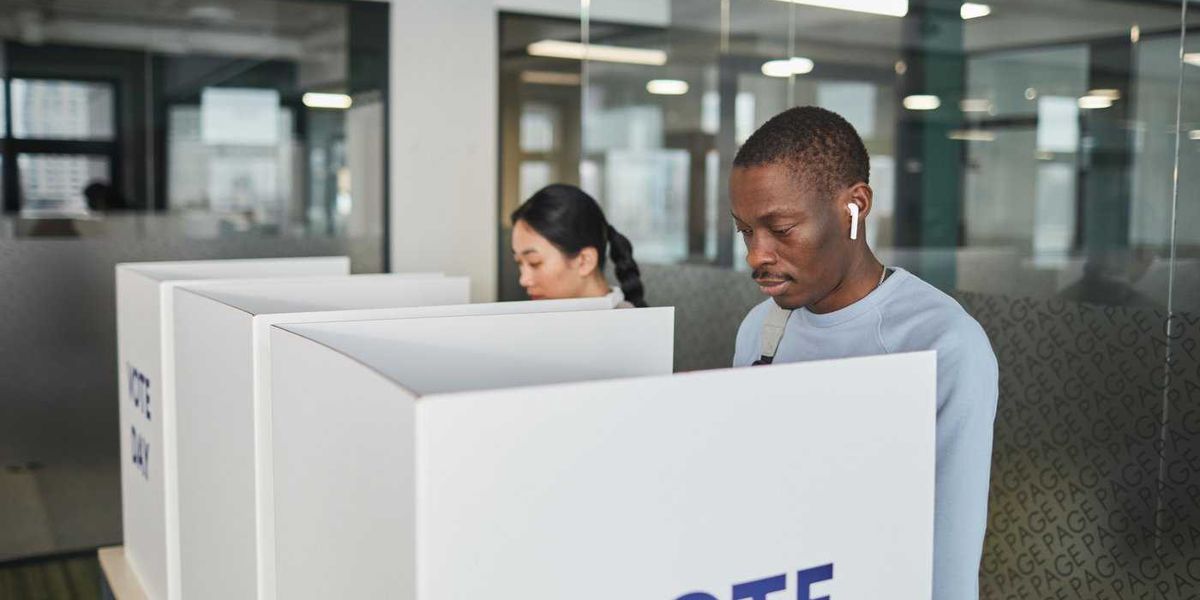
On Oct. 5, Khan intends to vote in the Quebec election for the first time. When asked why he plans to vote this time he passed over a pamphlet from the National Muslim Action Fund, a political organization that endorses candidates.
The pamphlet lists questions Muslim voters can ask candidates about issues such as religious freedom and Islamophobia, and sets the number of Muslim voters in several ridings alongside the votes it says are needed to win. It’s a roadmap for people like Khan to make their vote count.
Duha Elmardi, who arrived in Canada as an asylum seeker from Sudan in 2018, became a Canadian citizen five days before an interview with New Canadia Media. She had already cast her first ballot in an advance polling station.
Like Khan, she was not excited by the choice of candidates in the parties.
“I feel very demotivated,” Elmardi said of the options on the ballot. None of the parties fully align with her views, though Québec Solidaire came closest, she said, adding that her vote came down to which party she found “least problematic.”
Elmardi has expressed her politics through activism since she arrived in Canada, on issues such as women’s rights, migrant rights, racism and Islamophobia, as well as on the plight of people in her home country of Sudan.
In part, it’s a continuation of her activism in Sudan, where she spoke out against public order laws that attempted to control what women wear, where they go and how they could participate in public life.
“I think for me it started with my experience as a woman, but then it was a gateway for me to see so many other types of horrors that were happening,” Elmardi said.
She described a pre-war Sudan where the regime had full control over many aspects of people’s lives. Under Omar al-Bashir, she said it was hard for people to gather in large numbers without being harassed by police or other government authorities. People who organized protests risked arrest or death.
As Quebec residents head to the polls, Khan and Elmardi illustrate the different ways the politics that people knew before coming to Canada can shape how they engage with politics in their new country.
A previous NCM story, published Sept. 27 explored how politicians with immigrant origins navigate these two different ties.
According to the 2021 census, Quebec’s population included about 1.21 million immigrants, or 14.6 per cent of its residents. Since 2022, more than 161,000 people from other countries became eligible to vote for the first time in a Quebec election.
Part of Khan’s reluctance and Elmardi’s disappointment in the province’s politics is due to Quebec’s identity and language politics, which leave many immigrants feeling alienated. This year, it has been compounded by the anti-immigration rhetoric dominating the election campaign.
Social scientists said that the way immigrants engage with their adopted country is related to where they arrived from, how they experienced politics there, and how safe they feel in Canada.
“Here is how I would think about it: ‘Why do people move in the first place?’” said Thomas Soehl, a McGill professor who has studied immigrant political engagement.
“There are people who move because they’re done with politics. They want a home, good schools for their children and a new life. Others may have been forced out because of their politics, such as political refugees who escaped persecution. They’re going to bring that with them.”
Veronica Islas, executive director of Carrefour de ressources en interculturel (CRIC), has spent 13 years introducing newcomers to elected officials and helping them learn how to raise concerns locally — and watching them learn what they can safely say and do in Canada.
“In some cultures, because people have been so repressed, they are afraid of speaking out,” Islas said.
She recalled an Iranian woman in one of her programs who was skeptical of engaging with any sort of political activity.
“This girl said she would be ‘really, really afraid of participating in a big protest.’” Islas and her colleagues eventually managed to assure her that it was not just okay, it was her right in Canada.
“Once she knew it was within a framework that was socially permitted and protected, she was totally fine with it.”
Islas understands the adjustment it takes to feel comfortable expressing political opinions publicly after leaving a more oppressed country. In Mexico City, where she grew up, she said “you would never dare approach a politician.”
Coming to Canada meant figuring out where the limits are in her new country. “You’re not born with this knowledge, and it’s culturally based, and it changes from place to place,” she said.
There are also barriers that aren’t related to fear. Language, money, work and the cost of getting to events are also challenges.
“The more that you are in a vulnerable financial situation, the less that you will have the means to demonstrate, to protest or to ask for change,” Islas said. Among the people she works with, she said she has found older newcomers less willing to speak up, while women are more willing to become politically active.
Rathuja Sivasubramaniam, an Eelam Tamil feminist born in Canada to parents who immigrated from Sri Lanka, said she sees that pressure in her own family.
“They’re working seven days a week,” she says of her parents. “When do they have time to think about this or follow this? I don’t think everyone needs to necessarily get involved in the same way, because not everyone can.”
A reluctance to speak about politics can easily be mistaken for a lack of interest.
In a 2023 study of 2,065 immigrants in Quebec, researchers Antoine Bilodeau and David Dumouchel found that people from more repressed countries reported less political activity during phone interviews than when they answered online questionnaires. And the more repressive the country, the wider the gap.
The same pattern was noted in activities such as signing petitions, which require a name and contact details, but not in voting, which is private.
Bantayehu Shiferaw Chanie, a University of Ottawa researcher of diaspora politics, said people denied a political voice in their home countries embrace the opportunity to speak out in Canada.
“Political participation can become explicitly framed around voice, using political access precisely because it was denied to them at home,” Shiferaw Chanie said, adding that people who flee state violence, such as the Rohingya of Myanmar, are finally free to express their views.
What people ask of politics here depends on what they left behind, he said. Some, such as the Afghans, for whom there is no politically functioning homeland, direct their political energy toward Canadian institutions.
Iranians, on the other hand, organize to draw the federal government’s attention to government crackdowns in the country of their birth.
“The difference is going to be [related to] the kind of politics in their homeland,” Shiferaw Chanie said. “That determines what kinds of solutions they’re seeking.”
Copyright 2026, New Canadian Media. All rights reserved.
Mubin S. Khan, Local Journalism Initiative Reporter, New Canadian Media.