






![House of the Dragon season 3 episode 6 ending explained: Is [spoilers] dead?](https://static0.polygonimages.com/wordpress/wp-content/uploads/2026/07/emma-d-arcy-_1.jpg?w=1600&h=900&fit=crop "House of the Dragon season 3 episode 6 ending explained: Is [spoilers] dead?")


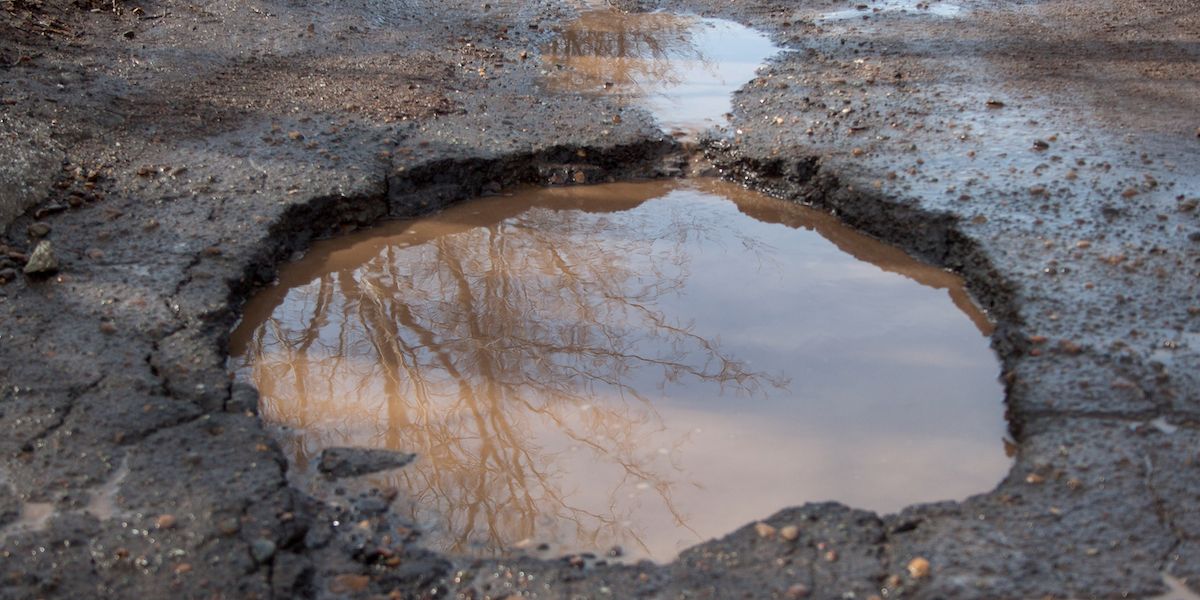
Aside from blooming flowers and playoff hockey, spring in Quebec is largely defined by one thing: potholes. And Montreal tends to dominate the conversation.
In fact, the city has become so synonymous with crumbling pavement that it has spawned its own folk hero, a landscaper named Marquize who went viral last month for filling potholes out of pocket and has since raised over $33,000 on GoFundMe to keep going.
So when CAA-Quebec released its annual Worst Roads ranking on Tuesday, covering the 11th edition of the campaign, you might have expected Montreal to dominate the top 10 with multiple entries.
However, it did not appear once.
The provincial top 10 was swept almost entirely by roads in the Outaouais region, with Gatineau alone claiming five of the ten spots. Chemin Pink took first place overall, followed by Chemin Klock and Boulevard Saint-Raymond, all in Gatineau.
Here are Quebec’s 10 worst roads for 2026, according to CAA:
- Chemin Pink, Gatineau
- Chemin Klock, Gatineau
- Boulevard Saint-Raymond, Gatineau
- Chemin du Lac-Saint-Francois, Saint-Hubert-de-Riviere-du-Loup
- Chemin Cook, Gatineau
- Chemin Notch, Chelsea
- Chemin du Lac-Heroux, Saint-Boniface
- Rue du Transport, Saguenay
- Chemin d’Old Chelsea, Chelsea
- Rue Principale/Route 132, Sainte-Croix
Montreal did have its own regional ranking, and the roads that topped it will be familiar to anyone who drives in the city.
Rue Notre-Dame Est came in first, followed by Avenue Souligny and Rue Sherbrooke Est tied for second, Le Boulevard in third, Avenue Papineau in fourth, and Boulevard Cavendish, Boulevard de l’Acadie, and Boulevard Rosemont sharing fifth.
The CAA campaign, which ran from March 18 to April 13 this year, lets Quebec residents report roads they consider to be in the worst condition in their area. It does not measure road quality directly, so it reflects where frustration is loudest, which makes Montreal’s absence from the provincial top 10 all the more striking.
Mayor Soraya Martinez Ferrada announced earlier this month that the city is expanding its pothole repair budget, adding $1 million for boroughs that have burned through their allocations, $125,000 specifically for manual patching on Notre-Dame Street, and another $1 million in open-market contracts. That is on top of $2.5 million already distributed to boroughs as part of an earlier action plan.
