





Few anime films have cast a longer shadow over queer and arthouse animation than Kunihiko Ikuhara’s Adolescence of Utena. The surreal 1999 feature, which radically reimagines the already-iconic Revolutionary Girl Utena TV series, has only grown more influential in the decades since its debut. Nearly 30 years later, Polygon exclusively reveals that this cult-classic anime is returning to the silver screen for two nights in June.
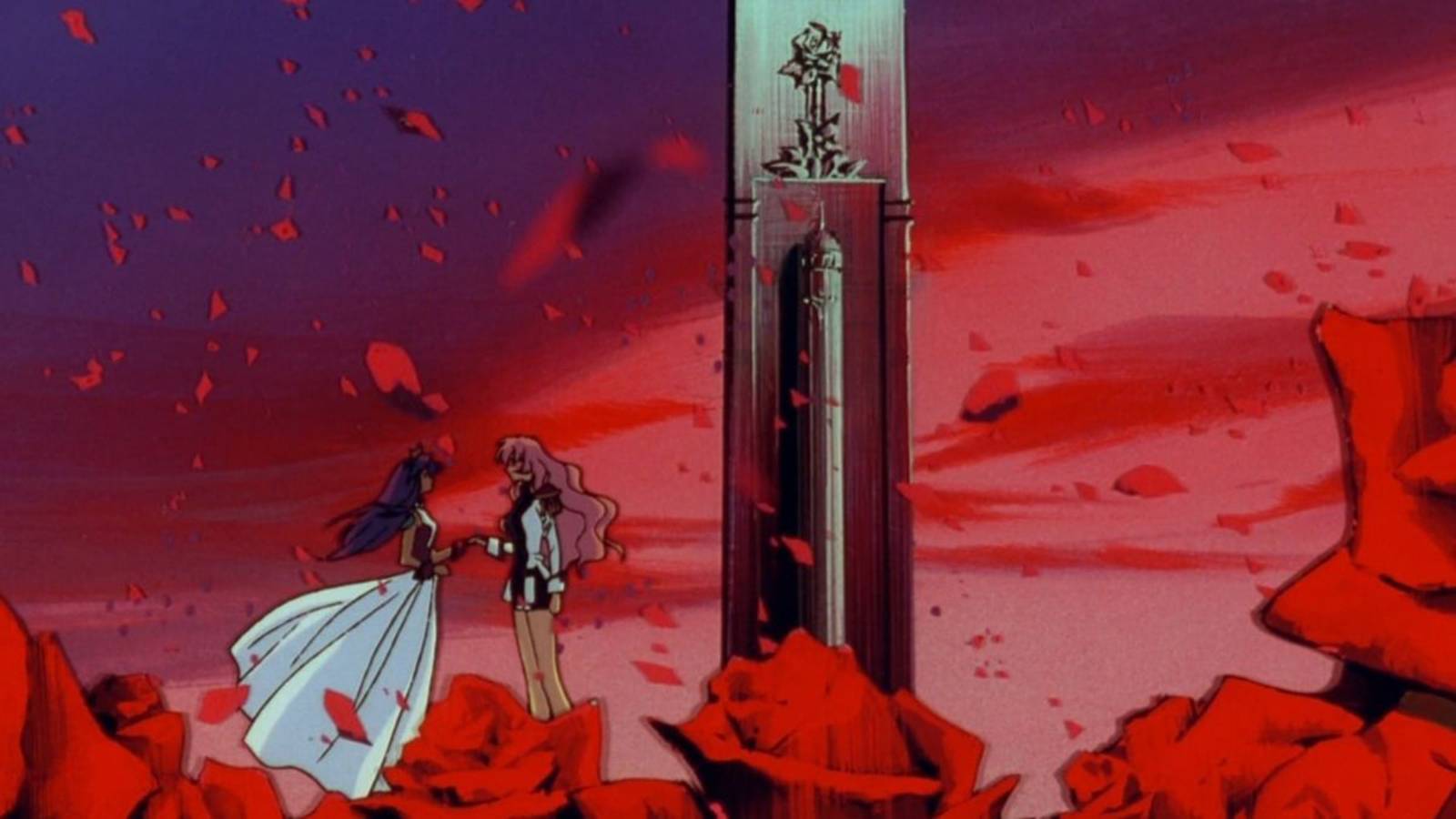
Adolescence of Utena is part fairy tale, part psychological allegory. Set within the sweeping halls of prestigious Ohtori Academy, the story follows a tomboyish Utena Tenjou as she is pulled into a series of ritual sword duels to protect Anthy Himemiya, the school’s “Rose Bride.” But surviving the academy means more than simply defending Anthy. Utena soon discovers the school itself is a cage built on systems of manipulation, performance, and control that she must ultimately shatter to escape.
Ikuhara approaches the film less like a traditional anime director and more like an avant-garde playwright, filling scenes with theatrical framing and dreamlike imagery. Objects transform into emotional metaphors, characters slip into archetypal roles, and exposition regularly gives way to raw feeling. The result is a film that feels far closer to experimental cinema than genre anime.
That approach is what helped turn Adolescence of Utena into one of anime’s defining queer works. One of the film’s most striking scenes comes early on when Utena and Anthy share a dance in an open-air ballroom. What begins as a romantic fantasy gradually transforms into something more confrontational, as shifting costumes and fluid choreography challenge traditional gender roles and completely reject the prince-and-princess dynamic typically found in fairy tales.
But Ikuhara doesn’t just rely on surreal visuals. Through a radical score composed by J.A. Seazer, Adolescence of Utena treats music like an active participant in the storytelling. The score functions like a theatrical Greek chorus, blending progressive rock with cryptic, operatic chanting. By layering the sonic environment with these ideas, Ikuhara ensures that Utena and Anthy’s rejections of societal expectations feel less like a quiet rebellion and more like a cosmic reckoning.
Another iconic stand-out sequence is Utena’s surreal transformation into a pink race car. Ikuhara uses the scene to merge adolescent change with liberation from patriarchal control, turning Utena into a literal vehicle for escape. When Anthy takes the wheel and drives them both toward freedom, the car becomes a deeply queer metaphor for mutual liberation.

Much like The End of Evangelion, Serial Experiments Lain, and Perfect Blue, Adolescence of Utena built its reputation through dense symbolism and emotionally raw direction, rather than straightforward storytelling. Over time, the film became a major touchstone in queer anime discourse, praised for the emotional intimacy and complexity at the heart of Utena and Anthy’s relationship at a time when that kind of representation remained exceedingly rare in the medium.
Utena is a towering achievement of late-90s animation that demands to be experienced exactly as intended: loud, overwhelming, and on the largest screen possible. For those looking to experience this avant-garde masterpiece in its full, theatrical glory, GKIDS is bringing Adolescence of Utena back to theaters for just two nights on June 21 and June 22. Tickets are on sale now.

![17th Jul: The Naked Gun 2 1/2: The Smell of Fear (1991), 1hr 25m [PG-13] – Streaming Again (6.45/10)](https://occ-0-6231-92.1.nflxso.net/dnm/api/v6/0Qzqdxw-HG1AiOKLWWPsFOUDA2E/AAAABcL_Z3kqUUmGD_578ntrnk1cCzKxQrA0TIAOwISrEstJCHk0mzZDFJ8yDMU4HkDSJ4hd0hOa4oGapdJZSd8MVJCx6MK69pbt2seW.jpg?r=d64 "17th Jul: The Naked Gun 2 1/2: The Smell of Fear (1991), 1hr 25m [PG-13] – Streaming Again (6.45/10)")