





SAN ANTONIO, Texas – A pilot study from The University of Texas at San Antonio Health Science Center found higher levels of several potentially harmful chemicals in the primary teeth of children with autism compared with children without autism.


Chemicals found in baby teeth of children with autism
What we know:
Researchers said the study does not establish that the chemicals cause autism. Instead, the findings point to a need for larger studies examining whether long-term exposure to developmental toxicants and endocrine-disrupting compounds may play a role.
The compounds are associated with products including:
- Fragrances
- Food preservatives
- Flame retardants
- Plastic tubing
- Food packaging and containers
- Personal care and baby products.
Baby teeth track long-term early childhood exposures
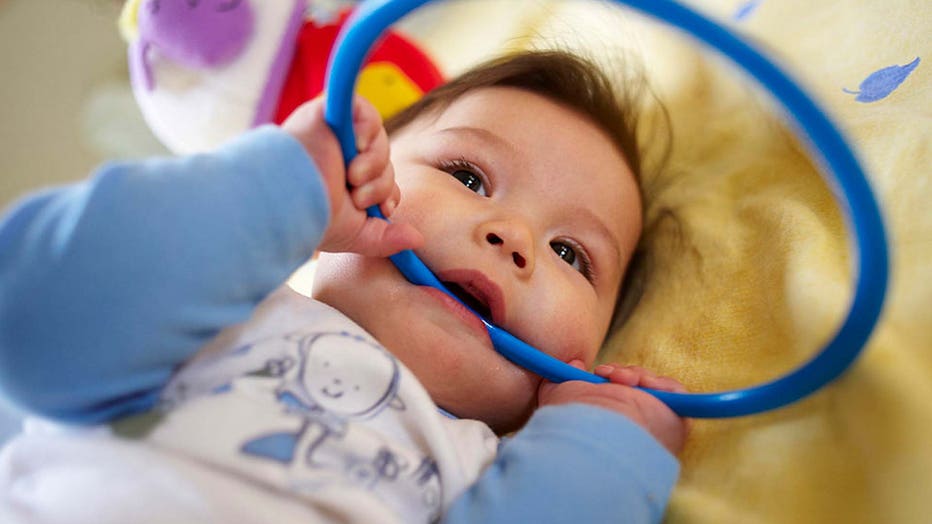
Baby chews on a teething ring.
By the numbers:
Researchers analyzed primary teeth donated by 22 children with autism and 16 typically developing children. Primary teeth were used because they can preserve a record of chemical exposure over an extended period. Human teeth begin forming in the womb around the fourth month of pregnancy and are fully formed by about age 3. As they develop, teeth can incorporate chemicals from the body’s environment.
Using a broad chemical-screening method, researchers found an average of about 300 chemicals per participant in both groups.
Of the 60 compounds identified in more than half of the samples, 39 are known developmental toxicants or endocrine-disrupting compounds. Researchers found higher concentrations of 57 of the 60 compounds in the autism group. 19 compounds had significantly higher concentrations.
The study’s authors stressed that the findings do not mean baby bottles or any other specific products cause autism.
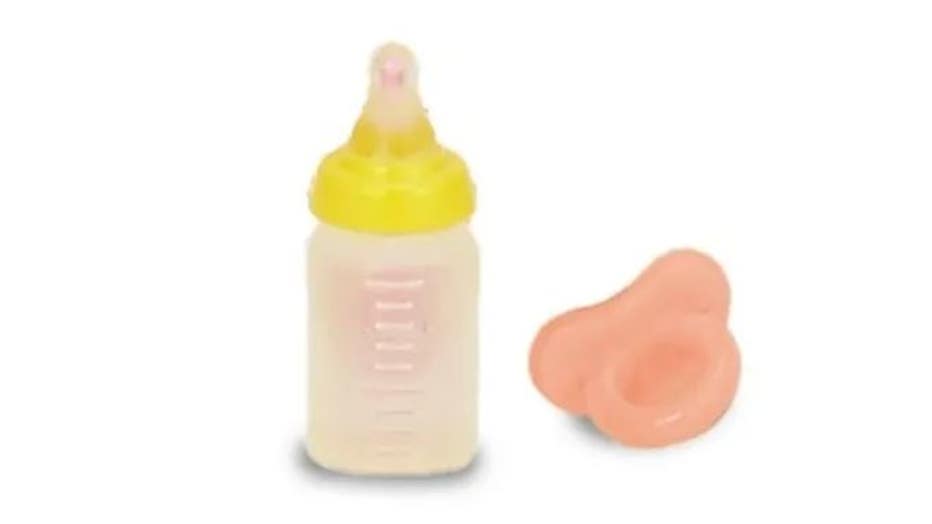
(U.S. Consumer Product Safety Commission)
Dig deeper:
Children may encounter chemicals before birth through what their mothers breathe, eat or absorb through their skin. After birth, potential exposure sources include food, food containers, personal care and household products, air, water pipes and products made for babies and children.
Researchers used two-dimensional gas chromatography and time-of-flight mass spectrometry to analyze the teeth.
Brain development, critical windows of exposure
What they’re saying:
The researchers said the timing of exposure is important because the brain and central nervous system develop over an extended period.
“There are several critical windows of exposure during pregnancy, especially in the first trimester, but it doesn’t stop there,” research affiliate Lynne P. Heilbrun said. “The central nervous system continues to develop after birth until around age 25.”
David Gimeno Ruiz de Porras, professor and department chair of environmental and occupational health, said chemicals are being developed and introduced into commercial use faster than scientists can examine their potential effects.
“There are hundreds of millions of compounds being produced and released into commercial use,” he said. “Industry is moving much faster in producing chemicals for different uses than we can study them.”
Future research needed
Big picture view:
The relationship between chemical exposure and autism is complex. Genetic factors may influence how individuals respond to environmental exposures and may make some people more susceptible to certain chemicals.
The researchers hope future studies will include larger groups of participants from multiple countries. They also want to use high-resolution liquid chromatography to detect a broader range of chemicals, including heavier compounds not captured in the current analysis.
“This was a small study, but it gives us ideas about what we could do in this line of research in the future,” Gimeno Ruiz de Porras said. “As scientists, our role is to put the evidence-based, factual information out there.”
The Source: Information in this article was provided by a UT San Antonio Health Science Center study.