






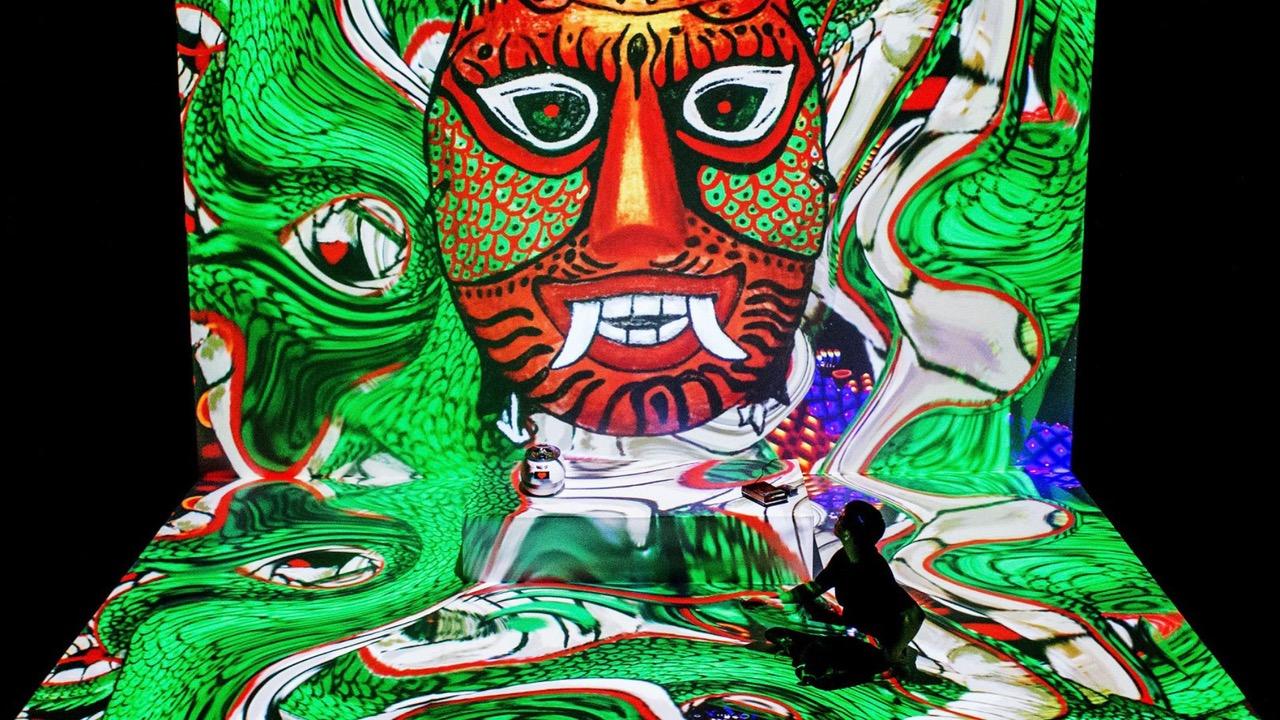
A week ago today, the winner of the 2026 Ibsen International Award was announced by the Norwegian National Theatre. This year’s winner Jaha Koo is a remarkable interdisciplinary artist and the first Asian recipient of the award: a South Korean theatre- and performance-maker, music composer and video artist. He makes work that matters, asking questions of democracy, participation and inclusion with wit and imagination, humour and delicacy.
The International Ibsen Award is announced every two years, on Henrik Ibsen’s birthday, and celebrates the work of a game changer in theatre; an individual or company who have contributed something different or new to theatre-making. The Norwegian government founded the award in 2007. The winner receives 2.5 million Norwegian kroner (approximately 257,0000 US dollars). There are no conditions attached to accepting the prize, and anyone can submit a nomination for the International Ibsen Award. The prize is awarded at the National Theatre in Oslo at a special ceremony with a guest performance of work presented in Oslo, usually in the days leading up to the ceremony.
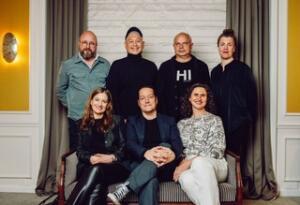
The International Ibsen Award Committee 2026. Photo: Nationalteatret, Oslo.
Behind what is sometimes referred to as the Nobel Prize for Theatre is a jury (the seven-person committee) appointed by the Norwegian Government to make the decision. These are experts in the field of theatre — theatre-makers, productors, artistic directors of venues and festivals, academics, writers and critics — who understand how theatre is made and programmed. We are the 2026 Committee, chaired by Ingrid Lorentzen: Maria Delgado, Roman Dolzhansky, Lars-Petter Hagen, Hilkka-Liisa Iivanainen, Kee Hong Low, and Kristian Seltun and have co-written this reflection on our work.
So how do we work? Well, we see a lot of work, we comment on what we have seen, we compile a shortlist, we select a winner. It’s not about choosing a favourite but forging a voice for the committee, we as a group coming together through a lot of listening, discussion and debate.
For 2026 it seemed important to expand on the criteria, recognising our responsibility to award an artist or company that has ‘contributed to the global art of theatre or given theatre new artistic dimensions’ — but also going back to what made Ibsen’s work so important and resonant over 130 years ago. Ibsen wrote plays that asked difficult questions of a world in transition. Where do our ethical responsibilities lie as human beings and artists? How do we navigate change? How do we manage the histories we carry with us or inherit? Ibsen questions and confronts, whether it is his own class in society and its double morals, fatherhood, what is means to be human, and what differs humans from the trolls. He gave a voice to those who had no protection and no voice in society. Ibsen’s most important works were written from abroad, always about Norway, a country that is then forming itself as a young nation, going from colonisation to independence. He lifts his finger, and he warns his audiences to navigate a changing world with care and ethics. It may be too late for the characters on stage: the harm is done when we enter the play, but there may still be time for the spectator….
And so, we went back to this to refine our guidance for 2026: the reimagining of theatre as the space in-between in an age of polarities and binaries. The idea of theatre as a way of doing as well as a thing in and of itself. Theatre as the space for doing things differently, a space for kindness, empathy and understanding. A space where audiences are welcomed and invited into a stage world. Theatre as the place where we can reflect and imagine but also a space for making things happen. The difference between the national and the nationalistic, between saying and doing. We wanted to recognise art that that carries signs and indicators of the potentiality of the future of theatre: works that are creating their own canon while joining the current canons, works that are both urgent now and urgent to future audiences. It felt important to acknowledge the evolution of theatre, its flexibility, interdisciplinary qualities and pliability. Theatre at the intersection….
2026 feels a very different landscape to 2019 when many of us first joined the committee. We have seen global conflicts, a pandemic and movements of people across continents. How can our decision not reflect the changes we witness and experience? It’s an opportunity, that has felt increasingly more crucial: to sit with colleagues and scholars from across the field, to discuss not only what is ‘the best’, but what matters now, really matters. To honour, to acknowledge what we do not yet know, forestillingsevne – the ability to imagine.
This year we, for the first time, have chosen to share the criteria we have been working on with the wider audience.
In a world too often positioned through the ‘for’ and ‘against’, The International Ibsen Award 2026 rewards the imagining of theatre as the space in-between – as a site for assembly, a place to envision and inspire what we might not yet know.
The practice of theatre made through compassion and kindness, so critically needed for our times.
The experience of art as a reminder of the human capacity to nurture and share beauty, hope and joy, as new ways of being and seeing.
Theatre forging time and space for the reflection of the ongoing quiet works that are democracy in action.
Yes, we are celebrating changemakers, someone who shifts the way we see things, but have also opted to recognise the quiet work that is too often overlooked. We have sought to peel off the layers beyond taste and personal preference in our decision-making. But unlike Ibsen’s onion, when we peel there is an essence that we have identified, and eventually, in the selection of Jaha Koo, a winner!

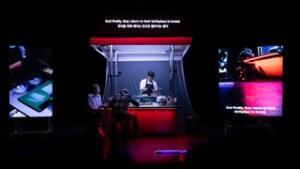
Haribo Kimchi (2024). Photo by Bea Borgers.
And we have been mindful as a committee of our responsibilities to look care-fully, to discuss what we see, to try and question our positionality and perspectives. We have sought to look at work across different formats and scales – from the symphonic to the chamber piece. We were seven individuals bringing different experiences and expertise to our discussion when we began our deliberations in 2024, we ended as a collective when we reached our decision in 2026. Our Committee statement explains why we opted for Jaha Koo: work that deals with the gaps, that interrogates and dismantles genre, that plays with conventions and has deep resonances for different generations of spectators.
The 2026 International Ibsen Award recognises the intersections of the past, the present and the future in a global environment where the digital is the real and technology part of our way of forging community. Jaha Koo gives us theatre of the moment in all its complexities. To paraphrase Ibsen (from a speech he gave to the students’ parade in Kristiania on 10 September 1874): To create is to see. Jaha Koo encourages us through his stage writing to see things anew. Congratulations Jaha Koo on receiving the 2026 International Ibsen Award.
This post was written by the author in their personal capacity.The opinions expressed in this article are the author’s own and do not reflect the view of The Theatre Times, their staff or collaborators.