







In 2003, author Dan Brown published The Da Vinci Code, the second entry in his Robert Langdon trilogy after 2000’s Angels and Demons. The novel bolsters its murder-mystery framework with speculative retellings of religious myth, such as the legend of the Holy Grail and the historical role played by secret societies. This proved to be immensely controversial, boosting book sales to the point that The Da Vinci Code became a word-of-mouth bestseller and remained so until 2005.
A Hollywood film adaptation was the logical next step from a financial standpoint. As a result, Ron Howard (Apollo 13, Cinderella Man) and Akiva Goldsman (who had worked with Howard on A Beautiful Mind) teamed up for The Da Vinci Code (2006), which became a box-office success despite getting overwhelmingly negative reviews.
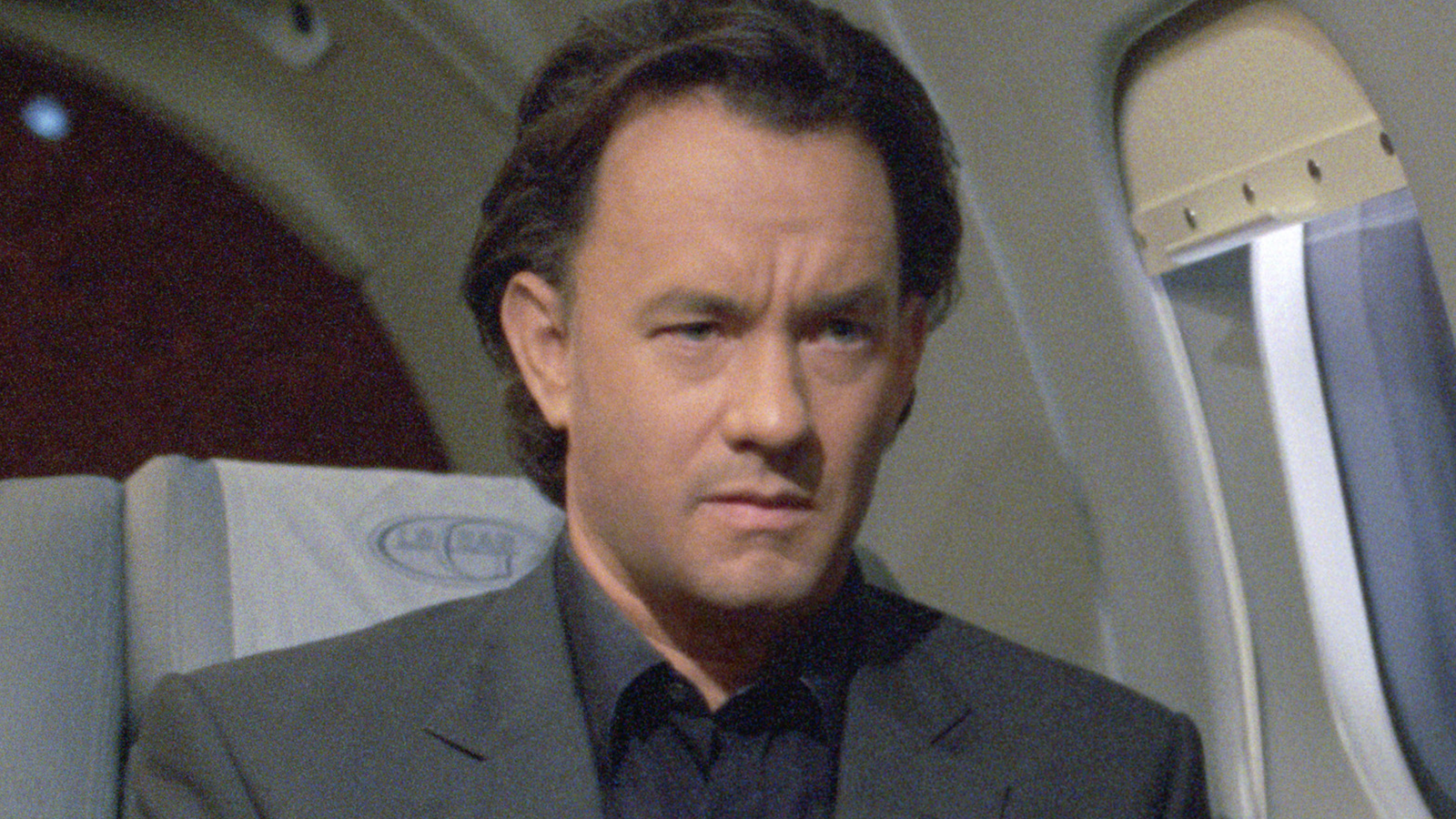
A chunk of the outrage directed at Howard’s film was the distillation of public reaction to Brown’s controversial subject. Whatever suspension of disbelief the novel offered was absent in Howard’s straight-faced adaptation, compounded by the film’s clunky pacing. But despite these glaring flaws, The Da Vinci Code makes great use of its puzzle-box premise (this is a movie that features a literal puzzle box) to spin a ludicrously fun yarn about religious conspiracies, secret societies, and “symbology” in art. A full decade before HBO’s Westworld became the definitive puzzle-box story of our times, Tom Hanks solved a literal puzzle box to uncover a conspiracy connected to Jesus Christ.
Howard’s 2006 blockbuster opens with the murder of a Louvre curator, whose body is posed like Leonardo da Vinci’s Vitruvian Man. Police Captain Bezu Fache (Jean Reno) summons American symbologist Robert Langdon (Hanks) to the crime scene, presumably to help decipher any hidden messages. A cryptographer named Sophie Neveu (Audrey Tautou) warns Langdon that Fache has lured him here for a reason: The phrase “P.S. Find Robert Langdon” is a part of the curator’s dying message. Realizing that Fache thinks Langdon is the killer, the two hightail out of the Louvre while theorizing that the dead man might’ve been a high-ranking member of a secret society.
Anyone who has read Brown’s novel knows how the story unfolds, but Howard succeeds in turning the source material’s stale puzzle box formula into a highly entertaining one. Almost every one of Brown’s Robert Langdon novels opens with a crime in which our Harvard professor is falsely implicated (or connected to, in some fashion). From there, Brown follows a standard location-hopping structure that involves a sensational revelation about historical myths, followed by a chase of some sort to the next location. Howard’s film uses the cyclical ebb and flow of this formula to balance out high-octane action and exposition dumps. Langdon’s location-hopping quest is also an excuse to bask in beautiful locations, including the Louvre, Lincoln Cathedral, and Rosslyn Chapel.
As Langdon and Sophie race against time to solve an elaborate puzzle about the Holy Grail and its purported location, every code, clue, and theory-presented-as-fact unravels with Hans Zimmer’s moving score soaring in the background. Whatever felt over-the-top in Brown’s novel reaches operatic heights in Howard’s hands, who nails down the essentials for a popcorn movie that allows audiences to wear their conspiracy hats for a little under three hours.
Beneath all the fluff, there’s an earnest attempt to dissect the roots of organized religion, often run by self-serving men who benefit from the subjugation of marginalized groups. Secret societies become systemic markers for wealth and affluence, as these institutions gatekeep knowledge and control popular narratives. These aspects are closer to our real-life circumstances than the blatantly false speculations about Da Vinci’s The Last Supper or the claim that The Priory of Sion exists. That said, Howard’s film makes the smart choice to not sound as didactic as the novel, which is why these revelations — delivered in somber monologues by Langdon — feel so enthralling despite their fabricated nature.
Westworld reinvented the idea of evil AI with each season
HBO killed season 5, but that doesn’t mean we didn’t get a satisfying ending
Silas (Paul Bettany) and Sir Leigh Teabing (Ian McKellen) also make for perfect antagonists. While Silas’ dark, brooding personality is ramped up to convey his pain as a social outcast (Bettany’s performance can be considered a counterpart to his titular role in 2011’s Priest), Teabing becomes the eccentric academic who hides a more caustic worldview. McKellen makes the most out of this half-baked character, turning every smile and pause into an exquisite display of exceptional talent. In his capable hands, the lore dumps feel earned, and his motivations feel more complex than the ones etched in Brown’s bestseller.
All of this comes together with Langdon solving a literal puzzle box (the cryptex), which is the key to unlocking the mystery at the heart of The Da Vinci Code. Howard delivers the book’s most shocking revelation with great panache, and follows it up with an even more absurd epiphany that Langdon has when he cuts himself while shaving. Perhaps, through the power of cinema, this final scene feels like a fitting end to a curated spectacle. As Langdon fulfills his holy quest, the spell cast by this middlebrow summer blockbuster lifts.
The Da Vinci Code can be streamed on Prime Video.